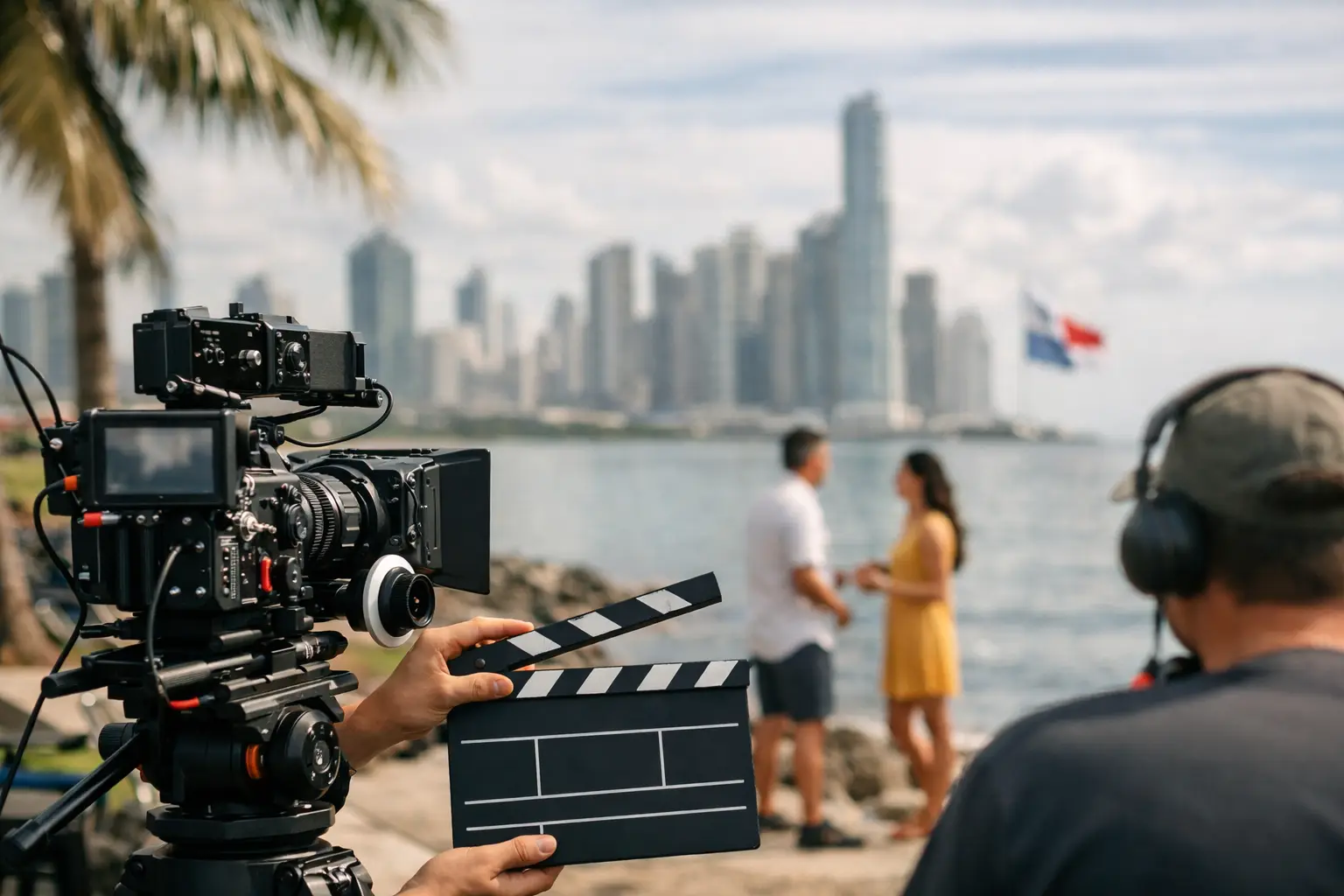
A missed permit window can cost more than a weather day. In Panama, that usually happens when an overseas production assumes one approval covers every location, authority, and filming scenario. It does not. Film permits in Panama are manageable, but they need to be planned against the real production footprint – public space, drone use, traffic control, protected areas, private property, and the size of the crew all affect the path to approval.
For international producers, the good news is that Panama is built for production. The country offers urban skylines, tropical beaches, rainforest, islands, colonial streets, mountains, highways, ports, and remote natural environments within relatively short travel ranges. The challenge is not whether you can film here. The challenge is making sure the legal and logistical side keeps pace with the creative ambition.
How film permits in Panama actually work
There is no single universal permit for every shoot. Approval depends on where you are filming, what you are filming, and how much impact your production will have on the location. A small documentary crew shooting on private property has a very different permit profile from a commercial campaign locking down a city street or a reality series moving gear through multiple public locations.
In practice, permits can involve municipal authorities, government entities, site administrators, environmental agencies, police coordination, aviation-related approvals for drones, and direct authorization from private owners or operators. Some locations are straightforward. Others are sensitive because of public access, security restrictions, heritage status, or ecological protection.
That is why experienced local coordination matters. The permit process is not only about filing paperwork. It is about identifying the right approvals early, presenting the production correctly, and matching the request to realistic lead times.
What determines the permit path
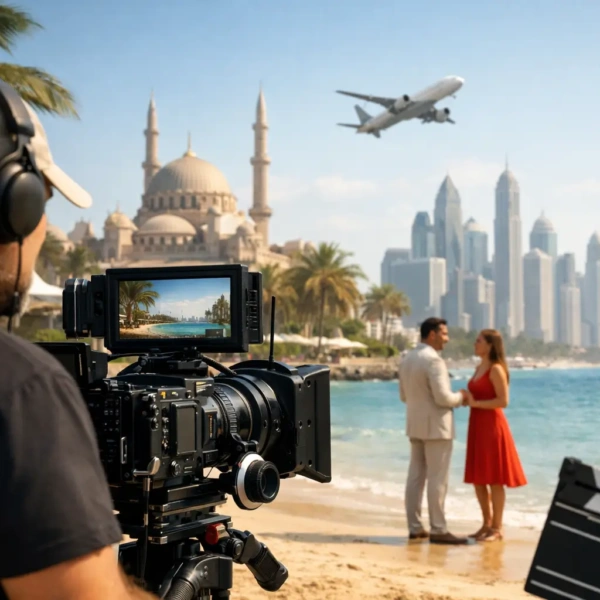
The first factor is location type. Public streets, sidewalks, parks, beaches, historic districts, government-managed sites, ports, and protected natural areas each come with different rules. A beach scene may look simple on paper, but once you add wardrobe tents, generators, vehicles, or drone shots, the permit scope changes.
The second factor is production impact. Authorities will usually look more closely at shoots that involve lane closures, special effects, stunts, large lighting packages, public crowd interaction, weapon props, amplified sound, or visible brand activity. If the production alters normal operations, even temporarily, approvals tend to require more time and more precise documentation.
The third factor is equipment and airspace use. Drone filming is one of the most common areas where foreign teams underestimate requirements. Not every location is suitable for drone operations, and local restrictions can apply based on proximity to airports, urban congestion, public safety concerns, or protected zones. A drone plan that works creatively may need to be revised operationally.
Insurance, crew nationality, customs handling for gear, and vehicle access can also influence how a shoot is reviewed. The permit is only one part of the compliance picture.
Typical permit scenarios for international productions
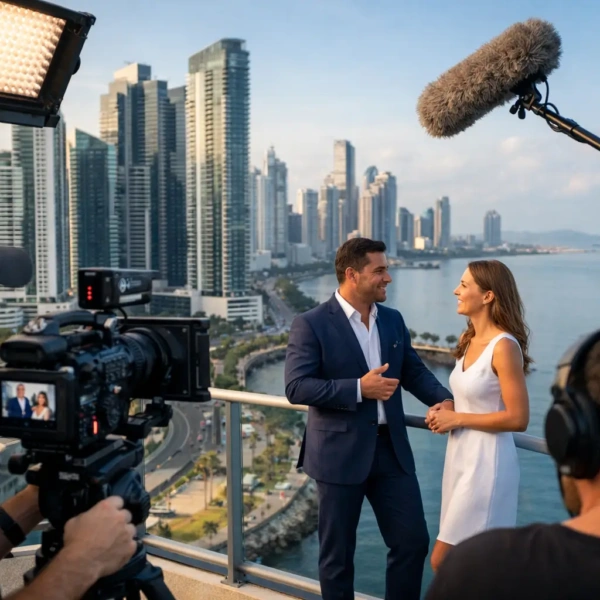
If you are shooting a commercial in Panama City, expect permit needs to center on municipal coordination, traffic management, public-space use, and possibly police support if the footprint is visible or disruptive. The city is film-friendly, but active urban areas need practical control.
If you are heading into rainforest, islands, or other environmentally sensitive locations, the process becomes more conditional. Access routes, environmental protections, waste handling, and production scale may all matter. A location that appears open to tourism is not automatically open to unrestricted filming.
If your project is based mainly on private property, the process can be faster, but private authorization does not always replace public approvals. For example, if your unit parking spills into public streets or your drone flight crosses controlled areas, outside permissions may still be required.
For factual television, travel content, and documentary work, permit strategy often comes down to balancing speed and coverage. Lightweight crews can move efficiently, but the shoot still has to be structured honestly. Calling a production a “small crew” does not help if the actual footprint includes multiple vehicles, fixers, sound support, and aerial capture.
Timelines: fast is possible, last-minute is risky
Panama can move quickly compared with many larger production markets, but speed depends on the request being complete and realistic. Straightforward approvals for low-impact filming may be handled in a short window. More complex shoots need longer lead times, especially if they involve multiple jurisdictions or high-traffic public areas.
The biggest mistake is treating permitting as an end-stage admin task. By the time creative is locked, campaign dates are fixed, and flights are booked, there may be very little room left to adjust if a location requires added review or conditions. Good permit management starts during location selection, not after it.
A practical rule is simple: the more public, visible, technical, or disruptive the shoot, the earlier the permit conversation should start. That includes drone operations, marine filming, police-assisted scenes, and shoots in controlled or iconic locations.
Budgeting for permits without surprises
Permit costs in Panama vary by location, authority, filming impact, and support requirements. Some approvals are relatively modest. Others become more expensive when they involve security coordination, municipal services, special access, or after-hours control.
What producers should watch closely is the indirect cost of permits. A location might be affordable on paper, but the full operating cost rises once you add transport windows, site restrictions, limited setup hours, fire or safety support, or production delays caused by incomplete approvals. The cheapest location is not always the most efficient location.
This is also where local production support creates value. A strong fixer or production service partner can flag when a location is likely to trigger hidden costs and can often suggest alternatives that preserve the look without increasing the permit burden.
Common mistakes foreign productions make
The first is assuming Panama is informal because it is flexible. It is flexible when the production is properly managed. Authorities and site owners generally respond well to professional planning, but they do not respond well to vague requests, shifting crew counts, or permit applications that understate what will happen on site.
The second is separating permitting from logistics. They are connected. If a crew needs unit base parking, marine transfers, road control, customs support for equipment, and a drone launch area, those details should inform the permit approach from the start.
The third is relying on verbal approval. Location enthusiasm is helpful, but it is not the same as formal authorization. This matters even more for brand work, scripted action, and shoots with insurance exposure.
The fourth is underestimating local knowledge. Panama is compact, but each area operates differently. A technically legal plan can still be inefficient if the schedule ignores access realities, public activity patterns, or neighborhood sensitivities.
Why a local partner changes the process
For overseas producers, the real advantage of local support is control. You are not just hiring someone to send forms. You are bringing in a team that can assess the script or treatment, match it to permit risk, pre-clear likely issues, coordinate authorities, align locations with budget, and keep the schedule moving.
That becomes especially valuable when your project combines multiple needs – permits, local crew, scouting, equipment, customs, transport, accommodation, and rebate positioning. A fragmented setup may look cheaper at first, but it usually creates communication gaps. On active productions, those gaps become delays.
A one-stop production partner also helps with the trade-offs. Sometimes the right advice is to pursue the hero location and absorb the permit complexity. Other times the better call is to shift the scene to a comparable setting that saves a day, protects the budget, and avoids compliance friction. Experienced production support is not about saying yes to everything. It is about getting to the most efficient yes.
40 Grados Producciones works in that space every day, supporting international shoots that need Panama to perform like a dependable production base, not a guessing game.
The permit conversation should start with the shoot, not the form
The best way to approach film permits in Panama is to treat them as part of production design and execution, not as a box to check at the end. If the creative depends on access, movement, drone coverage, public control, or sensitive locations, the permit strategy needs to be built into the schedule from day one.
Panama offers real production advantages – visual range, competitive costs, skilled local crews, and rebate potential – but those advantages pay off when the groundwork is handled properly. If you plan the approvals around the actual shoot and work with people who know how the country operates, permits stop being a source of risk and start becoming part of a shoot that runs the way it should.
The smartest productions do not wait to ask whether a location can be permitted. They ask early enough to keep every option on the table.