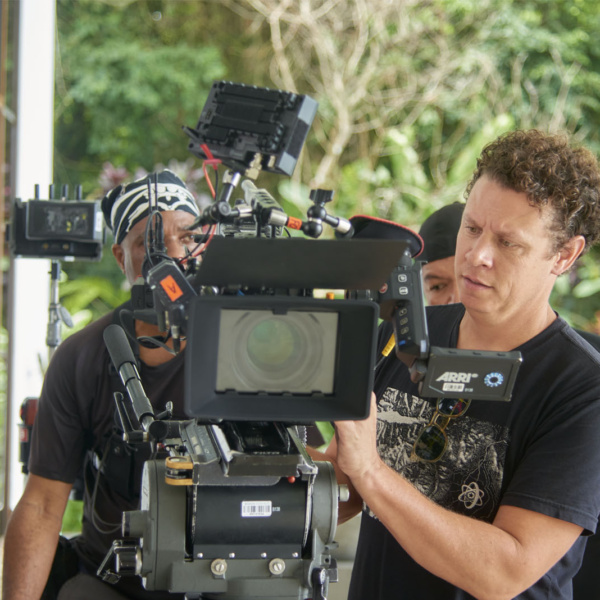
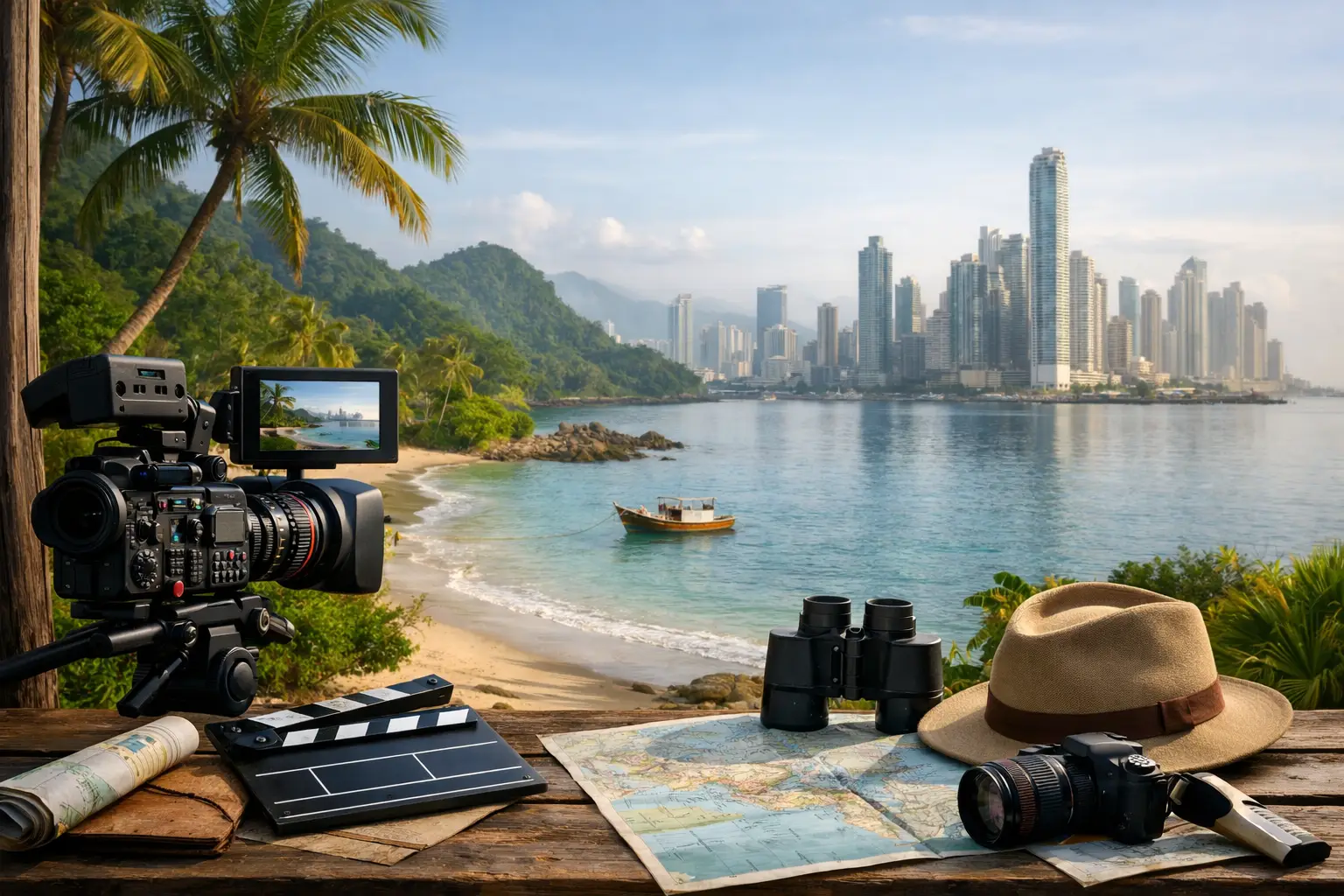
A skyline that can double for Miami, jungle roads within reach of the city, colonial streets, beaches on two coasts, and modern logistics in between – location scouting Panama is rarely about finding just one good backdrop. It is about building a production plan around range, speed, and control.
For international producers, that distinction matters. A strong scout in Panama is not only visual. It is operational. The right location has to photograph well, hold a crew, clear permits, fit the shooting schedule, and make sense against transport, weather, security, and budget. A location that looks perfect on a reference board can still fail on access, noise, turnaround time, or municipal restrictions. That is why scouting here works best when creative and production priorities are evaluated together from day one.
Why location scouting Panama works for international shoots
Panama gives productions unusual density of options in a relatively compact territory. In practical terms, that means fewer company moves, shorter travel windows, and more flexibility when a schedule changes. A single project can combine high-rise urban visuals, tropical rainforest, islands, industrial zones, mountain terrain, rural roads, and heritage architecture without the extended domestic travel often required in larger countries.
That variety is one reason producers look at Panama early. The other is execution. Good scouting here can move quickly because the country supports production with experienced local crews, established service infrastructure, and a film incentive framework that can improve the financial equation. The 25% cash rebate is part of that conversation, but it only becomes valuable when the project is structured correctly and documented from the start.
This is where scouting directly affects the budget. A smart scout reduces expensive surprises. It helps define where permits will be simple, where police support may be needed, which locations require private negotiation, and which sites look easy in photos but become slow once trucks, generators, talent holding, and unit parking are factored in.
What producers should evaluate during location scouting Panama
The visual match is only the first filter. Experienced producers want to know how the location performs under production pressure.
Access, distance, and company moves
Panama can save time, but only if the route planning is realistic. A beach location may be excellent visually and still create problems if heavy gear access is limited or if the road forces a long turnaround for every truck movement. Urban sites may appear close on the map yet become difficult during peak traffic windows. Scouting should test actual movement conditions, not ideal ones.
Permits and public authority coordination
Not every attractive location carries the same approval path. Public streets, historic districts, protected areas, ports, government-controlled spaces, and aerial work can all involve separate authorizations. Timing also varies. Some permits are straightforward. Others require advance planning, local authority engagement, or technical documentation. Producers should know the likely timeline before the location is presented as confirmed.
Sound, control, and shooting conditions
A location can look cinematic and still be wrong for sync sound. Urban density, aircraft paths, road noise, nearby construction, surf conditions, and foot traffic all affect what can realistically be captured on set. The same goes for lighting control, generator position, holding areas, and weather exposure. A good scout flags these issues early so the creative team can decide whether to adapt, build in mitigation, or move on.
Crew support and base camp practicality
This is where many remote assessments fall short. A technically strong location still has to support production operations. Is there space for staging? Can catering, wardrobe, HMU, and video village function efficiently? Is there stable access for cast and agency clients? Does the site require marine transport or special safety coverage? These details influence both schedule and cost.
The biggest advantage: multiple looks without leaving one country
Panama’s strongest production argument is not just that it has beautiful locations. Many countries can say that. The real advantage is the range of looks available within a manageable footprint.
A commercial team can shoot a polished financial district, then shift to tropical exteriors, then capture waterfront or heritage visuals with minimal disruption to the overall production plan. Scripted projects can stand in for several geographies if the location strategy is handled correctly. Reality and travel formats benefit from the same efficiency because the country allows visual variation without rebuilding the crew structure each time.
That said, it depends on the project’s demands. If a production needs highly specific seasonal looks, extreme altitude, or tightly controlled studio-heavy workflows, the location mix has to be judged honestly. Panama is versatile, but not every brief should be forced to fit. Effective scouting starts with the production requirements, not with a sales pitch.
Common location types producers request in Panama
The most requested looks are usually modern cityscapes, beachfront properties, tropical jungle, colonial architecture, marinas, islands, luxury hospitality venues, highways, industrial areas, and residential neighborhoods with a clean international feel. Corporate and commercial clients often want premium urban visuals with controlled access. Narrative and unscripted teams tend to prioritize contrast – city against rainforest, upscale against remote, historic against contemporary.
The value of local scouting is in knowing where those looks are strongest and where they are easiest to shoot. Two neighborhoods may offer a similar visual language, but one can save a full day of logistics because of parking, permit conditions, and proximity to crew support. That difference is not obvious from stills alone.
Why remote research is not enough
Deck research, satellite views, and image databases are useful for early alignment, but they do not replace in-country verification. Panama is a production-friendly market, yet the real condition of a location can shift because of construction cycles, municipal works, tourism patterns, weather impact, or property ownership changes.
A reference image may also hide practical issues. A road may be narrower than expected. A beachfront property may have tide limitations for gear movement. A rooftop may have appearance value but no safe load capacity for the planned setup. This is why producers who want schedule certainty rely on live scouting, current visuals, and clear operational notes.
How local production support changes the scouting process
When scouting is handled by a team that also manages permits, crew coordination, logistics, and legal support, the process gets tighter. Locations are not shown in isolation. They are shown in context of what it will take to film there.
That means budget conversations are more accurate. It means rebate planning can start earlier. It means the production is less likely to approve a location package that later collapses under permit delays or access restrictions. For international clients, this integrated approach usually matters more than having a long list of visually attractive options.
A one-stop production partner can also help balance creative ambition with local reality. Some requests are straightforward and can move fast. Others need municipal outreach, private negotiation, marine coordination, drone clearance, police support, or special insurance review. The sooner those conditions are identified, the more options the production keeps open.
Timing, weather, and flexibility
Scouting in Panama should always account for the shooting calendar. Weather patterns, daylight behavior, road conditions, and local event schedules can influence whether a location is reliable for the intended dates. The best answer is not always the prettiest location. Often it is the location with the best combination of look, access, and schedule security.
This is especially true for commercials, branded content, and broadcast work with short lead times. A location that requires extensive approvals may still be worth it for a feature or prestige project, but not for a fast-turn campaign. Likewise, a visually ambitious site may lose its value if the weather exposure forces constant contingency planning.
What international producers should expect from a scouting partner
A serious location scouting partner in Panama should provide more than image options. Producers should expect current photos and video, realistic travel times, permit guidance, ownership status, notes on sound and control, nearby support infrastructure, and transparent discussion of limitations. They should also expect alternatives, not just favorites.
That level of preparation protects the production. It gives agency clients confidence, helps line producers model the schedule properly, and allows decision-makers to compare locations on practical terms rather than visual enthusiasm alone. For many international shoots, that is the difference between a smooth location package and a costly reset halfway through prep.
At 40 Grados Producciones, that is how location support should work – as part of a complete production strategy, not as a gallery of nice places.
Panama rewards productions that scout with both the lens and the call sheet in mind. If the location works creatively, operationally, and financially, the country moves fast. That is where the real value is.