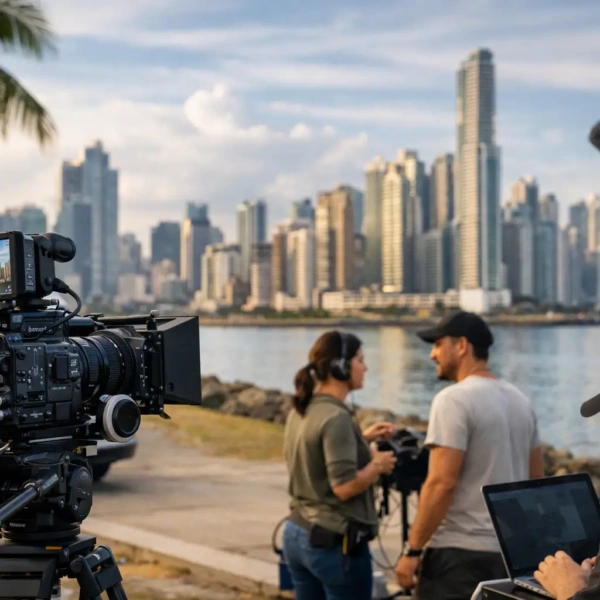

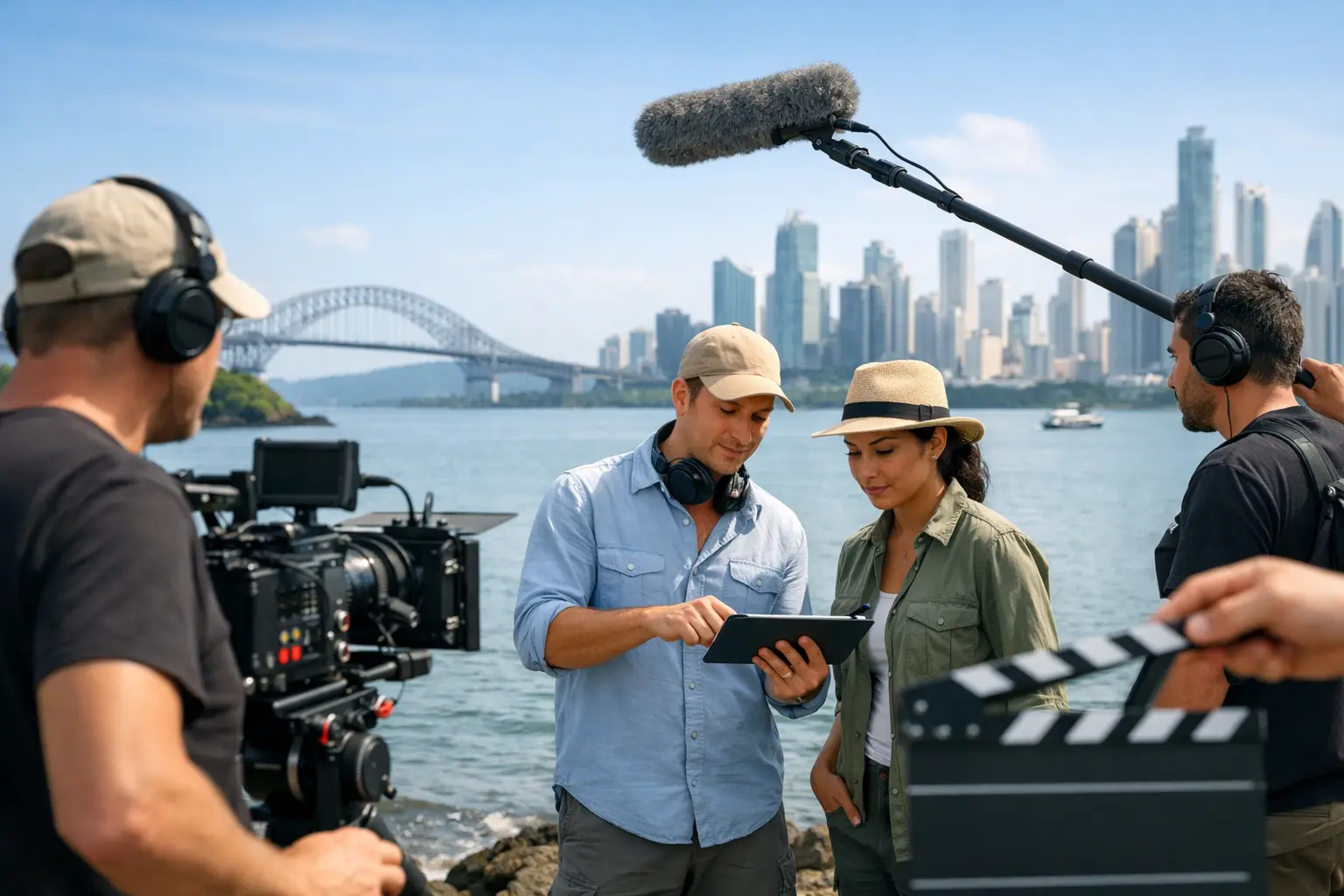
A great location can fall apart fast if the paperwork is wrong. For international producers planning a shoot in Panama, the real question is not just where to film – it is how foreign crews film legally without delays, fines, or last-minute permit issues.
Panama is a strong production market because it combines varied locations, experienced local crews, competitive costs, and a 25% cash rebate for qualifying projects. But none of those advantages matter if a production arrives without the right legal structure in place. The fastest shoots are usually the ones that start with local compliance handled early.
How foreign crews film legally in Panama
The legal path depends on the type of production, the crew size, the equipment package, the shooting locations, and how long the team will be in the country. A commercial with a compact team filming on private property has a very different compliance profile from a reality series moving through public spaces or a feature using drones, road control, special effects, or imported gear.
That is why there is no one-size-fits-all checklist. What matters is building the right permit and logistics plan before crew travel is booked. In practice, that usually means confirming the production scope, identifying whether public authorities need to be involved, reviewing immigration requirements, arranging insurance, and coordinating local production support that can represent the project on the ground.
Permits come first, not last
Permits are often the first area where foreign productions lose time. Producers sometimes assume that a location release or a property agreement is enough. It is not always enough.
If the shoot involves public streets, government-managed spaces, beaches, parks, traffic interruption, drones, large lighting setups, security support, or a noticeable footprint, formal authorization may be required from the relevant entities. The exact approvals depend on the municipality, the location category, and the operational impact of the shoot.
This is where local knowledge matters. Permit timing is rarely just about submitting a form. It involves knowing which offices need to review the production, how much lead time is realistic, what backup documents may be requested, and whether the planned activity creates issues around safety, public access, or noise. A producer can save money by trying to handle this remotely, but that can become expensive if the crew lands and cannot roll camera.
Immigration and work status need a real review
One of the most common mistakes on international shoots is assuming that every crew member can simply enter as a tourist and work. Whether that is acceptable depends on the nature of the project, the role of the traveler, the duration of stay, and the applicable local requirements.
For that reason, immigration should be reviewed as part of preproduction, not after flights are issued. Some productions need a simple entry strategy with supporting documents. Others may need a more formal process tied to the nature of the services being performed in country.
The legal standard is not just whether someone is holding a camera for one day or ten. Authorities can look at the purpose of entry, the business activity, and whether the production is operating commercially. If there is any ambiguity, it should be resolved before the crew arrives. Clean paperwork at the border is part of the production plan.
Equipment, customs, and temporary import rules
Legal filming is not only about people. It is also about gear.
Foreign crews bringing cameras, lenses, audio packages, drones, grip, or specialty equipment into Panama need to think through customs well in advance. Depending on the gear value, the origin of the shipment, whether items are hand-carried or freighted, and how long the equipment stays in country, temporary import procedures may apply.
This is an area where small errors create large delays. Serial numbers that do not match the manifest, unclear ownership documentation, incomplete carnets or customs declarations, and missing support letters can hold gear at the airport or port. That affects not just schedule but crew costs, location fees, and talent days.
A strong local production partner will usually prepare the customs pathway around the actual shooting plan. Sometimes it makes more sense to import key items and source the rest locally. Sometimes the better move is to reduce border friction by renting more in country. The legal answer and the efficient answer are often connected.
Drones need special attention
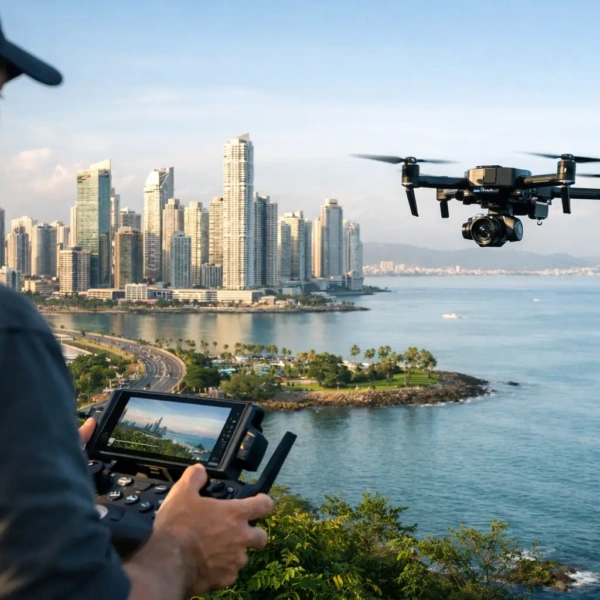
Drone filming deserves its own planning track. It is easy to underestimate because many productions treat it like a camera add-on. Regulators do not.
Drone operations may require specific permissions, operator documentation, flight-area review, and coordination based on the location and proximity to restricted zones or populated areas. What is possible on a remote beach may not be possible in an urban district or near sensitive infrastructure.
If drones are part of the creative plan, they should be declared early. Waiting until the tech scout to ask for authorization is risky, especially if aerials are central to the board or episode structure.
Insurance, contracts, and local liability
If a foreign crew wants to film legally and professionally, insurance cannot be treated as a box to check. Productions should review general liability, worker-related coverage, equipment coverage, vehicle exposure, and any location-specific requirements tied to stunts, marine activity, animals, or public interaction.
Some locations or agencies may ask for proof of coverage before issuing permission. In other cases, the production may need local contractual support to define responsibility between the foreign producer, local vendors, crew, property owners, and service company. Good legal preparation reduces exposure when the schedule changes, weather disrupts the plan, or a location owner raises operational concerns.
This is also where using a local production services company helps protect the production. Contracts, releases, vendor terms, and permit conditions are easier to manage when they are handled by a team that works within the local system every day.
The local crew question is also a legal question
Many producers think of local crew only as a budget and staffing issue. In reality, it is also part of legal compliance and execution control.
A local fixer, line producer, production manager, or coordinator does more than translate calls and book vans. They help ensure that the production is operating with the right approvals, at the right times, with the right municipal and site-level coordination. They know when a location needs police support, when neighbors should be notified, and when a permit condition affects lighting placement, parking, or access windows.
That operational intelligence is one of the reasons foreign shoots move faster with local support. In Panama, that can mean the difference between a clean shoot day and an expensive reset.
Rebates only work when the production is properly structured
Panama’s 25% cash rebate is a serious advantage, but incentive access depends on compliance. Producers should not treat the rebate as separate from legal planning. It sits inside legal planning.
To qualify, projects typically need to meet formal criteria, document eligible spend correctly, and follow the required application and reporting process. If spending is not structured properly, or if the production enters the country informally and tries to organize paperwork later, rebate opportunities may be reduced or lost.
That is why the smartest approach is to align permits, accounting, vendor documentation, and local production services from the beginning. The rebate is valuable, but only if the production is built to support it.
What foreign producers should do before confirming the shoot
Before locking flights and issuing final crew calls, producers should pressure-test five areas: location permissions, immigration status, equipment import planning, insurance coverage, and incentive eligibility. If any of those remain unclear, the schedule is not really locked.
A practical legal strategy is usually simple on paper: define the shoot, review the required approvals, assign local responsibility, and build enough lead time for agency responses. The complexity comes from execution. That is why experienced international teams usually avoid managing Panama as a remote desk exercise.
For producers who need a one-stop solution, a local partner such as 40 Grados Producciones can coordinate permits, logistics, crew, equipment support, and rebate alignment under one production plan. That reduces fragmentation and gives the foreign producer one accountable point of contact.
Panama rewards crews that come prepared. If the legal side is handled early and correctly, the country becomes what producers want it to be – fast, flexible, visually diverse, and cost-efficient. The best time to solve compliance is before the first call sheet is ever sent.