
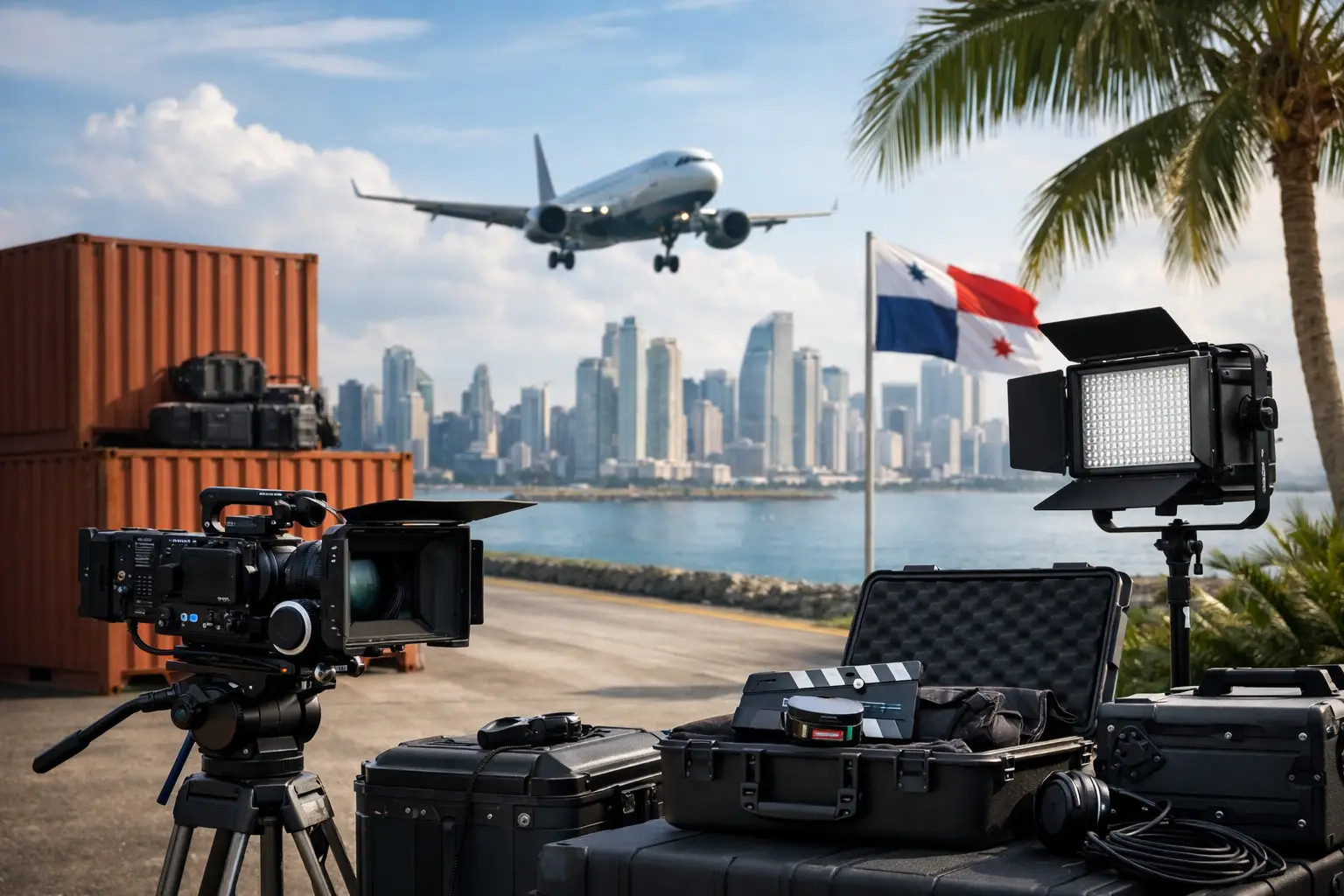
A camera package delayed at customs can cost more than a day of rental. It can disrupt talent schedules, location access, crew calls, and a tightly planned international shoot. If you are planning how to import film equipment to Panama, treat customs planning as part of preproduction, not a freight task to solve after the shipment is in the air.
Panama is well positioned for international productions, with strong air connections, established logistics infrastructure, and experienced local production support. But temporary equipment entry still requires accurate paperwork, a clear customs strategy, and coordination between your shipper, local representative, and production team. The right approach depends on what you are bringing, how long it will remain in country, and whether every item will leave Panama after the shoot.
How to Import Film Equipment to Panama: Choose the Right Entry Method
Most visiting productions bring equipment under a temporary import procedure. This is designed for gear that enters Panama for a defined purpose and is exported again after filming. Cameras, lenses, lighting, grip, sound gear, monitors, DIT stations, wardrobe equipment, props, and production office equipment can often fall into this category when correctly declared.
Temporary importation is generally the practical route when your equipment is owned or rented abroad and will return with the production. Customs may require a guarantee, bond, or other form of security tied to potential import duties and taxes. The terms, amounts, and release process can depend on the shipment value, equipment type, and customs declaration used. Do not assume that temporary entry means no financial exposure. It means the exposure must be planned and managed correctly.
An ATA Carnet may also be useful for qualifying professional equipment. A carnet can simplify temporary admission in countries that accept it, but it is not a substitute for advance coordination. Confirm that your specific equipment, entry point, travel dates, and customs process are compatible with carnet use before relying on it. A carnet must be stamped properly at entry and exit. A missed endorsement can create complications when the equipment returns home.
Permanent importation is different. If you plan to leave equipment in Panama, sell it locally, donate it, or consume it during the production, it may require a standard import declaration and payment of applicable duties and taxes. This can apply to expendables as well as equipment. Replacement parts, construction materials, branded giveaways, and supplies are not automatically treated the same as a returning camera package.
Build the Customs Package Before Freight Is Booked
The customs package should be complete before the cargo moves. Your commercial invoice and packing list need to match the physical shipment exactly. A vague invoice that says “film equipment” is an invitation for questions, inspections, and delays.
Each major item should be listed with a clear description, make, model, serial number, quantity, country of origin where required, and realistic replacement value. Serial numbers matter. They establish that the same equipment entering Panama is the equipment being re-exported. This is especially critical for cameras, lenses, wireless systems, drones, laptops, drives, and high-value lighting fixtures.
Your documentation typically needs to establish four things: who owns the equipment, why it is entering Panama, where it will be used, and when it will leave. In addition to the invoice and detailed packing list, productions should prepare a temporary import request or customs declaration, a letter describing the production and filming dates, transport documents, and authority documents for the local customs broker or representative handling clearance.
The production letter should be specific. Identify the production company, local service company if applicable, project type, planned locations, arrival date, expected export date, and a local contact who can respond quickly to customs questions. For a commercial, reality series, feature, or branded shoot, the letter should describe the activity without overstating it. The purpose is to demonstrate legitimate temporary professional use.
Keep a digital version of every document, but do not depend on digital access alone. The freight team, customs representative, and traveling production manager should all have the current final set. One incorrect serial number or a last-minute case added after documents were issued can create a mismatch that slows release.
Match Your Shipping Plan to the Production Schedule
Air freight is usually the safest option for time-sensitive camera, lighting, and sound packages. It is faster, easier to monitor, and better suited to equipment that must clear close to a shoot date. The trade-off is cost, particularly for large grip, stage, and lighting shipments.
Sea freight may make sense for larger productions with sufficient lead time, especially when importing set materials or heavy specialty gear. It requires more schedule discipline. Port handling, container availability, customs examinations, and inland delivery need to be built into the plan. Do not schedule a tech scout or prep day around a container that has not yet cleared.
Hand-carrying essential equipment can reduce risk for a lean crew, but it is not a workaround for customs compliance. Professional camera bodies, lenses, wireless kits, and multiple hard cases can still attract questions on arrival. Travelers should carry equipment lists, proof of ownership, and production documentation, and they should declare goods when required. For larger packages, freight clearance is normally the more controlled method.
What Happens When Film Equipment Arrives in Panama
The clearance process begins before the shipment lands. A local broker or production representative should review documents in advance, confirm the correct customs procedure, and be ready to act when the cargo arrives. If customs selects the shipment for inspection, the team must be available to open cases, identify equipment, and reconcile serial numbers with the packing list.
After release, move the equipment directly into a secure prep location or production warehouse. Photograph case seals and document the condition of high-value gear at handover. This is useful for insurance, rental accountability, and eventual re-export reconciliation.
At wrap, re-export is not an administrative afterthought. The equipment needs to leave through the proper process, with records showing that the temporary import obligation has been closed. Retain export documents, customs stamps, airway bills, and final equipment inventories. If gear leaves in multiple shipments, track each serial number carefully. A partial return is manageable when documented, but it should never be accidental.
Equipment That Needs Additional Planning
Some production tools require permits or approvals beyond standard customs documentation. Drones are the clearest example. Importing a drone does not automatically authorize flight. Panama has aviation rules, operational restrictions, and location-specific conditions that can affect aerial filming. Plan the flight permissions, operator documentation, insurance requirements, and filming schedule before the drone ships.
Wireless microphones, radio transmitters, satellite systems, and other communications equipment may require technical review or authorization depending on frequency, power, and use. Certain specialty items, including weapons props, blank-firing devices, pyrotechnics, controlled substances for special effects, and protected biological materials, need their own handling plan. These are not cases to solve at the airport. They should be assessed during budgeting and preproduction.
Lithium batteries also deserve attention. Airline and freight rules can limit how batteries are packed, labeled, declared, and transported. Coordinate with your freight forwarder early, particularly for large battery inventories, cinema camera batteries, drone batteries, and power stations.
Avoid the Costly Mistakes
The most common error is treating the equipment list as a rough working document. Customs needs a final, accurate declaration. Another mistake is assigning unrealistic values to equipment. Understating value can raise credibility issues, while inflated values can increase the amount secured under a temporary import process.
Producers also lose time when they mix temporary gear with consumables and locally retained items in the same unclear shipment. Separate these categories from the start. If a cable, prop, wardrobe item, or set material will stay in Panama, identify it and plan for the appropriate import treatment.
Finally, do not build the schedule around a theoretical clearance time. Allow contingency for inspections, document corrections, weekends, holidays, and changes to flight or vessel arrival. A good Panama production plan protects principal photography from freight uncertainty.
Put Local Control Around the Process
International teams do not need to build a customs network from scratch. A qualified local production partner can coordinate the broker, review equipment manifests, prepare supporting production letters, align delivery with permits and location schedules, and manage re-export at wrap. That local control is particularly valuable when a shipment contains specialty gear, multiple carriers, or equipment moving between Panama and another Central American country.
40 Grados Producciones supports international crews with the local production infrastructure required to keep equipment, permits, logistics, and on-set execution aligned. The goal is simple: your team should be prepping the shoot, not chasing cargo releases.
Bring customs into the production conversation early, keep the paperwork exact, and give your local team enough lead time to solve issues before the cases arrive. That is how equipment reaches set ready to work.