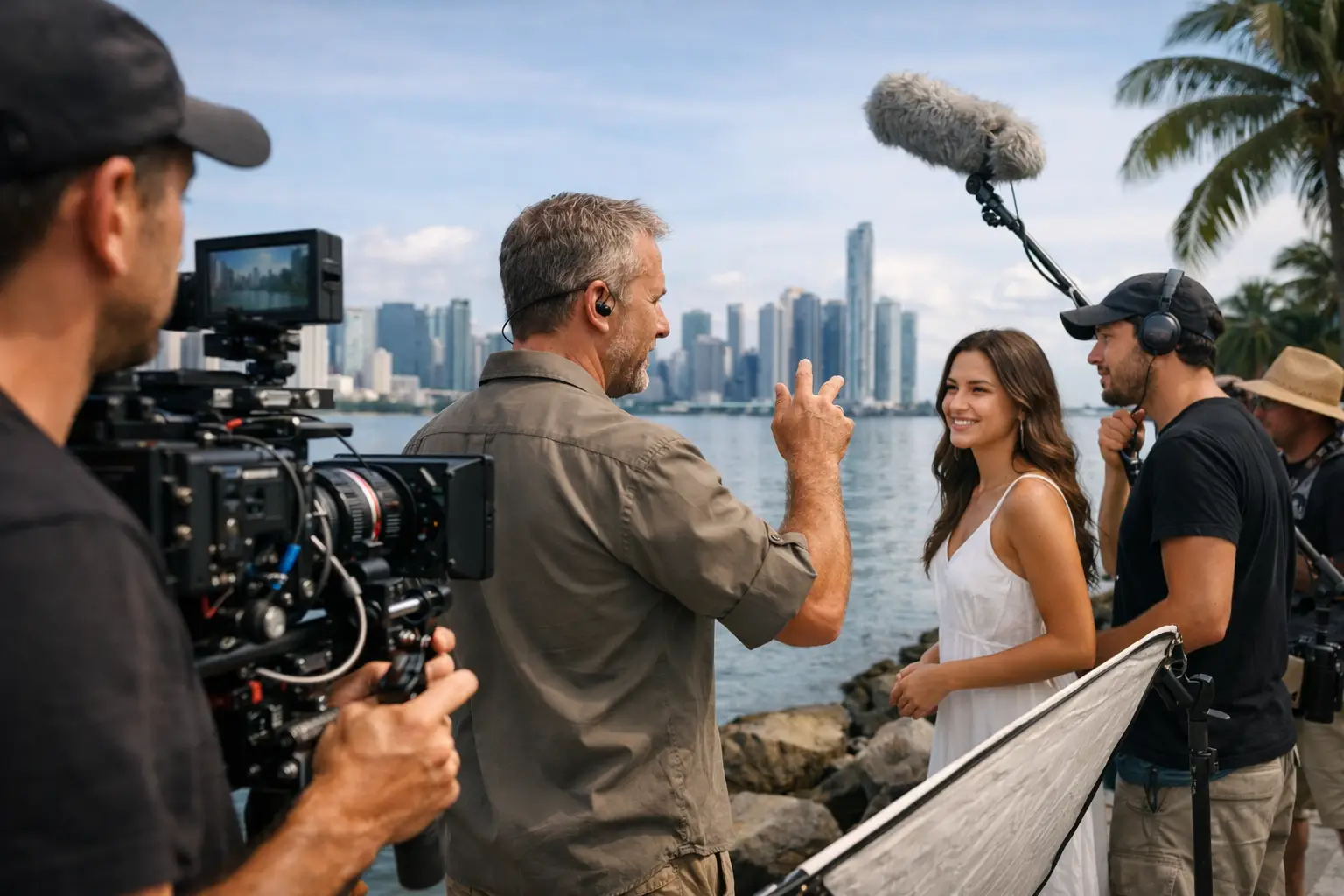
A missed permit window in Casco Viejo, a customs delay on key gear, a location that looks perfect in photos but fails on access – these are the problems that derail international productions in Panama. That is exactly where fixer services for Panama shoots stop being a nice-to-have and become a production necessity.
For overseas producers, Panama can be unusually efficient when the local side is handled properly. The country offers visual range, experienced crew, strong connectivity, and a competitive rebate environment. But none of that helps if the production loses time to avoidable local issues. A good fixer is not just a contact with a phone list. The right fixer works as your in-country production partner, protecting schedule, budget, compliance, and decision-making from prep through wrap.
What fixer services for Panama shoots actually cover
The term gets used loosely, and that creates confusion. Some teams think a fixer is only there to arrange permits or translate on set. In reality, serious fixer services for Panama shoots usually sit much closer to line production support. They bridge the gap between a foreign production’s expectations and the local operating reality.
That starts with permits and permissions. In Panama, requirements can vary by municipality, public authority, location type, and production profile. A beach setup, drone operation, road control request, or filming day in a historic district each brings different layers of coordination. An experienced fixer identifies what is required early, not after the crew is booked and flights are locked.
It also includes location scouting and practical location assessment. Plenty of places look cinematic in a deck. Fewer work when you factor in parking, basecamp access, power, crowd control, weather cover, local sensitivities, and permit timelines. A useful fixer does not just send pretty options. They flag the trade-offs before they become expensive.
Crew coordination is another core area. Panama has strong local professionals across camera, grip, electric, production management, art, transport, and field support. Still, crew quality and fit matter. A commercial with agency oversight needs one type of setup. A docu-follow unit moving fast through multiple regions needs another. A fixer with real production depth staffs to the project instead of filling positions generically.
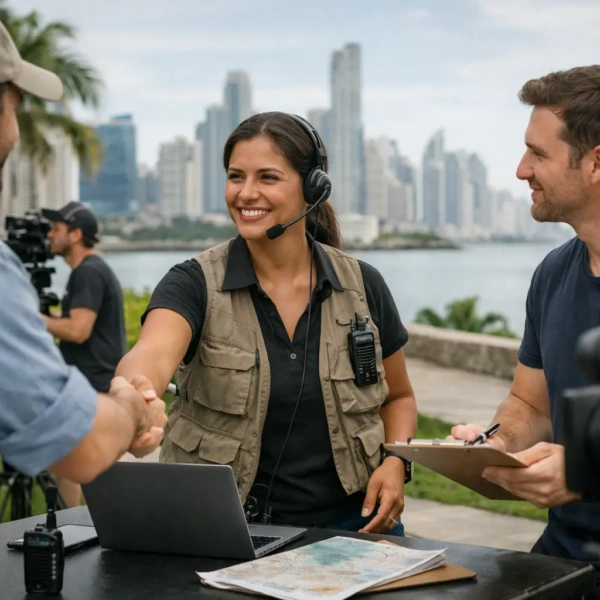
Then there is logistics – the part that usually determines whether the shoot feels controlled or chaotic. Airport handling, hotel blocks, unit moves, security, local transport, equipment sourcing, carnets, call sheet distribution, cash flow management, and on-the-ground troubleshooting all sit inside the fixer’s lane if the service is built properly.
Why international productions need local control in Panama
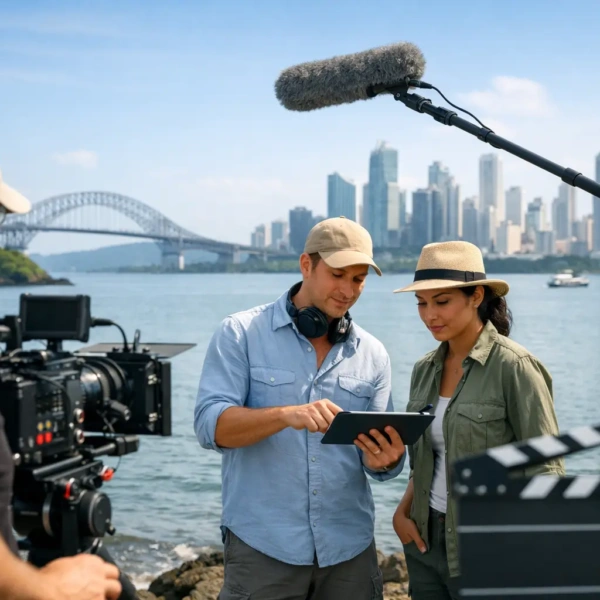
Panama is production-friendly, but it is not friction-free. That distinction matters. The country is compact compared with many regional alternatives, and it offers a rare mix of urban skylines, tropical coastline, islands, rainforest, colonial architecture, and industrial zones within manageable travel windows. That is a real operational advantage.
But foreign crews still face the usual international production pressures. Timelines are compressed. Stakeholders want certainty before greenlighting travel. Insurance, labor, customs, municipal permissions, and local vendor reliability all need validation. The cost of getting those details wrong is higher than the cost of hiring the right local partner at the start.
This is especially true for producers trying to maximize Panama’s 25% cash rebate incentive. Incentives can improve the financial picture, but only if the production is structured correctly and documentation is handled with discipline. A local fixer with production services capability helps align the operational side with the incentive side. That matters because a rebate is only valuable when the spend qualifies and the paperwork holds up.
The difference between a basic fixer and a real production partner
Not every fixer service operates at the same level. Some are useful for journalism, lightweight documentary work, or a quick field shoot with minimal exposure. Others are built to support commercials, branded campaigns, TV productions, and feature work with full production demands.
The difference usually comes down to systems, not enthusiasm. Can they budget accurately in local conditions? Can they source vetted crew quickly? Can they escalate permit issues before they affect the schedule? Can they manage legal and administrative requirements without guesswork? Can they support multiple departments at once while keeping the client side informed?
This is where a full-service company has a clear advantage over a solo fixer model. If your production needs permitting, location work, payroll support, equipment coordination, transport, and daily field execution, you do not want these functions floating across separate local contacts. You want one accountable team.
For many international clients, that is the practical reason to work with an established provider such as 40 Grados Producciones. The value is not only local access. It is having one operational center that can turn a foreign brief into an executable Panama shoot without forcing the visiting production team to build a local network from scratch.
How fixer services for Panama shoots protect the budget
Producers often look at local support through a line-item lens. That can be shortsighted. The better question is whether your fixer reduces the total cost of execution.
The answer is usually yes, if the service is experienced and involved early enough. A strong fixer helps avoid overpaying for the wrong locations, losing days to incomplete permits, carrying unnecessary travel costs, misjudging turnaround times, or booking crew and gear that do not match the production approach. They also help the production buy locally with confidence, which matters when you are trying to control imported equipment costs and avoid avoidable freight exposure.
There are trade-offs, of course. The cheapest local option may handle a straightforward one-day interview setup just fine. But once the production adds public locations, moving vehicles, talent logistics, drone work, or a multi-day schedule, underbuilt local support becomes expensive fast. Budget protection in Panama usually comes from precision, not from cutting the local layer too thin.
What to look for before hiring a Panama fixer
Start with relevant production experience, not generic destination knowledge. A fixer can know Panama well and still be a weak fit for a commercial agency shoot or a broadcaster deadline. Ask what kinds of productions they support most often and how they handle scope changes once prep is underway.
You should also look for transparency around permits, timelines, crew sourcing, and risk. If the answers sound too easy, that is usually a warning sign. Good local partners know where things move fast and where they do not. They give you workable options, not blanket assurances.
Communication style matters more than many clients expect. International shoots move on updates, approvals, and confidence. You need a fixer who can communicate clearly with US producers while also managing local authorities, vendors, and crew in real time. Fast response is helpful. Accurate response is what saves the day.
Finally, look at whether the fixer is equipped to support both prep and execution. Some providers are strong before the shoot and weaker once the crew lands. Others are reactive in the field but disorganized during budgeting and planning. The strongest setup is consistent end-to-end support.
Panama works best when the local side is built right
Panama offers a lot to international productions – visual diversity, efficient travel distances, skilled crew, and financial upside. But those advantages only translate on set when somebody local is actively controlling the variables.
That is the real value of fixer support here. It is not about having a local helper. It is about having an experienced team that can convert opportunity into a working production plan, keep the shoot compliant, and solve problems before they become line items. If you are bringing a project into Panama, the smartest move is usually the simplest one: put local execution in capable hands early, and give your production room to focus on the screen.