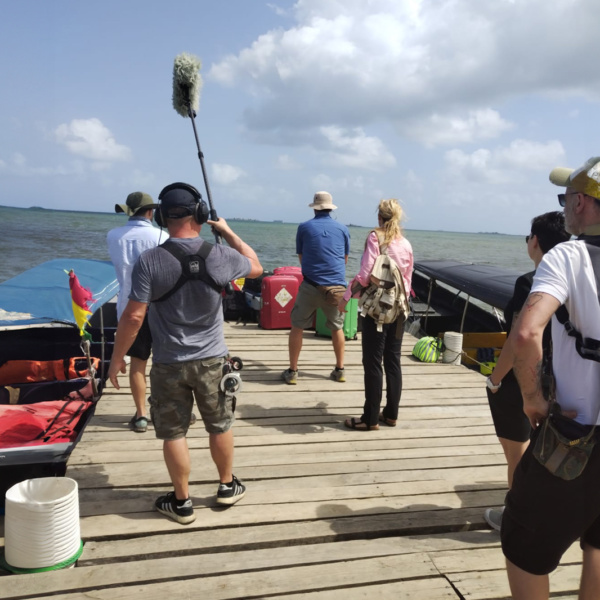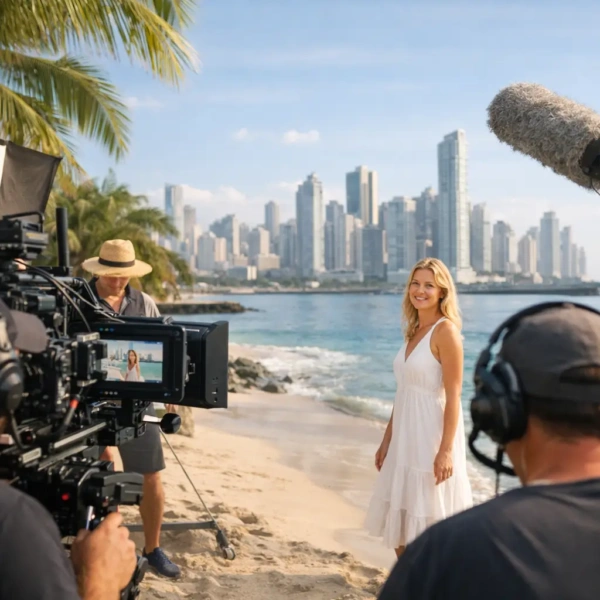
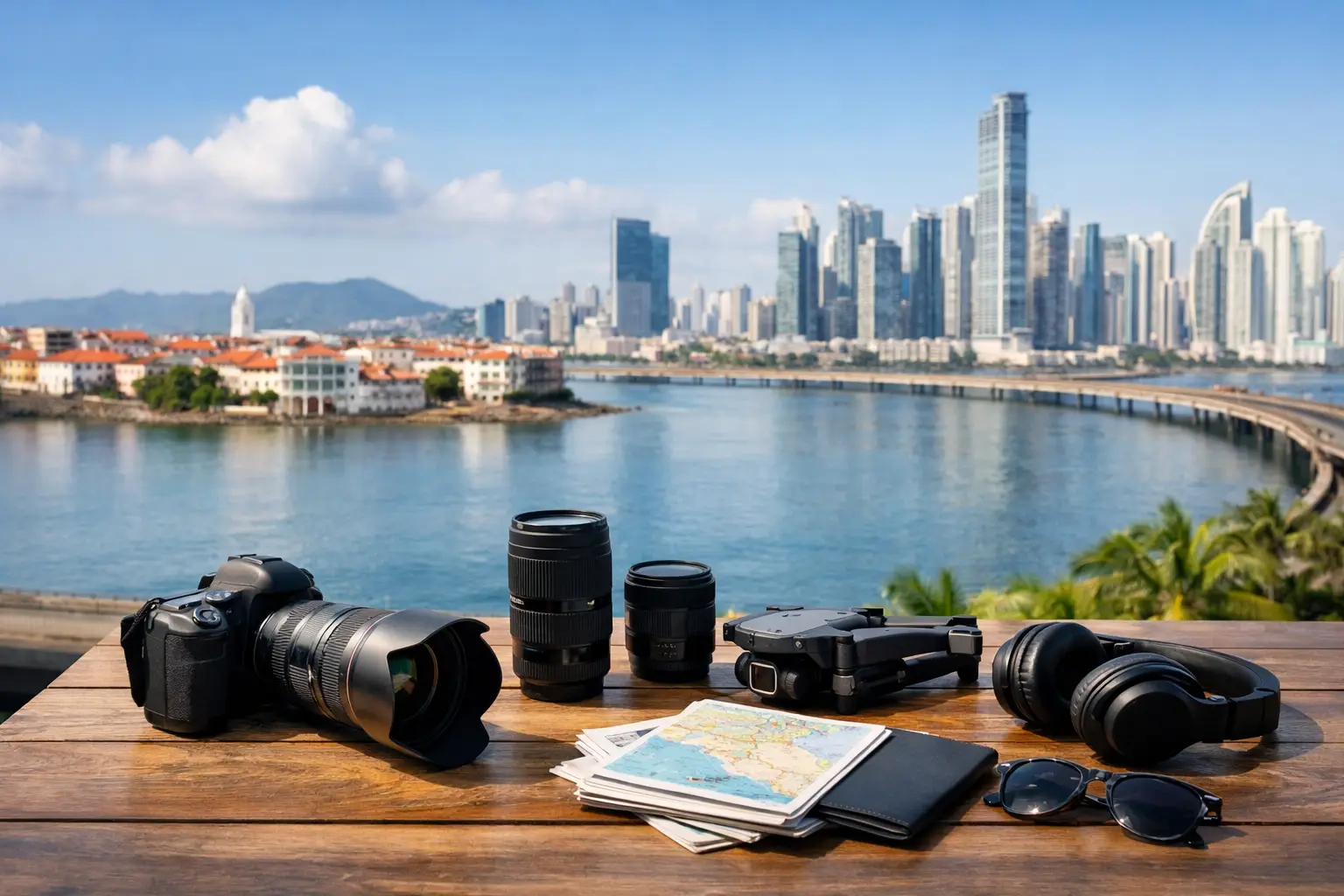
A crew lands on a Sunday, customs holds two cases, a permit needs a location revision, and call time is still 6:00 a.m. That is where an international shoot prep guide stops being a planning document and starts becoming risk control. If you are bringing a production into Panama, prep is not just about paperwork. It is about protecting schedule, budget, and creative intent before the first truck rolls.
Panama can be a highly efficient production base for film, television, commercials, branded content, and unscripted work. It offers strong visual range in a compact geography, experienced local crews, competitive operating costs, and a 25% cash rebate for qualifying productions. But those advantages only pay off when prep is handled with local accuracy. The difference between a smooth shoot and an expensive one usually happens long before day one.
What an international shoot prep guide should actually cover
A useful international shoot prep guide is not a generic checklist pulled from a global template. It needs to reflect the country you are entering, the type of production you are mounting, and the pace at which decisions need to be made. A commercial with a five-day window has different pressure points than a feature with company moves, night work, and imported gear.
For Panama, prep usually centers on six areas: permits, locations, crew, equipment, legal compliance, and logistics. None of these work in isolation. A location affects permit timing. A permit affects police support and traffic control. Crew availability affects schedule design. Gear choices affect customs, power planning, and budget. If one piece is addressed late, the knock-on effect reaches every department.
That is why experienced foreign producers typically look for a local production partner early, not after the creative is locked. Early local input can save money, but more importantly, it can stop unrealistic assumptions from getting built into the schedule.
Start with the shoot model, not the wish list
Before you start sourcing locations or booking flights, define the actual operating model of the shoot. Are you traveling with a lean key team and building locally? Are you importing department heads only? Are you bringing specialty gear or relying on local inventory? These decisions shape almost every line of prep.
Panama often works best when productions bring core creative decision-makers and key technical leads, then crew up locally across camera support, grip, electric, art support, transport, locations, production coordination, and field logistics. That is not a fixed rule. Some productions need to travel heavier, especially if they have specialized workflows or agency-driven approvals. But many international teams overspend by importing roles that can be staffed efficiently on the ground.
The same applies to locations. A script may call for multiple countries or visual worlds, but Panama can often double for more than clients expect. Urban skylines, historic districts, tropical beaches, rainforest, industrial zones, islands, and rural roads can all be accessed within relatively practical distances. The right prep question is not just, “Can we find it?” It is, “Can we find it in a way that keeps company moves manageable and permit complexity under control?”
Permits and legal planning need a real lead time
Permits are one of the first areas where international productions misjudge pace. Some assume a quick turnaround because Panama is production-friendly. Others overcomplicate the process because they are used to more restrictive jurisdictions. The reality sits in the middle. Panama can be efficient, but permits still depend on location type, municipal requirements, public space usage, traffic impact, drones, and the size of the production footprint.
A small branded shoot with minimal public disruption is one thing. A commercial with street control, picture vehicles, and visible talent in a high-traffic area is another. Beaches, heritage zones, government-adjacent spaces, aerial work, and protected natural areas can all require more coordination. If the production includes minors, stunts, weapons props, marine activity, or extensive public interaction, legal review should happen early.
This is also where foreign productions need to be careful about assuming that a document from home will translate directly. Insurance language, company registration details, customs documentation, employment structures, and production responsibility can all require local interpretation. Clean prep means aligning your legal setup with how the shoot will actually function in-country, not just how the production office describes it internally.
Budgeting for Panama means budgeting for movement
Panama is cost-competitive, but low-friction does not mean zero-friction. The smartest budgets account for movement, timing, and access. A location that looks inexpensive on paper may become costly if it adds marine transport, generator needs, security, weather cover, or overtime exposure because of travel windows.
This is especially relevant for international teams used to larger countries where regional moves are expected. In Panama, the compact scale is a major advantage, but only if the schedule is built around realistic transfer times, crew call logic, and daylight conditions. Trying to stack too many contrasting locations into one shooting day usually creates hidden costs in transport, resets, and meal penalties.
The stronger approach is to budget by production behavior. How many unit moves are actually sustainable? Which scenes require imported equipment? Where can local sourcing reduce freight and customs pressure? What support needs to be locked in for weather contingency? A line budget that reflects local operating conditions is far more reliable than a converted budget from another territory.
Crew and vendor strategy can make or break efficiency
The strongest international shoots in Panama are usually the ones that respect local crew structure from the start. That means clear department communication, realistic booking timelines, and a production office that understands who needs to be involved at prep stage versus shoot stage.
A common mistake is waiting too long to confirm key local heads because the foreign team is still finalizing travel. By the time the schedule tightens, the best-fit crew may already be booked, especially during active commercial periods or overlapping factual production windows. Early crew mapping gives you more than availability. It gives you practical input on location viability, turnaround expectations, local sourcing, and what should be adjusted before you commit.
Vendor strategy matters just as much. Equipment support, transport, power, art sourcing, marine coordination, security, and unit services all work better when managed as one operational system rather than a series of disconnected bookings. Producers often focus on rate cards first. The better question is whether your vendors can support the actual complexity of the shoot. A cheaper option that cannot scale under pressure is rarely cheaper by wrap.
Use the rebate as a planning tool, not a late-stage bonus
Panama’s 25% cash rebate is one of the market’s strongest advantages, but it should not be treated as an afterthought. If a production wants to benefit fully, the structure needs to be considered during prep, not after principal photography is already in motion.
Eligibility, spend categories, documentation standards, vendor paperwork, and local compliance all matter. The rebate is valuable, but it rewards organized productions. If approvals, accounting practices, or contracting are handled loosely, the same incentive that looked attractive in early conversations can become harder to realize in practice.
The best way to think about the rebate is simple: it is a financial upside built on disciplined prep. When production services, budgeting, legal setup, and local spend are aligned from the start, the incentive becomes a genuine strategic advantage rather than a hopeful line in a pitch deck.
The best international shoot prep guide includes contingency
International productions usually plan for visible risks like weather delays or customs checks. They are less likely to plan for the quieter issues that create cumulative damage – a location owner changing terms, a delayed vehicle release, an underestimated drive time, a permit revision that affects unit base, or a mismatch between imported kit and local power needs.
Contingency planning in Panama should be practical, not dramatic. Build backup options for weather-sensitive locations. Confirm alternatives for access-heavy shoots. Check whether key locations have hold capacity, not just availability. Review customs timing against actual arrival patterns, especially if gear and crew do not land together. If drones are part of the visual plan, prepare for the possibility that a substitute shot strategy may still be needed.
This is where a one-stop local partner adds real value. Good prep is not just securing services. It is pressure-testing the entire shoot plan against how production really moves on the ground. That includes knowing when to push for a permit, when to shift a call, when to simplify a company move, and when to protect the day by changing the plan early instead of reacting late.
At 40 Grados Producciones, that is the work behind the work. For international producers, the goal is not simply to get a shoot into Panama. It is to get it up and running with control, compliance, and the least possible drag on schedule and budget.
If you are scoping Panama for an upcoming project, the smartest prep starts with honest questions about what the shoot needs to do each day. Once that is clear, the country can move very fast in your favor.