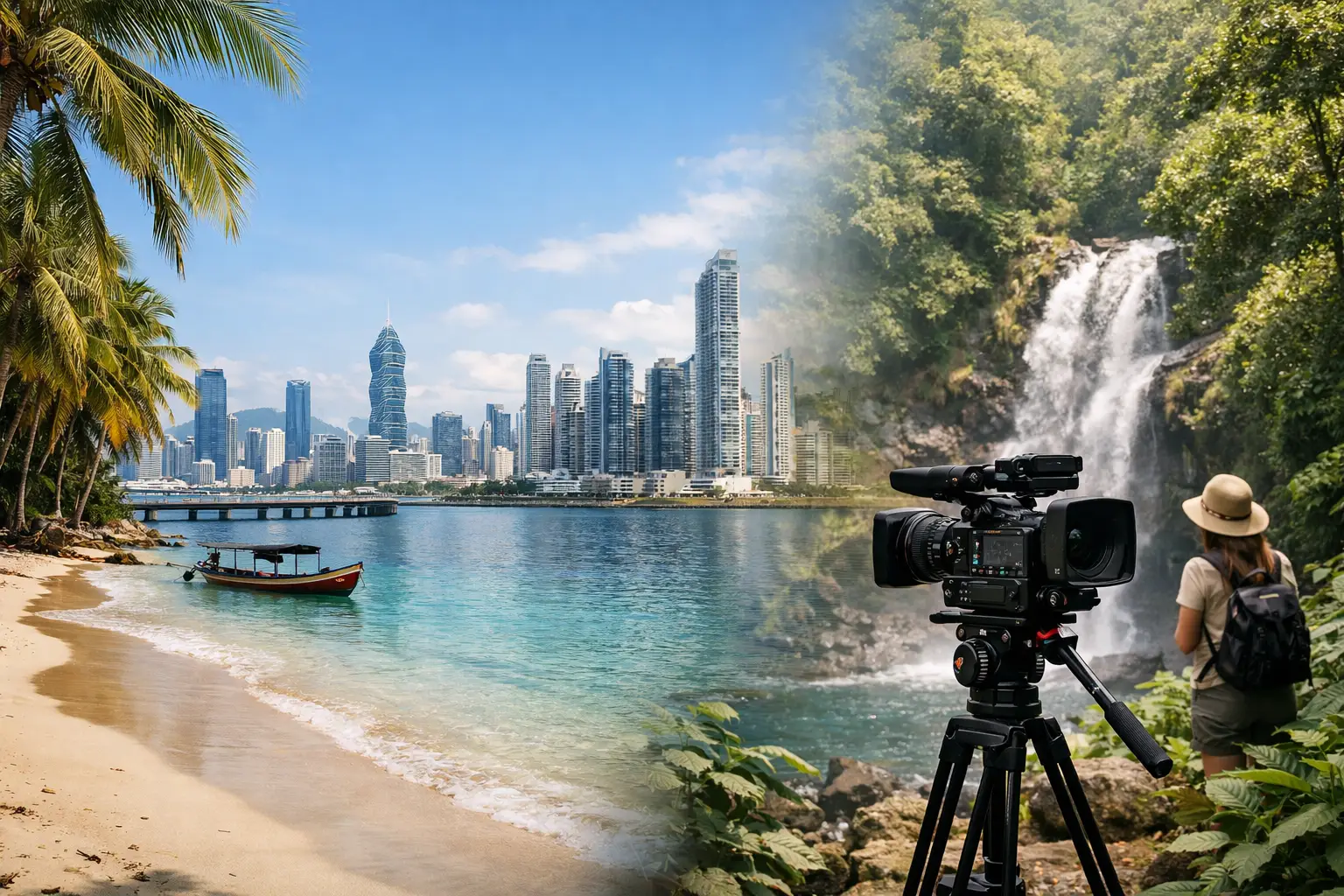
A car spot needs a clean road, a luxury campaign needs controlled architecture, and a beverage shoot may need tropical color within an hour of basecamp. The best Panama locations for commercials are not simply beautiful backgrounds. They are practical production assets: visually distinct, accessible, crew-supported, and viable within a real schedule.
Panama gives commercial teams an unusual range of looks in a compact geography. Modern city, colonial streets, rainforest, Pacific surf, Caribbean water, mountain air, and industrial infrastructure can all support a single campaign. The key is choosing locations based on the creative treatment, crew movement, permit requirements, weather exposure, and the amount of control the production needs.
Best Panama Locations for Commercials by Visual Need
Panama City skyline and business districts
Panama City is the strongest choice for contemporary lifestyle, finance, technology, automotive, fashion, and hospitality work. The skyline delivers a dense mix of towers, waterfront views, elevated roads, polished interiors, and urban energy that can read as Latin American, international, or aspirational metropolitan depending on the frame.
Costa del Este is especially useful for corporate architecture, clean streets, premium vehicles, and modern residential looks. Punta Pacifica and the coastal boulevard offer dramatic high-rise backgrounds and Bay of Panama views. Casco Viejo provides a different urban register altogether: textured facades, plazas, balconies, boutique hotels, and walkable streets with strong production value.
The trade-off is control. City shoots require careful planning around traffic, pedestrian activity, building access, parking, street closures, and sound. A rooftop or private property can offer more control than a public street, while still delivering the city scale an agency may be looking for.
Casco Viejo for heritage, fashion, and premium lifestyle
Casco Viejo is one of Panama’s most versatile commercial districts because it can play elegant, historic, tropical, European-influenced, or distinctly Latin American. Its cobblestone streets, restored colonial buildings, churches, courtyards, terraces, and waterfront edges work well for fashion editorials, spirits, travel, jewelry, beauty, and luxury lifestyle campaigns.
It is also a location where scouting matters more than broad descriptions. One block may be ideal for a controlled beauty setup, while another may be too narrow for a camera vehicle, lighting package, or generator. Access times, neighborhood activity, hotel operations, and municipal restrictions should be confirmed before the creative locks a hero shot.
For productions needing a polished old-city environment without moving far from the capital’s hotels, rental houses, and crew base, Casco Viejo is a highly efficient choice.
Pacific beaches for sport, resort, and sun-driven campaigns
The Pacific coast offers broad beaches, surf breaks, rocky shorelines, beach clubs, and resort environments within practical reach of Panama City. These locations suit swimwear, sportswear, automotive, outdoor gear, tourism, food and beverage, and family travel campaigns.
Coronado, Punta Chame, San Carlos, and Playa Venao each provide different production conditions. Punta Chame is valued for its open horizon, wind-driven action, and wide expanses of sand. Coronado offers developed infrastructure and accommodation options. Playa Venao has a stronger surf and youth-lifestyle identity, but the travel time and overnight logistics should be built into the schedule.
Pacific beaches are visually reliable when planned around the tide chart and sun path. The same beach can look expansive at low tide and significantly narrower at high tide. Wind is another major factor, especially for dialogue, light modifiers, drone work, wardrobe, and product setups. For a stills-heavy campaign, this may be manageable. For a dialogue-led spot, a protected location or controlled sound plan may be the better call.
Caribbean islands and clear-water escapes
For turquoise water, island lifestyle, sailing, and remote tropical imagery, the Caribbean side delivers a markedly different look from the Pacific. Bocas del Toro is a proven option for resort, travel, swim, adventure, and nature-led commercials. It offers overwater elements, lush vegetation, colorful local character, beaches, and water access that can create several campaign looks in one area.
The visual upside comes with logistical considerations. Equipment movement, boat transfers, lodging capacity, weather windows, power needs, and crew calls must be planned earlier than they would be for a city-based production. A leaner unit can move quickly. A large agency shoot with extensive grip, art, wardrobe, and talent support needs a disciplined freight and transport plan.
For brands that need a true Caribbean identity rather than a generic beach backdrop, the additional planning is often justified.
Rainforest, jungle roads, and river environments
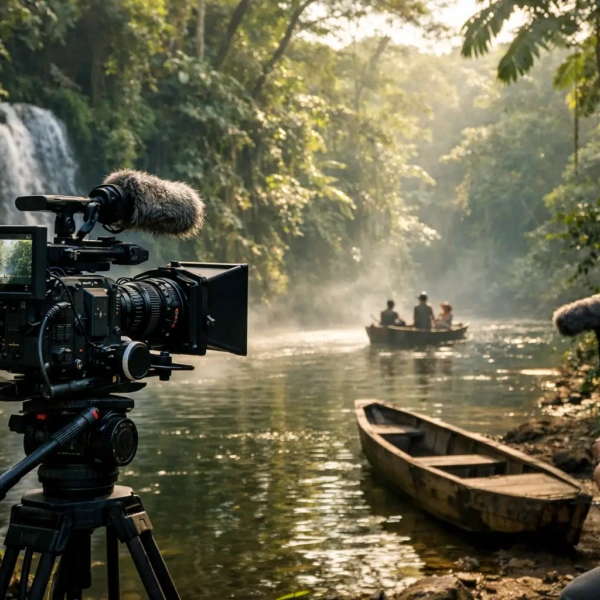
Panama’s rainforest is not a distant expedition location. Dense tropical vegetation, rivers, canopy, and jungle roads can be reached from the capital with the right scouting strategy. This makes the country competitive for outdoor brands, SUVs, beverages, adventure travel, conservation messaging, music videos, and cinematic product films.
Soberania National Park and the areas around Gamboa are particularly useful for productions that need rainforest scale while maintaining access to city-based accommodation, equipment, and crew. The frame can move from a polished urban environment to deep green vegetation in the same production day, depending on the schedule and permit setup.
Rainforest work requires realistic expectations. Humidity affects equipment and wardrobe. Rain can arrive quickly. Insect control, covered video village areas, backup power, ground protection, safety staffing, and weather contingencies are part of the production plan, not extras. The result is worth it when the campaign needs a landscape that feels alive rather than dressed.
The Panama Canal and industrial scale
The Panama Canal area offers one of the country’s most distinctive visual signatures. Locks, ships, waterways, bridges, rail, port activity, and large-scale infrastructure can support logistics, engineering, financial services, shipping, technology, and corporate campaigns. It is also useful for commercials that need a sense of movement, global connection, or human achievement.
Not every canal-facing image is simple to secure. Areas under canal authority, active industrial zones, ports, and operational facilities have their own rules, safety protocols, access procedures, and lead times. Productions should identify early whether the creative requires a public viewpoint, a private location with a canal view, or direct operational access.
A well-planned alternative can sometimes create the same impression with fewer restrictions. This is why local scouting should begin before the agency builds its entire treatment around a single restricted angle.
Highlands, coffee country, and cool-climate landscapes
Boquete, Volcan, and the Chiriqui Highlands give Panama a look many international clients do not expect: green mountains, mist, cultivated landscapes, coffee farms, rivers, stone textures, and cooler light. These areas work for premium food and beverage, wellness, outdoor apparel, family travel, vehicles, and campaigns that need a fresh, elevated natural setting.
The highlands are best treated as a dedicated production block rather than a quick add-on to a Panama City shoot. Travel, accommodation, equipment transport, and weather all influence the schedule. In return, the production gets visual separation from the tropical coast and city, often without leaving the country.
How to Choose the Right Panama Commercial Location
The right location is the one that protects the creative and the production day at the same time. A visual reference may point toward an isolated beach, but a private resort beach could be the smarter option if the job needs wardrobe changes, catering, controlled holding, power, restrooms, client monitoring, and a fast company move.
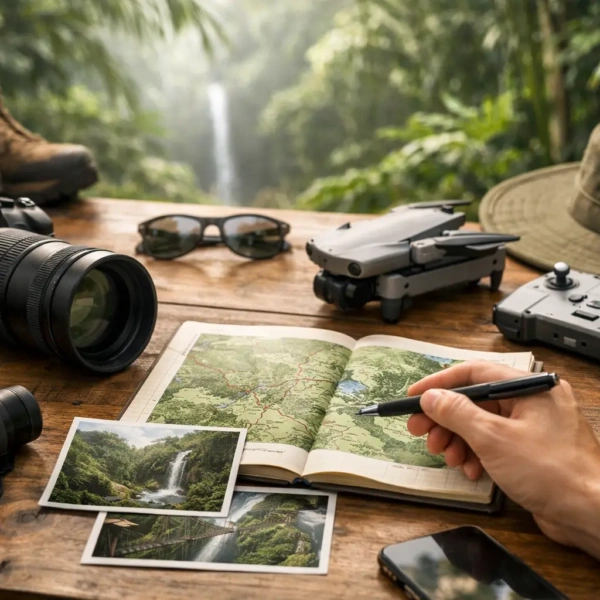
Start with the essential frame: city, heritage, beach, jungle, infrastructure, or highlands. Then identify what cannot be compromised, such as a drone shot, direct sound, water access, a hero vehicle, child talent, sunrise timing, or private control. Those requirements determine whether a location is genuinely viable.
Permits should be addressed before final tech scouting. Public spaces, protected areas, historic zones, aerial filming, roads, and certain commercial properties can involve separate approvals. Requirements vary by location and production scale, so an early permit assessment prevents costly changes after talent, travel, or equipment have been booked.
Budget also improves when the location strategy is tight. Panama can provide multiple looks efficiently, but trying to capture city, Caribbean, jungle, and highlands in three days creates unnecessary travel and risk. Group locations by region, reserve weather cover options nearby, and build the schedule around the most restricted or time-sensitive setups first.
For international teams, a local production partner should turn these variables into a workable plan: location options that match the treatment, realistic permit paths, crew and equipment solutions, transportation, accommodation, customs coordination when needed, and on-set execution. 40 Grados Producciones approaches location work from that operational perspective, because the most impressive scout image only matters if the production can deliver it on time and on budget.
Panama is most effective when the location plan is not a collection of postcard views, but a deliberate production design. Choose a small number of strong, compatible environments, protect the schedule around weather and access, and let each location earn its place in the final film.