
A missed permit window, an unreliable vehicle vendor, or the wrong local hire can turn a well-funded shoot into an expensive delay. That is why international production support Panama is not just a convenience for foreign producers. It is the difference between arriving with a plan and actually getting the project made on schedule, on budget, and in compliance.
Panama is attractive for obvious reasons. It offers tropical beaches, dense jungle, modern skyline, colonial streets, industrial zones, mountain terrain, and Caribbean and Pacific access in one compact country. Travel times between looks are manageable, crew rates are competitive, and the country’s 25% cash rebate has made Panama more compelling for studio, broadcast, branded, and unscripted projects. But those advantages only pay off when the production has strong local execution.
What international production support in Panama actually covers
For an overseas producer, production support is the operating layer that keeps the shoot moving. It starts before anyone boards a flight. Script breakdowns, preliminary budgets, permit pathways, customs planning, local vendor sourcing, hotel blocks, transportation routes, and crew availability all need to be mapped early, especially if the production has fixed air dates, talent windows, or agency approvals.
Once prep starts, the work becomes more specific. You need legal clarity on what can be filmed, where, and under what authority. You need location options that match the brief without creating hidden access costs. You need local department heads and crew who understand international working standards. You need a realistic schedule built around traffic, weather patterns, public access, and turnaround times. On paper, these sound straightforward. In practice, this is where foreign productions usually lose time.
The strongest local partner functions as a one-stop solution. That means permits, location scouting, crew coordination, equipment support, logistics, legal guidance, fixers, and on-the-ground management are handled as one system rather than as separate vendors trying to interpret the same production plan.
Why Panama works for international shoots
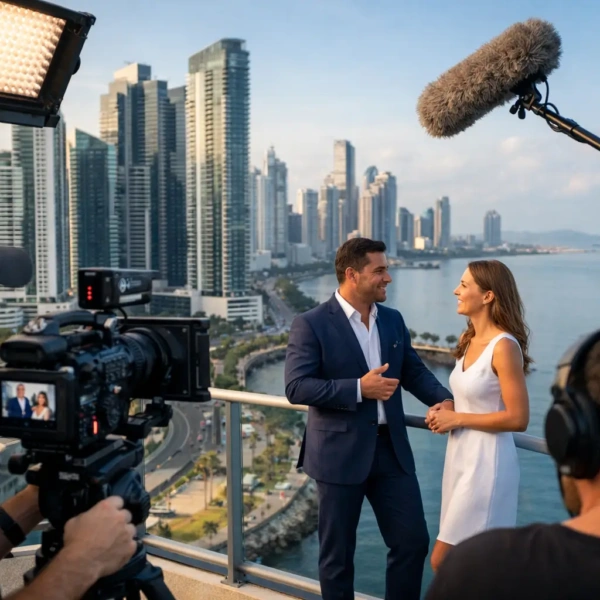
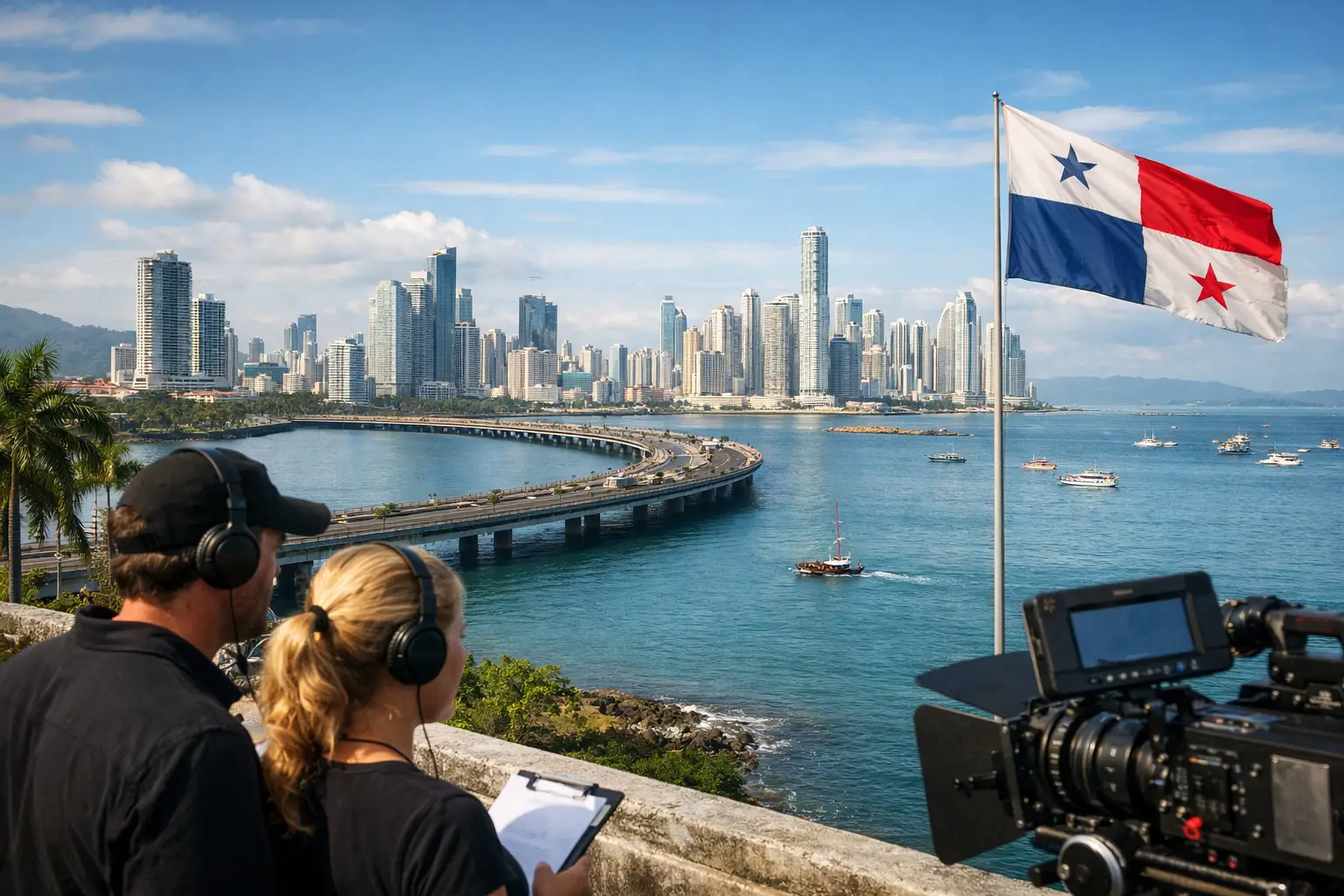
Panama has a rare production advantage. It can stand in for multiple countries and visual worlds without requiring long domestic transfers. A commercial can capture urban luxury in Panama City in the morning and shift to rainforest coverage or coastal setups with relatively short travel later in the day or next morning, depending on the schedule.
That range matters because it reduces company moves, extra hotel nights, and duplicated transport costs. For producers managing tight board-approved budgets, fewer moves often mean more shooting value on screen.
The country also benefits from an experienced production base. Panama has supported commercials, branded campaigns, documentaries, television, and feature work for years. Local crews are accustomed to servicing foreign teams that need efficiency, confidentiality, and clear communication. That does not mean every job should be staffed the same way. A reality series, luxury brand campaign, and scripted feature each need different crew structures and different prep intensity. Good support means matching the local build to the project rather than forcing a standard package.
Then there is the incentive conversation. Panama’s 25% cash rebate is a serious factor for many productions, but it should be approached carefully. Incentives are valuable when the qualifying spend, paperwork, timing, and local compliance are managed correctly. They are less useful when producers treat the rebate as automatic. A local production partner should help evaluate whether the incentive is worth pursuing for your specific budget level and schedule, and what documentation standards are required from day one.
The areas where foreign productions usually need help
Permits are usually the first pressure point. Different municipalities, public agencies, protected areas, aviation restrictions, police coordination needs, and private property rules can affect the shooting plan. Some locations are straightforward. Others require lead time, local negotiation, or adjusted production methods. If a project includes drones, road control, weapons props, marine work, or high-profile public setups, permit strategy needs to begin early.
Crew sourcing is the next major variable. Many foreign producers arrive with key creatives and heads of department, then build local support around them. That can work well, but only if the local crew is vetted for pace, technical capability, and experience with international reporting structures. The cheapest crew quote is rarely the best value if the team cannot hold schedule under pressure.
Logistics become critical once multiple departments are moving at once. Transportation, talent handling, airport coordination, equipment delivery, unit moves, catering, security, and lodging all interact. When one part slips, the whole day absorbs the cost. This is particularly true for location-heavy schedules, remote access shoots, and productions carrying international cast or agency stakeholders who expect a controlled environment.
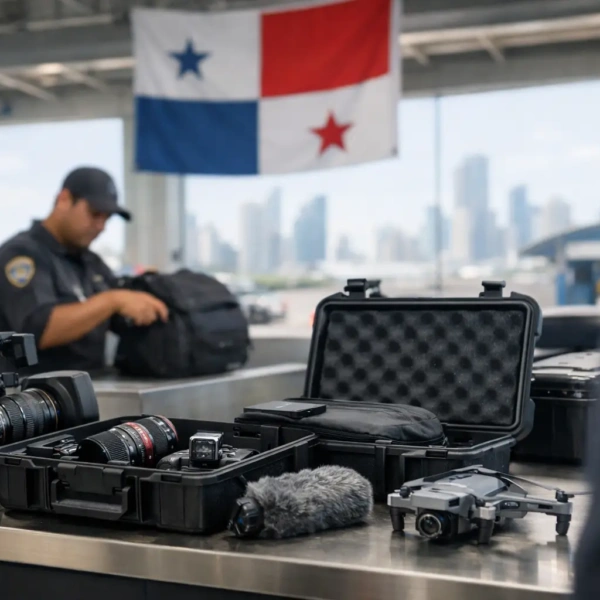
Customs and equipment handling can also create avoidable friction. Some productions ship specialty gear. Others source locally and supplement only where needed. There is no single right answer. Shipping can preserve technical continuity, while local sourcing can reduce freight cost and customs exposure. The right approach depends on your package, schedule tolerance, and insurance requirements.
International production support Panama and the rebate question
A lot of interest in international production support Panama starts with the 25% rebate, and that makes sense. For the right project, it can materially improve the finance plan. But experienced producers know the rebate should support the production strategy, not define it.
A project still needs the right local fit. If your schedule is too compressed for proper approvals, if your spend does not qualify cleanly, or if the administrative burden outweighs the benefit, the smartest path may be to focus on production efficiency first. Good local support means giving you a realistic assessment, not just selling the upside.
Where the rebate does fit, disciplined tracking matters. Vendor paperwork, payment trails, local spend categorization, and timeline control all affect the outcome. That is why the finance conversation should happen alongside production planning, not after the shoot is wrapped.
How the right local partner protects the budget
Budget protection is not only about getting lower rates. It is about avoiding false economies. A low day rate on a location that requires major access work, extended transport, police support, or weather downtime can become more expensive than a higher-priced option that shoots efficiently.
The same applies to crew and logistics. Saving money by underbuilding transport, skimping on location management, or delaying permit applications tends to show up later as overtime, reshoots, or lost setups. Strong local production support helps you see those trade-offs early.
This is where an experienced Panama service company earns its place. Producers need real numbers, realistic timing, and direct advice on what should be imported, what should be hired locally, and what should be redesigned for the market. That guidance is especially valuable for first-time shoots in the country, but even repeat international producers benefit from current local intelligence because regulations, vendors, and access conditions can shift.
What to look for in a Panama production services partner
The first test is operational credibility. Can the team build a practical shooting plan, not just a pitch deck? Producers should look for a partner that understands permit pathways, knows the location landscape, has access to dependable crew, and can speak clearly about legal and budget implications.
The second test is responsiveness under pressure. International shoots move fast, and changes happen late. The local partner should be able to rework schedules, secure alternates, solve access issues, and keep communication tight across departments.
The third is honesty. Not every location is worth the permit trouble. Not every remote setup is worth the weather risk. Not every rebate application makes financial sense. You want a team that gives a producer-level answer, not just a service-level yes.
That is the role companies like 40 Grados Producciones are built to fill – practical local leadership for foreign productions that need control, compliance, and a reliable path from prep through wrap.
Why producers choose Panama again after the first shoot
The first project in a new country is usually about risk management. The second is about efficiency. Once a producer sees how much visual range, cost control, and crew value Panama can offer, the market becomes easier to justify for repeat work.
That said, repeat success is rarely about the destination alone. It comes from having the right local system around the production. Good support turns Panama from an interesting option into a dependable production base for commercials, television, docs, branded content, and features.
If you are planning a shoot here, the smart move is to treat local production support as a core production decision, not an afterthought. The right team will not just help you film in Panama. They will help you make better decisions before the first call sheet is sent.