
If you are budgeting a Latin American shoot and comparing Panama vs Mexico production costs, the cheapest line item on paper is not always the most cost-effective production in practice. What matters is the total cost of execution – crew rates, permit timelines, travel complexity, location movement, tax incentives, and how much local support you need to keep the schedule intact.
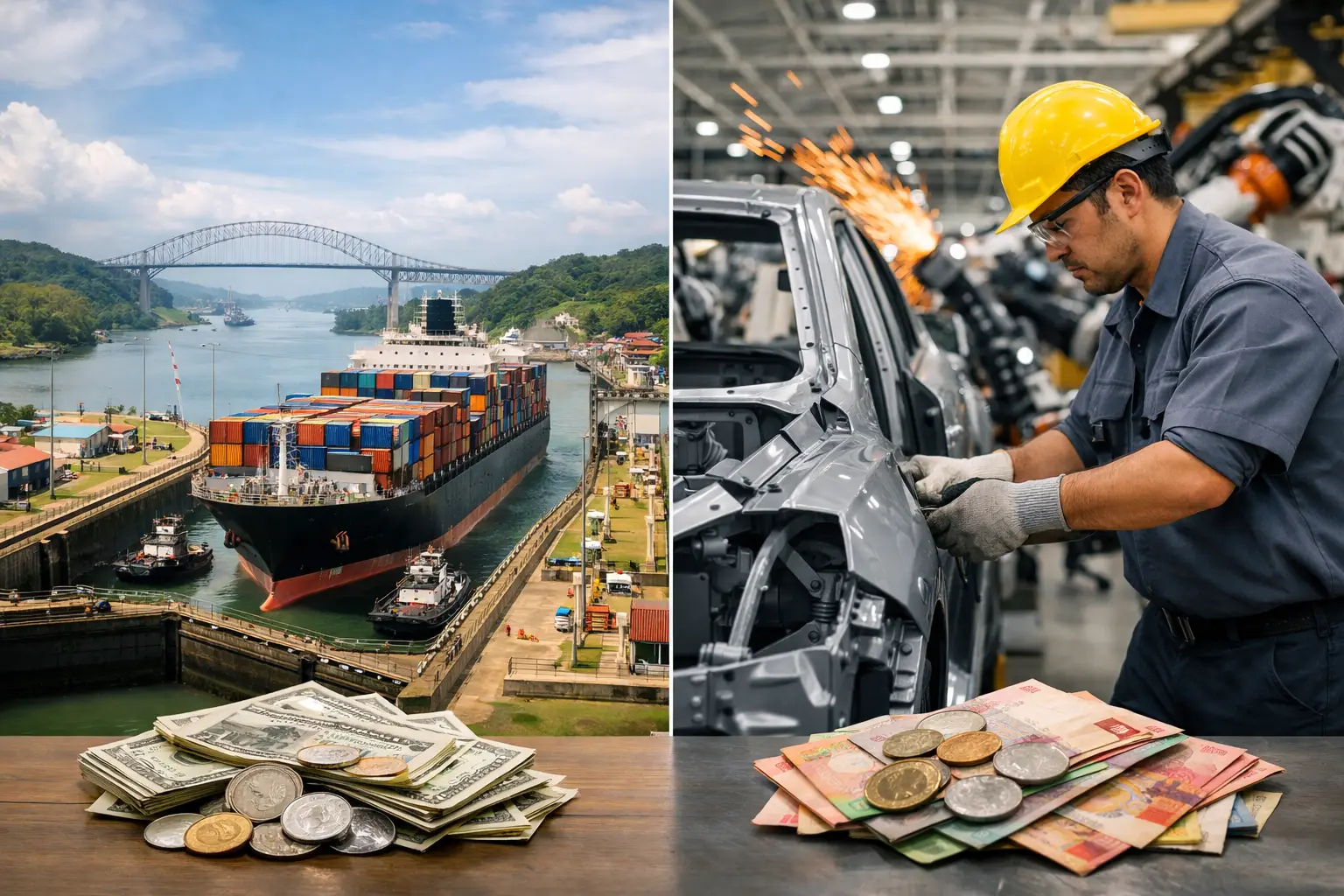
For international producers, Mexico and Panama both make sense, but they do not solve the same production problem. Mexico is a larger, deeper market with major crew capacity and a long track record across features, commercials, and series. Panama is a smaller, faster-moving production environment that can be highly efficient for overseas teams that want strong visual range, lighter operational friction, and access to a 25% cash rebate.
Panama vs Mexico production costs: the real budget question
The right question is not which country is universally cheaper. It is which country gives you the best cost-to-control ratio for your specific format.
Mexico often offers more vendor competition, larger crew pools, and more established infrastructure in major production hubs. That can work well for bigger builds, multi-unit productions, and projects that need specialized departments at scale. But size has a cost. In busy markets, rates can rise quickly, location access can get more layered, and moving between far-apart regions can add real transport and lodging pressure.
Panama is usually more attractive when the production needs efficiency over scale. Distances are shorter, core logistics are easier to manage, and a wide range of looks can be accessed without rebuilding the shooting plan around domestic travel. For a commercial, branded content campaign, unscripted shoot, travel series, or mid-sized scripted project, that can reduce waste across the budget – not just on labor, but on time.
Crew and labor costs
Mexico has one of the most developed production labor markets in the region. That depth is an advantage if you need a large local crew, specialty technicians, art department expansion, or multiple simultaneous units. In major cities and established production centers, you can find highly experienced department heads and crew with strong international credits.
However, that maturity also means some categories are priced accordingly. On premium commercial and narrative work, experienced crew and high-demand vendors in Mexico may not feel like a bargain, especially in peak periods. If your shoot depends on top-tier crews in competitive markets, labor savings can narrow fast.
Panama typically presents a leaner staffing model. Crew rates are often competitive, and for many international projects the local labor structure supports practical, cost-conscious execution. You may not have the same scale as Mexico in every specialized niche, but for many productions that is not the deciding factor. If the project can be crewed effectively with a strong local team and a few imported keys, Panama can be very efficient.
This is where local production support matters. A capable fixer or service company can help right-size the crew instead of overbuilding it. That alone can shift the budget more than a nominal day-rate comparison.
Permits, compliance, and administrative cost
Producers tend to underestimate admin cost because it does not always appear as a standalone line. It shows up in delays, extra prep days, overtime, agency coordination, and lost shooting windows.
Mexico can be straightforward when you have the right local production partner and a realistic prep schedule. But it is a large country, and permitting expectations vary by municipality, state, location type, and production category. If your schedule crosses several jurisdictions, coordination gets heavier.
Panama offers a more compact operating environment. For international producers, that can be a major advantage. Fewer layers of movement and a more centralized production setup can help simplify permits, authority coordination, and legal compliance. The result is often lower administrative drag, which matters when the production is moving quickly or carrying agency, client, or broadcaster oversight.
A lower-friction permit process does not just save money. It protects the schedule, and schedule protection is one of the most valuable forms of cost control.
Locations, travel days, and company moves
Mexico is unmatched in scale. Desert, colonial streets, dense urban environments, beaches, mountain regions, industrial settings, luxury resorts – the range is enormous. If the creative requires highly specific geography or multiple distinct world builds, Mexico can be a strong fit.
The trade-off is movement. That variety is spread across a large territory. Flights, long road transfers, split accommodations, freight, and additional travel days can push up the true production cost, especially if the board budget looked lean at the start.
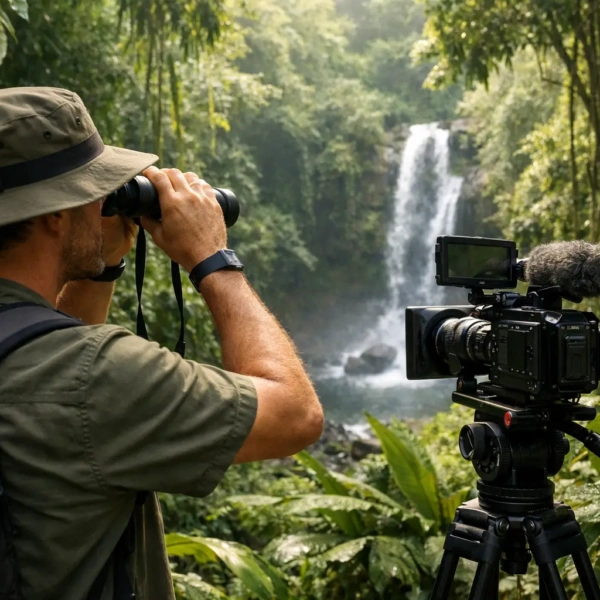
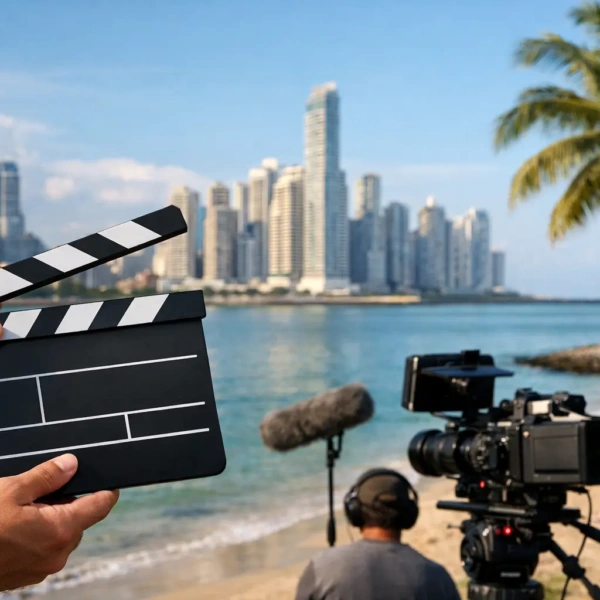
Panama competes differently. Its advantage is location density. Tropical beaches, rainforest, modern skyline, old-world architecture, islands, and rural roads can often be accessed within a far tighter radius. That means fewer company moves, simpler logistics, and less downtime between setups.
For producers working against compressed calendars, that difference is material. A country that lets you capture multiple looks without burning travel days can outperform a lower quoted line item elsewhere.
Equipment and vendor ecosystem
Mexico has a broader equipment rental market, more stage options, and deeper access to specialty gear. That matters for productions that need larger grip and electric packages, studio-based workflows, advanced camera support, or complex build-outs.
Panama is well positioned for many commercial, television, documentary, branded, and location-based shoots, especially when supported by an experienced local production services company. The question is not whether gear exists. The question is whether your package needs a massive domestic ecosystem or a reliable one that can support the scope efficiently.
If your production is heavily gear-dependent, Mexico may present more immediate depth. If your project is location-forward and logistics-sensitive, Panama may still come out ahead once you factor in lower movement costs and simplified execution.
Incentives and rebate value
This is one of the biggest swing factors in the Panama vs Mexico production costs conversation.
Panama offers a 25% cash rebate for qualifying audiovisual productions, and that can have a meaningful effect on net cost. For producers who structure properly and work with a local team that understands the process, the rebate can improve the budget in a very direct way.
Mexico’s incentive picture is less uniform from the standpoint of a foreign producer comparing countries at a glance. Opportunities may exist depending on project type and structure, but they are not always as simple or nationally clear-cut for service-driven inbound shoots.
The important point is that rebates do not operate in isolation. A country with a strong incentive but weak execution can still cost more. Panama’s value is that the incentive can sit on top of an already efficient production setup, especially for projects that do not require the scale of a larger market.
When Mexico makes more financial sense
Mexico can be the better financial choice when the production is large, technically complex, or dependent on a deep bench of specialized crew and vendors. It also makes sense when the script is creatively anchored to looks that Mexico can provide more specifically or more convincingly than Panama.
If your shoot needs major art department capacity, extensive studio resources, multiple specialist teams, or a broad local casting market, Mexico may justify the bigger operating environment. In those cases, scale can offset cost.
When Panama makes more financial sense
Panama is often the smarter financial choice when the project needs speed, manageable logistics, strong location diversity in close proximity, and a service structure that helps foreign producers stay in control. Commercials, reality shoots, travel content, unscripted formats, branded campaigns, and efficient narrative work are where the economics can look especially strong.
For teams that want a one-stop solution rather than building a country from scratch, Panama reduces operational sprawl. That is where real savings happen – fewer wasted prep days, fewer transport layers, fewer avoidable surprises, and a clearer path to rebate access.
A company like 40 Grados Producciones is built around that model: local execution, permit support, crew coordination, logistics, and on-the-ground control for international productions that need Panama to work quickly and correctly.
The best comparison is net cost, not headline cost
Producers sometimes compare crew rates and assume they have compared countries. They have not. The better comparison is net landed cost after permits, movement, lodging, local support, incentive qualification, schedule efficiency, and risk exposure.
Mexico remains one of the most capable production markets in the region. Panama remains one of the most efficient. If your project needs scale, Mexico may earn its cost. If your project needs agility, Panama may deliver the better return.
The smart move is to budget against the actual shooting plan, not the reputation of the market. Once the script, schedule, and logistics are on the page, the right country usually becomes obvious.