A camera package that looks fine on a quote sheet can still slow a shoot the moment it hits a tropical exterior, a remote island transfer, or a last-minute location change. That is why film equipment rental Panama is not just about finding gear. It is about securing the right package, in the right condition, with the right local support behind it.
For international productions coming into Panama, equipment decisions affect far more than image quality. They affect customs planning, transport schedules, crew efficiency, permit timing, insurance exposure, and whether your day stays on track when weather or access changes. The producers who get the most value out of Panama are usually not the ones chasing the cheapest line item. They are the ones building a practical rental plan around the actual demands of the shoot.
What film equipment rental Panama really needs to cover
When producers evaluate a rental market from abroad, the first question is often simple: can we get the camera and lighting package we want locally? The better question is broader. Can the local setup support the production from prep through wrap without adding avoidable risk?
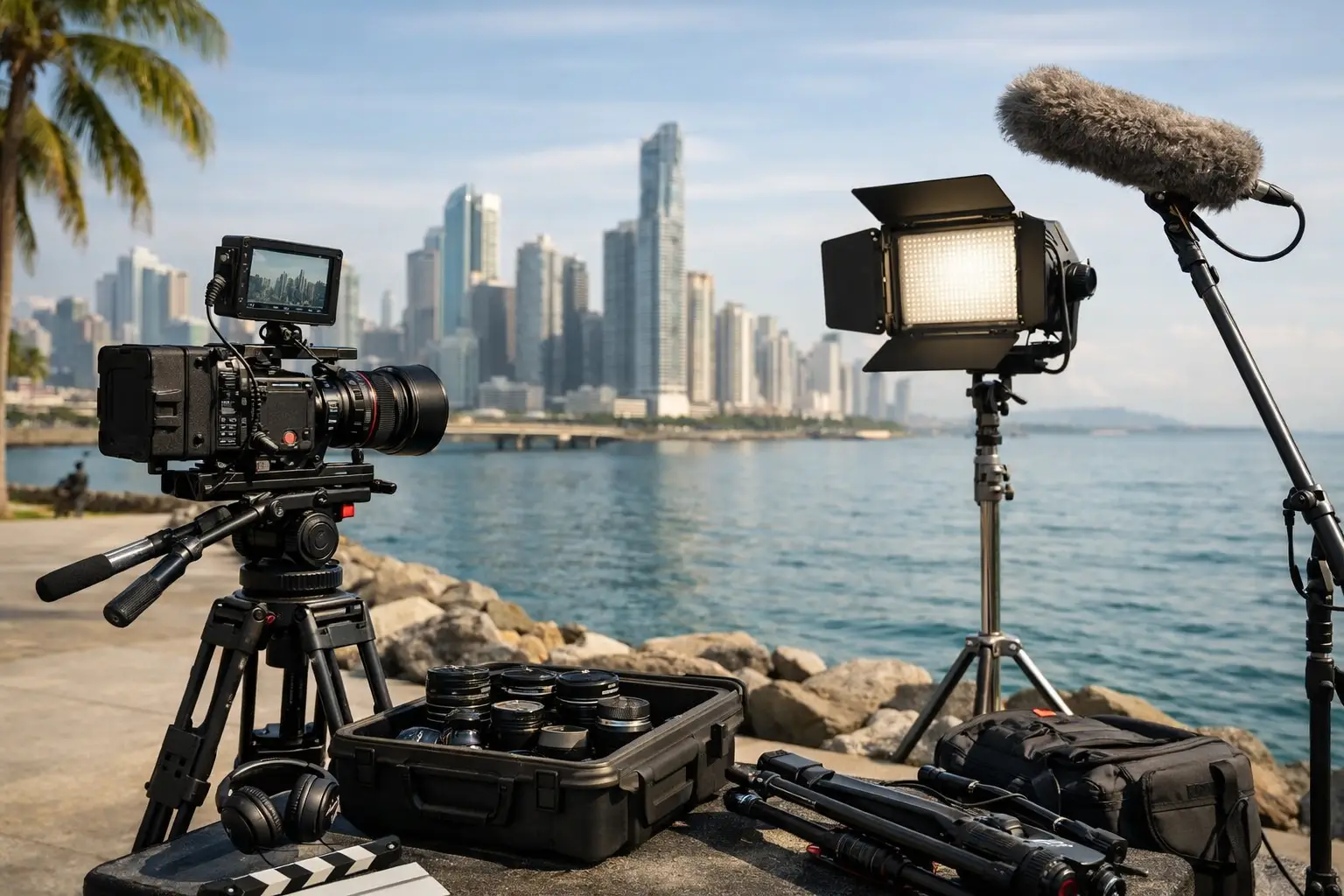
In Panama, that means looking beyond cameras and lenses. A workable rental strategy often includes grip, electric, support systems, monitors, wireless video, audio gear, power solutions, expendables, and transport coordination. On some shoots, the package itself is straightforward but the challenge is keeping it moving efficiently between city locations, jungle roads, beaches, and controlled interiors.
That is where local production support matters. Equipment availability is only one piece of the equation. Matching gear to locations, weather conditions, schedule pressure, and crew structure is what keeps the rental package useful in the field.
Why local rental support beats shipping everything in
Bringing a full package from the US can make sense for highly specialized builds or talent-specific workflows. But for many commercials, branded shoots, TV segments, documentaries, and features, importing every case is not the most efficient move.
Shipping gear adds freight costs, carnet administration, customs coordination, risk of delays, and extra handling on both ends. It also reduces flexibility. If your schedule changes or you need an additional unit item locally, you now have two systems to manage instead of one.
Film equipment rental Panama gives international productions more room to adapt. You can source core gear locally, supplement specialty items where needed, and reduce the operational drag that comes with moving an entire package across borders. That usually matters most when schedules are compressed or the shoot spans multiple environments.
There are trade-offs, of course. If your production depends on a niche camera ecosystem, highly customized lensing, or proprietary engineering support, importing may still be the right call. The practical answer is often hybrid: bring what is unique to your workflow and source the rest in-country.
Gear planning in Panama depends on the shoot type
A city-based commercial with controlled interiors has very different rental needs than a reality shoot crossing provinces. Panama offers both urban production convenience and location variety, but the gear package should reflect the real operating conditions.
Commercial and branded content
For agency and brand work, speed is usually the priority. Clients want polished output, tight turnarounds, and minimal downtime on set. That favors rental packages that are dependable, fast to deploy, and easy to scale if the creative shifts during prep.
In these cases, lighting and grip support can matter as much as camera choice. Access to the right control tools, rigging, power planning, and monitoring setup often determines whether the schedule stays efficient.
Feature film and scripted television
Scripted work tends to demand consistency across longer schedules. That means more attention to package continuity, backups, maintenance standards, lens matching, and support for multiple units or extended location moves.
For longer-form projects, producers should also evaluate whether the rental workflow can handle prep revisions, replacement items, and wear over time. A package that is acceptable for a two-day shoot may not be enough for a multi-week schedule in changing conditions.
Reality, documentary, and travel content
These productions often need mobility above all. Lightweight camera builds, fast battery management, portable audio setups, weather-aware protection, and flexible support gear usually matter more than a large footprint.
Panama is well suited to this kind of production, but only if the package is built around field realities. Smaller crews moving through boats, rural roads, or mixed indoor-outdoor schedules need gear that can keep up without constant resets.
The real value is coordination, not just inventory
A rental list on its own does not solve production problems. Producers need local coordination that connects the gear package to the rest of the operation.
That includes confirming that selected equipment fits the approved locations, the power availability on site, the transport plan, the crew structure, and the permit conditions. It also means having local teams who understand what happens when a replacement is needed quickly, when a weather cover plan becomes necessary, or when call times shift and prep has to be adjusted.
This is especially important for international teams working without an established Panama network. A local production partner can align equipment support with permits, crew bookings, schedule logic, and on-the-ground execution so the rental package works as part of the production system, not as an isolated vendor line.
Budget control without cutting the wrong corners
Every production wants value, but low pricing only helps if the package performs. The cheapest option can become the most expensive if it creates delays, requires emergency substitutions, or arrives without the right support accessories.
With film equipment rental Panama, budget control usually comes from better package design, not from stripping essentials. Producers can often save by avoiding unnecessary imports, combining local sourcing with local crew expertise, and building a package around actual shot requirements rather than standard wish lists.
It also helps to budget for the realities of Panama production. Heat, humidity, rain, travel time, and terrain can all influence what support gear is worth having. Extra media management capacity, weather protection, power backup, vehicle space, and sturdier support equipment may look optional in prep but become essential in the field.
The right local team will usually tell you where to spend and where to simplify. That guidance is often more valuable than a lower day rate on paper.
Compliance, logistics, and rebate thinking
International productions rarely come to Panama for gear alone. They come for location diversity, strong value, skilled crew support, and the potential advantage of Panama’s 25% cash rebate. Equipment planning should support that larger financial picture.
If your rental strategy creates customs complications, idle crew time, or preventable transport costs, it can quietly erode the savings that brought the project to Panama in the first place. On the other hand, a well-structured local package can help keep the shoot lean, organized, and easier to manage from a compliance standpoint.
This is why equipment decisions should not sit in a silo. They should be made alongside production logistics, legal requirements, scheduling, and rebate planning. Producers who treat local rentals as part of the full production strategy usually get a cleaner result.
Choosing the right production partner for equipment support
The strongest option is not always the company with the longest equipment list. It is the partner that can assess the shoot correctly, source what is needed, anticipate constraints, and keep the package aligned with the production plan.
That means asking practical questions. Who is managing prep locally? Who checks compatibility between your camera package and the support gear? Who coordinates delivery windows, backup options, and location-specific needs? Who is solving problems if the weather turns, the road access changes, or the schedule slips by half a day?
For many foreign producers, the best answer is a one-stop local production partner that can integrate equipment support with permits, local crew, transportation, and field logistics. That reduces handoff risk and gives the production one accountable team on the ground. In Panama, that is where experienced service companies such as 40 Grados Producciones can make a measurable difference.
A solid rental plan should feel boring in the best possible way. Gear arrives ready, the package matches the schedule, replacements are realistic, and the production team is not wasting creative energy solving avoidable operational issues.
Panama gives producers a lot to work with – modern urban looks, coastline, rainforest, islands, and cost advantages that can stretch a budget further. The equipment strategy should support that opportunity, not complicate it. If you are planning a shoot here, the smartest place to start is not with a generic gear list. It is with a local plan that makes the gear work where the production actually lives: on set, on the move, and under pressure.