
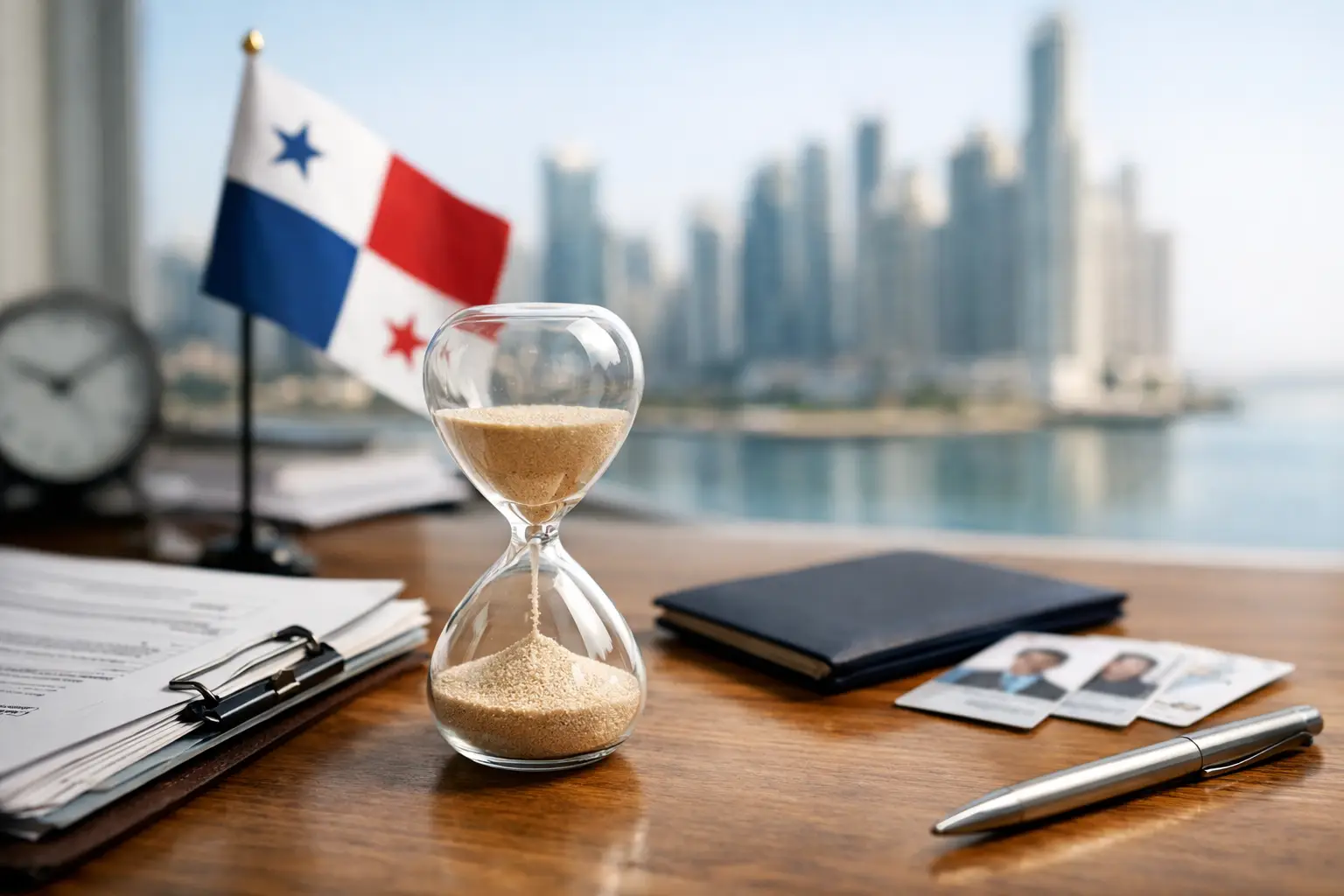
If you are asking how long do Panama permits take, the real answer is this: some shoots can be cleared in a few business days, while others need several weeks of lead time. The timeline depends on where you are filming, what you are filming, how much public impact your production creates, and whether your paperwork is complete the first time it is submitted.
For international producers, that difference matters. A simple branded shoot with a small crew moves very differently than a commercial with street control, drones, talent releases, police coordination, and multiple government stakeholders. Panama can be fast, but speed usually comes from proper local coordination, not from assuming every permit follows the same clock.
How long do Panama permits take in practice?
In practical production terms, permit timing in Panama usually falls into a few working ranges. Low-impact shoots on private property, where all owner permissions are in place and no public authority approval is required, can move quickly. In those cases, the key timeline is often the property negotiation and contract process rather than a government permit.
Public locations are different. If you are filming in a municipal area, on a beach, in a protected zone, around transportation infrastructure, or in a high-traffic urban setting, approvals can take anywhere from several business days to a few weeks. The wider the operational footprint, the more review time you should expect.
A good rule for international planning is to separate projects into three categories. A basic shoot with limited footprint may be workable with short notice. A standard commercial or television production should build in at least one to two weeks for formal approvals. A complex production involving road control, aerial filming, special equipment, pyrotechnics, stunts, marine access, or sensitive public areas should be scheduled with a longer runway.
That is why experienced producers do not just ask how long do Panama permits take. They ask which authorities are involved, what operational permissions are required, and what can be submitted in parallel.
What actually affects permit timing
Permit timing in Panama is driven less by one national rule and more by the mix of entities involved in your shoot. A production filming in a hotel ballroom has a very different approval path than one filming in Casco Viejo, on a highway shoulder, or inside an environmentally regulated coastal area.
Location type changes everything
Private locations are usually the fastest if the owner has clear authority to grant filming access. Public spaces often require municipal or institutional signoff. Heritage zones, ports, airports, indigenous territories, nature reserves, and government-managed sites tend to require more lead time and more precise paperwork.
The more visible the location, the more likely it is that public safety, traffic flow, tourism management, or community impact will be reviewed. A sunrise stills unit with six people is one thing. A grip truck, generator, drone team, talent vanities, and set control barriers are another.
Scope of production matters
Authorities want to understand scale. Crew size, shooting hours, equipment list, vehicle count, use of talent in public areas, and whether you are affecting normal access all influence timing. If your production needs lane closures, parking reserves, security coordination, or crowd management, approvals may require interagency coordination.
That does not mean Panama is difficult. It means the timeline must match the footprint. Productions that treat a public-space commercial like a run-and-gun social shoot usually create their own delays.
Drones, water work, and special activity add review time
Aerial filming, marine filming, night work, weapons props, effects, and high-visibility commercial setups tend to trigger additional review. These are common areas where overseas teams underestimate the timeline because they focus on the creative plan before the local compliance path is mapped.
Even when approval is possible, special activity often needs more supporting documentation, clearer technical details, and more coordination with authorities on exact timing and control measures.
Paperwork quality can speed up or stall the process
Incomplete submissions are one of the biggest avoidable delays. Missing passport copies, unclear dates, incomplete call sheets, vague shooting descriptions, insurance gaps, or inconsistent production details can slow approval more than the permit itself.
Clear documents help authorities process requests faster because they reduce back-and-forth. On a tight schedule, that administrative discipline matters just as much as local relationships.
Typical Panama permit timelines by shoot type
The fastest productions to organize are usually controlled shoots on private property with minimal public impact. If contracts, insurance, and owner approvals are ready, these can often move on a compressed timeline.
A standard commercial, branded content piece, or television segment using recognizable public locations usually needs more lead time. In many cases, producers should expect roughly one to two weeks for a comfortable approval window, especially if permits need to pass through more than one office.
Large-format productions should plan further ahead. If you need road use, police support, drone coordination, public authority engagement, specialty rigs, or access to restricted sites, it is smarter to build a longer preproduction schedule from the start. Can these sometimes be accelerated? Yes. Should a line producer budget the schedule around that hope? No.
This is where local production management has direct value. The right team can identify which approvals are essential, which are conditional, and which can move simultaneously instead of sequentially.
Why producers get surprised by delays
Most permit delays are not caused by a hard no. They come from assumptions that do not match the local process.
One common issue is late location locking. If a production keeps multiple location options open too long, permit filing gets pushed back because authorities need specific addresses, dates, hours, and operational details. Another issue is changing scope after submission. A permit request for a lightweight interview setup may need to be revised if the shoot grows into a full commercial footprint.
International teams also sometimes overlook local calendar realities. Public holidays, municipal schedules, high-tourism periods, election-related restrictions, and major public events can all affect timing. A location that looks straightforward on paper may move slower during a congested week.
The point is not that Panama is unusually slow. The point is that production planning needs to be real, location-specific, and handled by people who know which office will ask what.
How to keep your permit process moving
The best way to shorten timelines is to reduce uncertainty before submission. Lock the location early. Finalize shoot dates. Confirm the true footprint, not the optimistic one. If drones, traffic control, marine access, weapons props, or night filming are part of the plan, state them clearly at the start.
It also helps to package the request the way authorities need to see it. That includes a precise production description, schedule, crew and vehicle counts, equipment profile, insurance details where required, and clear local contact information. When requests arrive complete and production-ready, they are easier to review.
For overseas producers, local representation is often the difference between a theoretical timeline and a practical one. A Panama-based partner can flag problem areas before they become delays, coordinate with municipalities and site managers, and adjust the plan if one location path starts moving too slowly.
That is especially relevant when the shoot is tied to travel bookings, agency deadlines, talent availability, or rebate planning. Saving two or three days in permitting can protect much larger budget items downstream.
Build schedule around reality, not best-case timing
If your question is simply how long do Panama permits take, the safest answer is this: short for simple shoots, longer for public-impact or specialty shoots, and always dependent on how well the production is prepared.
For serious scheduling, it is better to think in terms of permit strategy rather than one universal timeline. Start with the most sensitive locations first. Identify special permissions early. Leave room for revisions. And do not assume that because one scene is simple, the whole shoot will be.
Panama is an efficient market for international production, but efficiency comes from preparation, local execution, and accurate scope. When those pieces are in place, permits tend to follow the schedule instead of controlling it.
If you are budgeting a shoot here, give the permit timeline the same level of attention you give crew, weather, and logistics. That is usually what keeps the production on track before the first shot is ever called.