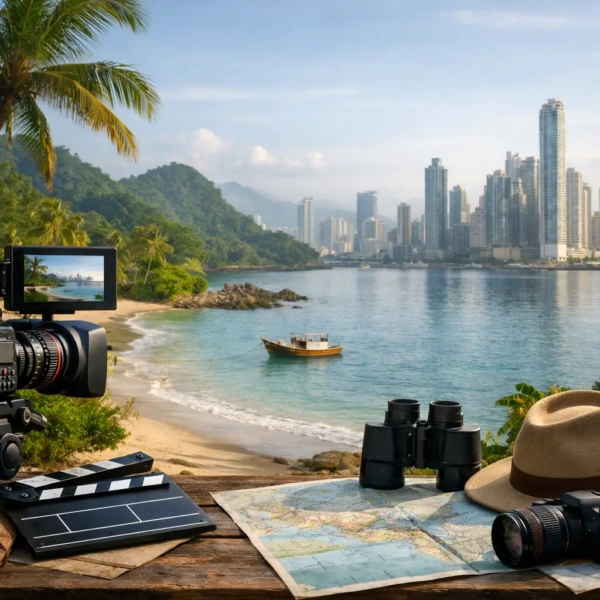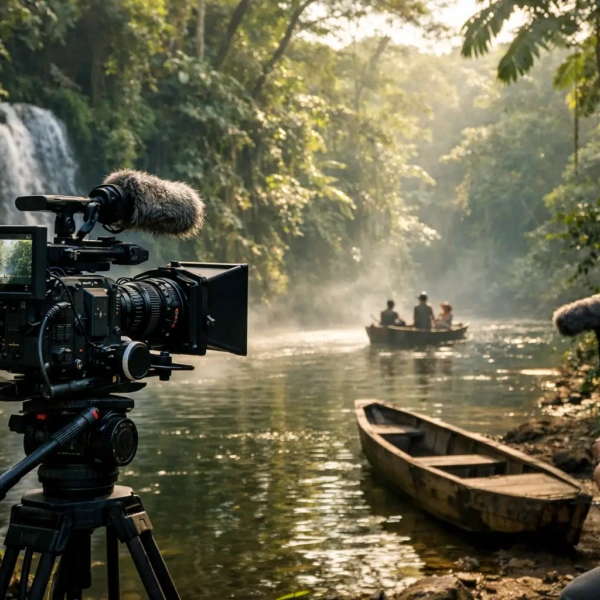

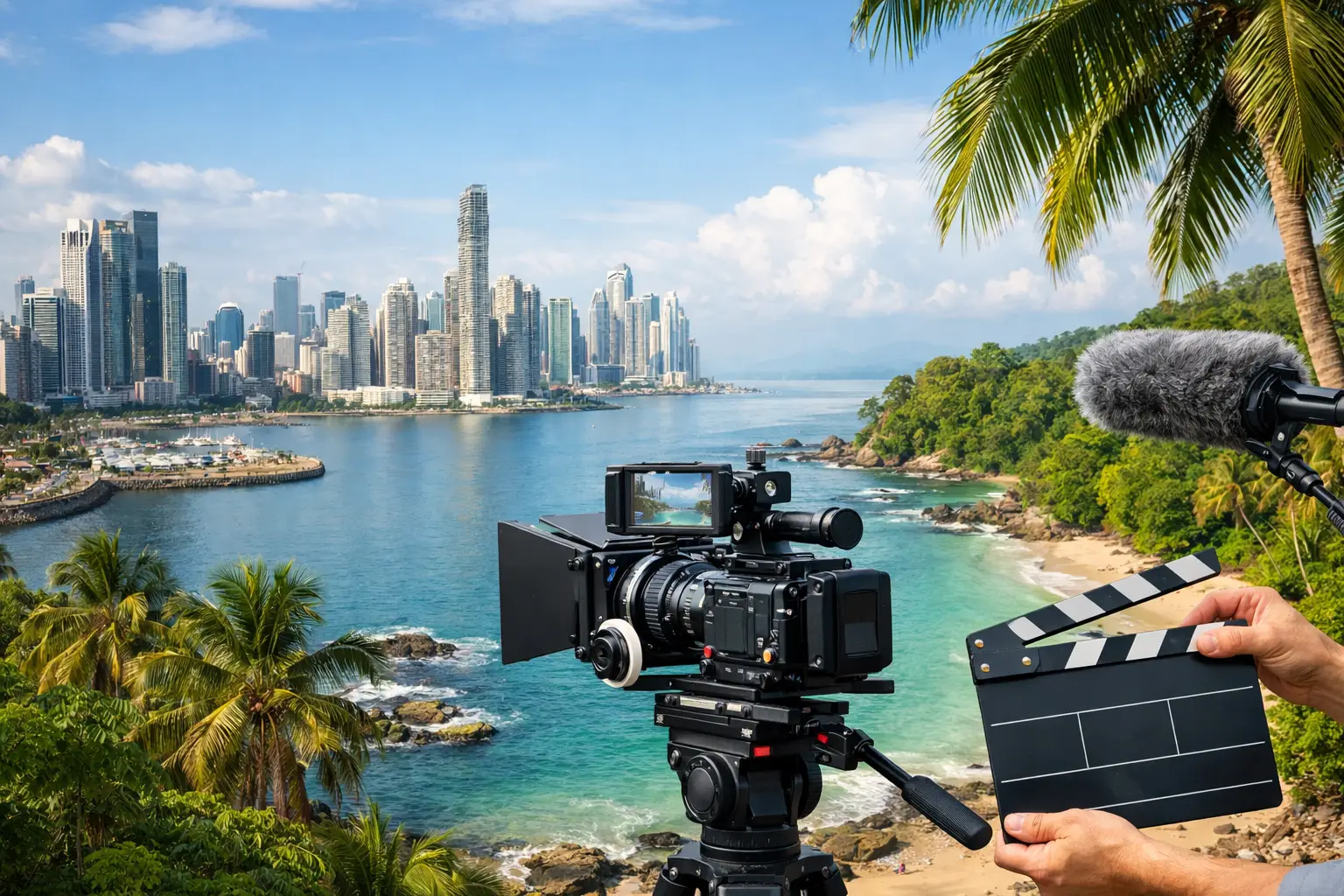
A location that can give you a skyline, rainforest, colonial streets, beaches, highways, ports, and mountain roads in the same shoot window gets attention fast. That is one of the top reasons to film Panama, but it is far from the only one. For producers weighing schedule pressure, rebate qualification, crew reliability, and location range, Panama keeps showing up as a practical production choice, not just an attractive backdrop.
For international productions, the real question is not whether Panama looks good on screen. It does. The question is whether the country can support the pace, compliance, and budget discipline a modern production demands. In that respect, Panama performs well because it combines visual variety with workable logistics and a production ecosystem built to support foreign teams.
Top reasons to film Panama for international productions
The strongest case for Panama starts with efficiency. Many destinations offer appealing scenery. Fewer offer meaningful location diversity within short travel times, experienced bilingual support, and a competitive incentive structure that can materially improve your budget.
Panama is especially useful for producers who need production value without moving a unit across multiple countries. A commercial team may need urban luxury in the morning and tropical texture by afternoon. A scripted production may need government-friendly permitting, police support, controlled access roads, and a service partner that understands how to keep paperwork, crew calls, and transport moving in sync. Panama can deliver that combination when the project is planned correctly.
Diverse locations in a compact geography
This is usually the first thing producers notice and one of the biggest top reasons to film Panama. The range is unusually broad for a country of its size. You can access modern cityscapes, historic districts, jungles, islands, beaches, industrial zones, residential neighborhoods, highways, and rural terrain without building an oversized travel budget.
Panama City gives you a polished urban look with a skyline that can double for major international business centers. Casco Viejo offers period architecture, narrow streets, plazas, and heritage textures that work well for scripted scenes, fashion work, and travel content. Outside the capital, the country opens up quickly into rainforest, highlands, Caribbean and Pacific coastlines, river settings, and agricultural landscapes.
That variety matters because it reduces company moves and protects shooting days. You spend less time relocating across borders or flying to secondary countries for inserts. For line producers and production managers, that can translate into tighter schedules and more usable screen value per day.
Strong value compared with larger production hubs
Cost is never the only factor, but it is always on the table. Panama compares well when producers are looking for a location that can support international standards without the premium overhead attached to some larger regional markets.
Crew, logistics, accommodations, transport, and location costs can be highly competitive depending on the project scope and season. The advantage is not that Panama is the cheapest option in every category. It is that the overall cost-to-production-value ratio is often favorable, especially when you combine location diversity and the ability to cover multiple looks in one territory.
There are trade-offs, of course. Very large builds, highly specialized gear packages, or unusually complex stunt and VFX requirements may call for a mixed sourcing strategy. But for commercials, branded content, docuseries, reality, music videos, travel programming, and many scripted projects, Panama can make the budget work harder without sacrificing polish.
The 25% cash rebate can change the math
For many foreign producers, incentives move Panama from interesting to actionable. The country offers a 25% cash rebate for qualifying audiovisual productions, and that can have a real effect on financing and location decisions.
What matters here is not just the headline number. What matters is whether your production can navigate eligibility, structure spending properly, and document the process in a way that keeps the application on track. Incentives are valuable when they are understood early, not treated as an afterthought once principal photography is already underway.
This is where local planning becomes essential. The rebate can be a strong reason to film in Panama, but producers still need a compliant spending strategy, clean paperwork, and local execution that aligns with program requirements. A project that waits too long to address those details can leave money on the table.
Why producers choose to film Panama instead of splitting countries
A multi-country plan can make sense when the script is highly specific, but it also creates friction. Every border crossing introduces new vendors, legal processes, customs variables, accommodation blocks, transport schedules, and crew onboarding. Panama helps reduce that complexity.
Reliable local crews and production support
A destination is only as good as the team supporting the shoot. Panama has skilled local crew across production management, camera, grip, electric, art, locations, transport, and coordination roles, and the market is accustomed to servicing international clients.
That matters for both quality control and speed. Experienced local teams understand how to adapt to agency workflows, broadcaster expectations, and studio reporting structures. They can also bridge the practical gap between foreign creative priorities and local operating conditions.
For incoming productions, the benefit is straightforward. You do not need to build an in-country network from scratch. You can arrive with a core team and scale locally, or run a more complete local crewing model depending on the format and budget. Either way, the production becomes easier to manage when the ground team knows the permitting channels, vendor base, and location realities.
Permits and compliance are manageable with the right local partner
No serious producer chooses a destination based on scenery alone. Permitting, insurance alignment, municipal coordination, drone rules, public space access, and police support all matter. Panama is workable, but like any market, it works best when handled by people who know the system.
This is one of the less glamorous but most important reasons to film Panama. With proper local guidance, productions can move through approvals more efficiently and avoid preventable delays. Without that support, even a simple location day can become slower and more expensive than planned.
International teams often underestimate how much time disappears into administrative coordination. A one-stop local production partner helps keep that under control by managing paperwork, scouting, schedules, transport, and on-the-ground communication as one operating plan rather than a chain of disconnected tasks.
Fast access from the US and major markets
Panama’s connectivity is a serious production advantage. For US-based teams especially, travel is relatively straightforward, and Panama City functions as a regional hub with strong international flight access.
That affects more than convenience. Easier travel can reduce fatigue, simplify client attendance, support shorter prep windows, and make it more realistic to move key personnel in and out without stretching the budget. For commercials and branded shoots where decision-makers need to fly in, approve, and fly out quickly, that kind of access has real operational value.
It also helps with equipment planning and contingency thinking. When a production is shooting in a market with strong international connectivity, replacement personnel, specialty support, and executive oversight are simply easier to manage.
Top reasons to film Panama when schedule matters
Some countries look attractive until you start building the schedule. Panama tends to hold up well under real production pressure because distances are manageable and support infrastructure is concentrated.
Infrastructure that supports moving productions
Hotels, roads, airports, urban services, and communications infrastructure all contribute to a smoother shoot. Panama is well positioned in this respect, especially for productions staging through Panama City and branching outward for location days.
The practical result is fewer wasted hours. Units can move between business districts, ports, beaches, jungle environments, and mountain areas without the kind of logistical drag that often affects regional shoots. Not every location is equally simple, and weather always needs to be respected, but the base production framework is solid.
That makes Panama particularly effective for shoots with compressed timelines. If your board, agency client, or network has limited patience for delays, a well-planned Panama schedule can be easier to defend than a more fragmented regional strategy.
A strong visual identity without overexposure
There is another advantage that matters creatively. Panama offers recognizable production value without feeling overused. You can get high-end tropical imagery, international urban visuals, maritime settings, and historic architecture without landing in a market that audiences have seen repeatedly in the same way.
For directors and agencies, that gives room to create something that feels specific. For scripted work, Panama can play as itself or support location doubling depending on the frame and production design approach. That flexibility is useful when a project needs a fresh screen identity without sacrificing operational ease.
The best destination choices usually come down to balance. Producers need a place that looks expensive, works efficiently, and does not create unnecessary friction in permits, travel, crewing, or finance. Panama consistently enters that conversation because it meets those tests better than many people expect.
If you are assessing your next international shoot, the smart move is to evaluate Panama the way a line producer would – against days, dollars, access, compliance, and creative range. That is where the country tends to make its case clearly, and where a local team like 40 Grados Producciones can turn a promising location into a shoot that actually runs right.