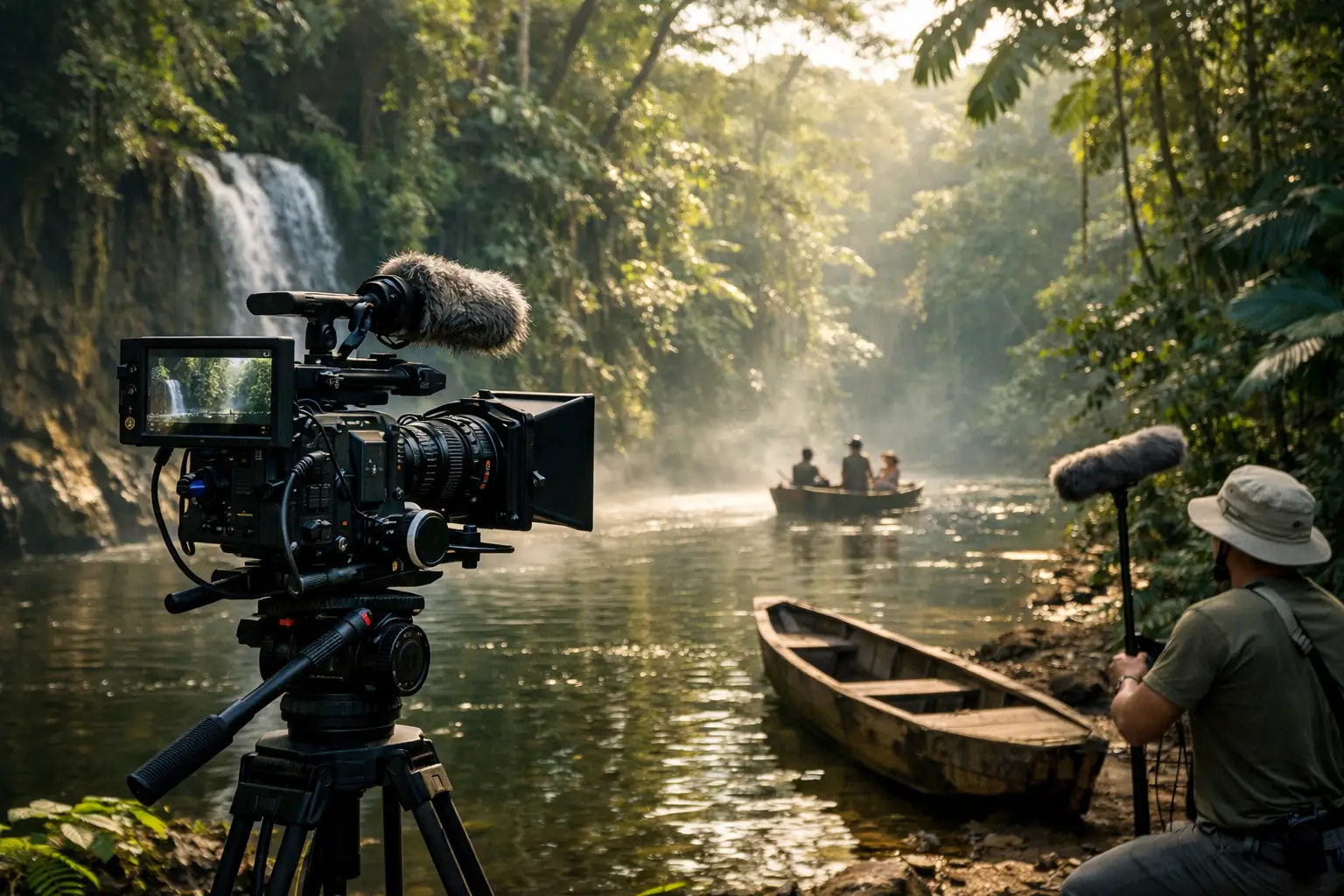
A jungle that looks untouched on screen can be one of the most managed environments in a production plan. That is the real value of Panama jungle filming locations. You get dense tropical visuals, river systems, canopy, wildlife-rich atmosphere, and genuine geographic variety, but within a country that is built to support international shoots with practical infrastructure, experienced crews, and a workable permitting framework.
For producers comparing Latin American jungle options, Panama stands out because the creative upside is matched by operational control. You can move from a city base to rainforest in a relatively short window, build a realistic shooting schedule, and support everything from feature work to branded content without treating access as an afterthought. The jungle looks wild. The production process does not have to be.
Why Panama jungle filming locations are commercially strong
Not every tropical location is useful just because it is visually impressive. For most international productions, the real question is whether the location can support the pace, compliance, and budget discipline the schedule requires. Panama performs well because it combines visual density with manageable logistics.
The first advantage is range. Panama offers primary rainforest, secondary jungle, riverbanks, mangroves, mountain forest, and coastal tropical terrain. That means one country can double for several looks depending on lensing, season, and art direction. If a script needs untouched jungle, survival terrain, expedition visuals, eco-luxury backdrop, or a remote-feeling setting that remains reachable to crew and equipment, Panama can usually deliver more than one option.
The second advantage is access. Some jungle territories in the region are beautiful but slow to work in. Long transfers, weak support infrastructure, and inconsistent permitting can add hidden costs that quickly erase an attractive day rate. In Panama, many jungle zones are close enough to staging hubs that you can preserve crew efficiency. That matters for commercials and unscripted projects, and it matters even more for productions carrying specialized camera packages, grip support, generators, wardrobe, and safety personnel.
The third advantage is financial. Panama’s production environment is competitive, and qualifying projects may benefit from the country’s 25% cash rebate incentive. That does not make every jungle shoot cheap, because remote work still requires planning, but it can materially improve the economics of a location-heavy production.
What producers should look for in jungle locations
A strong jungle location is not just about appearance. It has to work for camera, crew, sound, safety, and schedule.
Terrain is the first filter. Some directors want thick undergrowth and uneven forest floor because it reads as authentic. That works visually, but it can slow equipment movement, reduce reset speed, and limit staging areas. Other locations offer a more open canopy base or usable trail network, which can support steadicam, tracking work, or frequent company moves. The better choice depends on the script and on how much time the call sheet can absorb.
Light is another major factor. Dense jungle can look stunning, but heavy canopy also compresses your natural light window. If the creative brief calls for moody, shadow-rich texture, that is an asset. If the project needs bright beauty coverage or long dialogue scenes with continuity requirements, location selection becomes more technical. You may need areas with partial openings, nearby river reflection, or practical access for shaping light.
Sound should never be treated as secondary. Jungle environments bring insect beds, bird calls, water movement, wind through canopy, and occasional aircraft or distant road contamination depending on the zone. Some locations are better for MOS or stylized visuals than for sync dialogue. Others can support cleaner production sound if scouted properly and scheduled around environmental patterns.
Finally, there is crew reality. A jungle that takes two hours to reach after basecamp may still be a good location. A jungle that takes two hours, requires river crossing, has no communications signal, and offers no weather fallback becomes a more expensive decision. Good scouting identifies not only what is cinematic, but what is sustainable for a shooting day.
Key types of Panama jungle filming locations
Panama’s jungle inventory is useful because it is not one-note. Different zones serve different production needs.
Rainforest near Panama City
This is often the most efficient starting point for international producers. Jungle environments within practical reach of Panama City allow productions to maintain hotel, transport, equipment, and crew support from the capital while still achieving dense tropical visuals. For commercials, branded shoots, factual programming, and tight-turnaround content, this balance is hard to beat.
These areas are especially effective when the brief calls for “deep jungle” on screen but the schedule cannot support a remote unit move. They also reduce risk when talent, agency clients, or network teams need controlled access and reliable day planning.
Canal watershed and protected forest zones
Panama’s protected forest regions around the canal corridor can offer a distinctive mix of mature tropical vegetation, waterways, elevated lookouts, and logistics that are more manageable than many producers expect. This type of environment can work well for adventure content, premium factual series, and scenes requiring a strong natural setting without total remoteness.
The trade-off is that protected areas often come with stricter oversight. That is not a negative if handled properly, but it does mean permitting, environmental compliance, and location behavior need to be addressed early.
Remote jungle in western and eastern Panama
For projects that genuinely need isolation, scale, and a less managed visual profile, more remote areas in western or eastern Panama can provide that. These locations can deliver a bigger sense of expedition, stronger untouched texture, and less evidence of nearby development.
They also require a different production mindset. Travel windows are longer, weather contingencies matter more, and support systems need to be built with precision. For feature projects or high-value series, that can be worth it. For short-form campaigns, it may not be.
River and jungle combinations
Some of the strongest Panama jungle filming locations are not interior forest only. They combine tropical banks, navigable water, natural clearings, and layered vegetation. This creates more visual movement and gives directors multiple scene setups from one footprint.
From a production standpoint, river access can be either a major advantage or a complexity multiplier. If boats are part of the script, Panama offers compelling options. If water is not needed creatively, avoid adding it just because it looks dramatic in stills. Water safety, transport coordination, and weather exposure all increase quickly.
The production realities behind a jungle shoot
This is where many location conversations become too abstract. Jungle production is not difficult because it is exotic. It is difficult when planning starts too late.
Permits are the obvious first step, but not the only one. Depending on the site, you may be dealing with environmental authorities, protected areas, municipal requirements, private land access, indigenous territory considerations, or combinations of all four. The right local process prevents delays and protects your schedule.
Weather planning is just as important. Panama’s rainy season can produce excellent jungle visuals with saturated color and atmosphere, but it can also affect ground conditions, access roads, river levels, and continuity. Dry season offers easier movement, but greener is not always guaranteed in every zone at every moment. The ideal shoot window depends on the specific look you need.
Crew configuration matters more in jungle than on a standard urban setup. A lean team moves faster, but too lean can create safety and support problems once you are in heat, humidity, and variable terrain. Productions need the right balance of local crew, transport support, medics when appropriate, unit management, and realistic turnaround planning.
Equipment strategy should also be adapted to the environment. Humidity, mud, insects, and power limitations all affect how you build your package. A jungle day punishes overpacking and underpreparing at the same time. The most efficient shoots are the ones where camera, grip, production, and logistics are aligned before the tech scout, not after the first weather delay.
Why local support changes the outcome
For international producers, the difference between a good jungle concept and a shootable jungle plan is local execution. That includes scouting options that match the brief, confirming legal access, building realistic transfer times, sourcing qualified crew, and understanding which locations are visually strong but operationally weak.
This is also where budget protection happens. The cheapest-looking option on paper can become the most expensive once overtime, difficult transport, idle gear time, and permit complications appear. A one-stop local production partner helps avoid false efficiencies and keeps the location choice tied to the whole production plan.
40 Grados Producciones supports this process from the ground level up, with location research, permits, crew coordination, production logistics, and on-the-ground management built for international teams that need speed and compliance, not guesswork.
Choosing the right jungle location for the project
There is no single best answer, because the right jungle depends on the brief. If you need polished efficiency, stay closer to Panama City. If the project needs scale and isolation, build for a more remote zone. If dialogue is central, prioritize sound and staging over the most aggressive foliage. If the brief is visual-first, you can push deeper into terrain that reads more dramatic on screen.
The strongest productions start by matching the creative ask to operational reality. Panama gives you unusual flexibility on both fronts. That is why it continues to be a smart option for producers who need tropical production value without losing control of the schedule.
A jungle location should give you more than atmosphere. It should give you usable shooting days, a credible plan, and footage that feels bigger than the effort it took to get it.