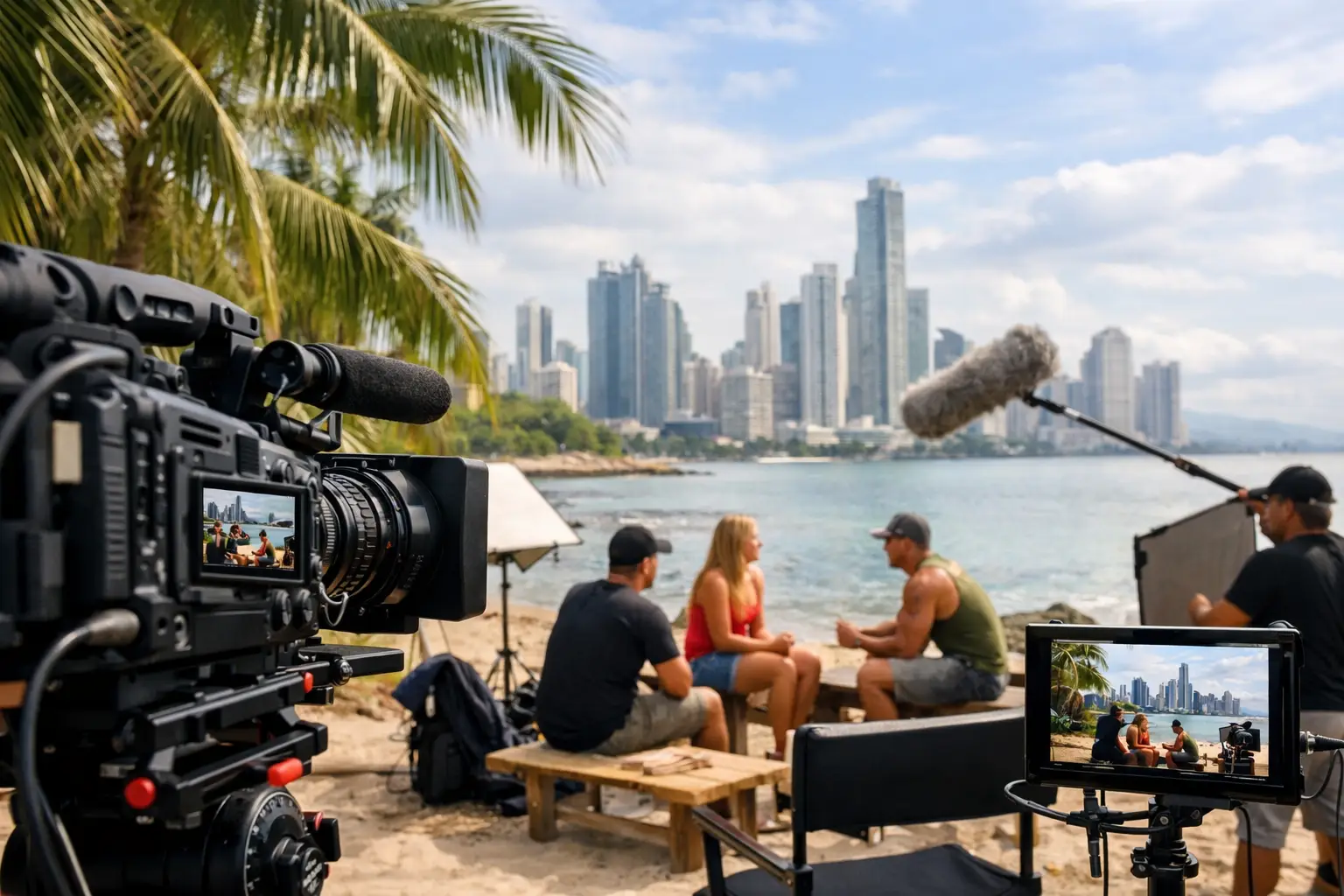
Reality TV production Panama works best when the concept needs range, speed, and clean local execution. A single shoot can move from rainforest to skyline, island chain to industrial port, without the travel burden and permitting complexity producers face in larger territories. For international teams, that matters less as a brochure point and more as a scheduling advantage.
Panama is not simply a scenic backdrop. It is a practical production base for reality formats, travel competition series, lifestyle shows, survival concepts, docu-follow programs, branded unscripted content, and premium factual entertainment. The country gives producers a compact geography, experienced crew base, reliable service infrastructure, and a rebate framework that can change the math on a series or special.
Why reality TV production Panama makes sense
Reality production rewards flexibility, but it punishes inefficiency. You may be chasing real weather, real access, real cast movement, and fast editorial value from every shooting day. Panama supports that model because the country offers visual contrast without requiring constant border crossings or major company moves.
In practical terms, that means a production can build episodes or segments around very different worlds within a manageable radius. Urban luxury, remote jungle, beach environments, colonial streets, mountain roads, indigenous regions, marinas, and logistics hubs are all available. That variety is useful for competition formats, host-led travel shows, elimination series, and social experiment programming where location becomes part of the narrative engine.
Cost control is another reason producers look at Panama seriously. Compared with many larger international production destinations, local labor, support services, and operational costs can be more favorable. The 25% cash rebate is also part of the conversation for qualifying projects. It does not replace disciplined budgeting, and eligibility always needs to be reviewed early, but it can materially improve the overall finance structure.
The production realities behind unscripted shoots
Unscripted television has a different pressure profile than scripted work. The plan changes faster. Cast behavior shifts the schedule. Access windows move. Weather can create opportunity one hour and a reset the next. That is why local production support matters more than generic line production.
A strong local partner helps protect the schedule by handling permits, agency communication, customs coordination, transport, lodging, local hires, marine or specialty access, fixers, and on-the-ground problem solving. In reality production, those details are not administrative extras. They are often the difference between getting the scene and losing it.
Panama is especially effective for productions that need to move quickly between controlled and uncontrolled environments. A studio interview setup, city-based contributor shoot, and remote field challenge can all sit within one broader production plan. That creates creative flexibility, but only if logistics are built properly from prep onward.
Locations that work on camera and on schedule
The visual appeal of Panama is obvious. What matters more to producers is how usable those locations are once the call sheet is real.
Panama City gives you modern high-rise visuals, rooftop perspectives, nightlife, business districts, historic streets, waterfront areas, and strong hospitality infrastructure. For reality formats involving hosts, cast housing, confessionals, reunion-style setups, or branded integrations, the city can support both polished production value and efficient day-to-day operations.
Outside the capital, the country opens quickly. Beaches on both coasts, tropical islands, jungle environments, rivers, mountain regions, agricultural zones, and transport corridors provide distinct looks without requiring multi-country scheduling. That is a major asset for shows that need scale and variation but cannot absorb constant travel resets.
The trade-off is that not every visually strong location is equally simple to access. Some areas are ideal for lightweight documentary crews but less efficient for larger reality builds with technical support, base camp needs, or heavy equipment. This is where scouting has to go beyond aesthetics. The right question is not only whether a place looks great, but whether it can sustain the production design, transport flow, safety plan, and permit path the format requires.
Crew, gear, and local execution
A reality show usually depends on a production model that feels controlled even when the content is not. Panama has skilled local crew capable of supporting international standards across production management, camera, sound, field coordination, locations, transport, and general set operations.
For overseas producers, using local crew strategically is not only a budget move. It improves responsiveness. Local coordinators know municipal processes, travel times, neighborhood restrictions, weather patterns, and vendor reliability in a way that visiting teams simply do not on day one.
Equipment planning depends on the format. Some productions can source a significant share of their package locally. Others will prefer to import specialty camera systems, challenge-specific rigs, or branded technical elements while hiring local support gear and crew. There is no one rule here. A run-and-gun travel series has different needs than a premium competition format with drone coverage, marine shooting, and multi-camera challenges.
The best approach is to map gear decisions against customs timing, insurance, field conditions, redundancy requirements, and rebate implications. Saving money on paper is not useful if the package slows prep or creates downtime in the field.
Permits, compliance, and why prep needs to start early
Reality television often creates the illusion of spontaneity, but the legal and permitting side should be handled with discipline. Panama can be highly production-friendly, but approvals still depend on location type, authority involvement, schedule sensitivity, and the nature of the content being captured.
City streets, public spaces, protected areas, marine environments, private properties, aerial filming, and special access zones all require different planning paths. The same is true for productions involving talent releases, public interaction, branded content obligations, or high-visibility field setups.
This is where experienced local management protects both the budget and the editorial plan. If a format relies on surprise elements, public-facing challenges, or moving quickly with cast in active environments, compliance cannot be handled casually. Producers need clear local advice on what can be done, how long approvals may take, and where alternate plans should be built in.
A smart reality production schedule in Panama usually includes backup location logic. Not because the country is difficult, but because reality formats are vulnerable to variables by design. Strong prep keeps those variables from becoming expensive problems.
Budget value and the 25% rebate
For many international clients, the financial case for Panama starts with the combination of production value and lower operating costs. It gets stronger when the 25% cash rebate applies. That said, producers should treat the incentive as part of a complete production strategy, not the strategy itself.
Qualification, documentation, local spend structure, and administrative timing all need to be reviewed before budgets are locked. The incentive can be highly attractive, but only if the project is organized correctly from the beginning. Reality productions, especially fast-turn or hybrid-branded formats, need extra care here because financing and deliverables may be structured differently than scripted series.
The real advantage is balance. Panama can offer meaningful visual ambition without forcing the kind of overhead that breaks unscripted margins. When the budget, rebate planning, and local service structure are aligned, producers can protect both screen value and schedule reliability.
What international producers should line up first
If you are evaluating Panama for a reality project, the first step is not simply to ask whether the country looks right for the format. The better question is whether the production model fits the territory.
Start with the episode design. How many moves per day are realistic? How dependent is the format on public access, marine logistics, or weather conditions? How much of the crew can be hired locally, and what specialty roles need to travel? Is the project structured to benefit from the rebate? Those answers shape the schedule before cameras roll.
It also helps to involve local production support during development or early prep rather than after creative is locked. That is where a company like 40 Grados Producciones adds real value – not only by servicing the shoot, but by pressure-testing the plan against real permitting paths, travel times, crew availability, and location practicality.
Panama is a strong market for reality television because it gives producers options without fragmentation. You can build scale, visual contrast, and operational efficiency into the same shoot. That does not mean every format should come here, but for the right project, it is a very effective production base.
The best results usually come from producers who treat Panama not as a cheap shortcut, but as a serious filming destination where local expertise turns ambitious unscripted ideas into workable shooting plans.