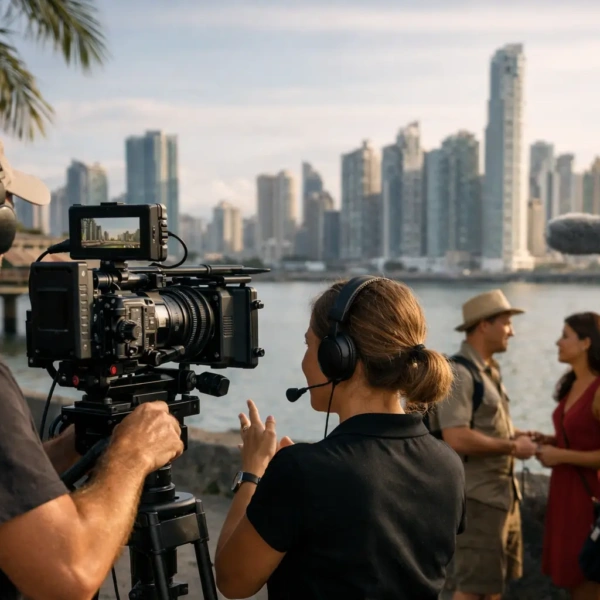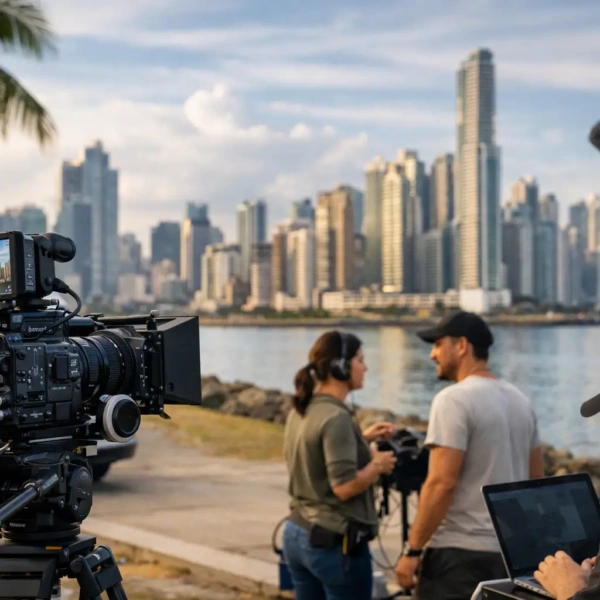


A shoot can look straightforward on a treatment and become complicated the moment the first truck, camera case, and crew call arrive in a new country. The local producer vs service company decision affects who owns the plan, who solves problems on the ground, and how much risk remains with the visiting production. For international teams coming to Panama, the right answer depends less on job titles and more on the scope, structure, and accountability required to get the project filmed.
A strong local partner should make Panama easier to access without reducing local production to a list of contacts. Permits, locations, crews, equipment, transportation, customs, accommodation, payroll, insurance, and incentive documentation must work as one production system. That is where the distinction becomes practical.
What a local producer usually does
A local producer is commonly an individual producer or a small local production team brought in to manage a specific creative or logistical need. They may have excellent relationships with locations, suppliers, casting agencies, crew members, or public authorities. On the right project, that direct network can be valuable.
This model often works well when an incoming production already has a strong line producer, production manager, and department heads, and only needs a trusted person to bridge local gaps. A commercial team shooting one or two days with a lean footprint, for example, may need help identifying locations, arranging permits, and hiring key local crew. A capable local producer can provide focused support and quick decisions.
The limitation is not necessarily experience. It is capacity and structure. A single local producer may not have a full back office for vendor management, accounting, legal coordination, equipment sourcing, production insurance, and simultaneous unit support. If the project expands, moves across regions, adds water work, night work, talent travel, or multiple shooting units, the visiting team may still need to build and supervise much of the operational framework themselves.
A local producer can also mean different things in different markets. One person may be a creative producer with strong regional knowledge. Another may be a fixer. Another may run production logistics but not carry responsibility for full budget control. Before hiring, define exactly what they will manage, what they can authorize, and what remains with your home-office team.
Local producer vs service company: the operational difference
A production service company is built to support an outside production from prep through wrap. Rather than supplying one producer or one relationship, it provides a coordinated local infrastructure. The service company becomes the on-the-ground production arm of the visiting producer, working to an approved budget, schedule, creative brief, and reporting structure.
For an international feature, series, reality program, or high-value commercial, this broader model reduces the number of separate local relationships your team must manage. The service company can coordinate department staffing, bid equipment, manage local vendors, secure permits, arrange transportation and accommodations, support customs procedures, advise on local compliance, and maintain daily production visibility.
That does not mean the service company replaces the visiting producer. The best arrangement preserves clear authority. Your executive producer, line producer, director, and department heads retain creative and financial oversight. The local service team converts those decisions into workable action in Panama, flags issues early, and presents local options with real cost and schedule implications.
The difference is particularly clear when something changes. A location falls through, weather shifts the schedule, a road closure affects company moves, or a piece of specialized equipment becomes unavailable. A local producer may be able to solve the immediate issue. A service company should be able to assess the impact across permits, crew calls, transport, budget, location agreements, and the next day’s work, then put a revised plan in front of you.
When a local producer is the better fit
There are projects where a local producer is the right choice. If your production is small, your schedule is short, and your internal team has already handled most planning, a narrowly defined local role can be efficient. This is often true for a documentary pickup shoot, a small branded-content crew, a location research trip, or a unit arriving with its own gear and department leadership.
It can also be a good fit when the local producer brings a specialized relationship that is central to the project. A particular community, remote property, event, or subject may require a person who has established trust in that environment. In these cases, their local knowledge is not interchangeable.
The key is to avoid assuming that personal connections equal full production coverage. Ask whether the local producer will source crew under their own management, contract vendors, handle local payroll, carry insurance, oversee safety planning, or simply make introductions. None of these answers is wrong. They just create different responsibilities for your team.
When a service company earns its place
A service company is usually the more reliable choice when Panama is a meaningful production destination rather than a brief stop on the itinerary. The value increases with crew size, shooting days, location count, technical complexity, travel volume, and budget exposure.
A full-service partner is particularly useful for productions that need a compliant path through local rules without losing time during prep. Film permits can involve multiple authorities depending on the location and scale of work. National parks, public streets, historic areas, airports, ports, indigenous territories, government facilities, and private properties each bring different requirements. A service company should map those requirements early enough to protect the schedule.
Panama’s range of locations also rewards serious local planning. Within manageable travel distances, productions can access modern cityscapes, tropical rainforest, beaches, islands, colonial architecture, industrial zones, and the Panama Canal environment. That visual range can reduce company moves across countries, but only if the schedule accounts for access, weather, transport, unit base needs, and permit lead times.
For productions evaluating Panama’s 25% cash rebate incentive, service capability matters even more. Incentives are not automatic production savings. They involve eligibility requirements, qualifying expenditures, documentation, and process discipline. A local partner should help the visiting team understand the current framework, plan eligible spending correctly, and organize the production records needed to support an application. Treat rebate support as a financial workflow, not a last-minute administrative task.
Questions that reveal the right partner
The strongest comparison is not local producer versus service company as a label. It is a comparison of operational responsibility. During early calls, ask who will be your single point of accountability, how local crew and vendors are vetted, and how often you will receive budget and schedule updates.
Also ask how the partner handles changes. Can they provide alternate locations quickly? Do they have established equipment and transport options? Who deals with a permit issue after hours? How are purchase orders, petty cash, vendor payments, and wrap reconciliations managed? These questions show whether you are hiring local knowledge or a complete production system.
Request a clear scope of work before prep begins. It should identify what is included in service fees, which costs are pass-through expenses, who approves overages, what reporting cadence applies, and which party carries each contractual responsibility. Vague scopes create friction even when the people involved are experienced and well intentioned.
Build the Panama team around the real scope
International producers should choose the model that matches the risk profile of the job. A local producer can be an excellent focused resource for a contained shoot. A production service company is built for broader accountability when a project needs departments, logistics, permits, budget control, and legal coordination operating together.
40 Grados Producciones supports international productions as a one-stop local partner in Panama, coordinating the practical work that turns a location decision into a shoot-ready plan. The objective is simple: give visiting teams local execution they can trust while keeping decisions visible and budgets controlled.
Before you lock a schedule or release travel, define the support your production actually needs. The right local partner will not only say yes to the brief. They will identify what the brief requires on the ground, explain the trade-offs early, and give your team a workable path to call action with confidence.