

If you are budgeting an overseas shoot, the Panama filming tax rebate is not a side note. It can materially change where your project lands. A 25% cash rebate on qualifying local spend can shift Panama from a visually attractive option to a financially smart production base, especially for features, series, commercials, reality formats, and branded content moving fast.
That said, incentives only help when they are structured correctly from the start. Producers do not lose money on rebates because the percentage is weak. They lose it because the spend is not documented properly, the local setup is off, or the production assumes the process will sort itself out later. In Panama, the opportunity is real, but so is the need for disciplined local execution.
What the Panama filming tax rebate actually offers
At its core, Panama offers a 25% cash rebate for eligible audiovisual productions that meet the program requirements. For international producers, that means a portion of approved local production expenditure can be returned after compliance and review. It is designed to attract foreign shoots, increase local hiring, and position Panama as a practical production hub in the region.
For many projects, the headline number gets attention first. What matters more in practice is the quality of the qualifying spend. Hotel nights, transportation, crew, rentals, location services, production support, and other local expenses may contribute to the rebate calculation when they are incurred correctly and backed by proper paperwork. The incentive works best when rebate planning is built into the production workflow, not added as an accounting exercise after wrap.
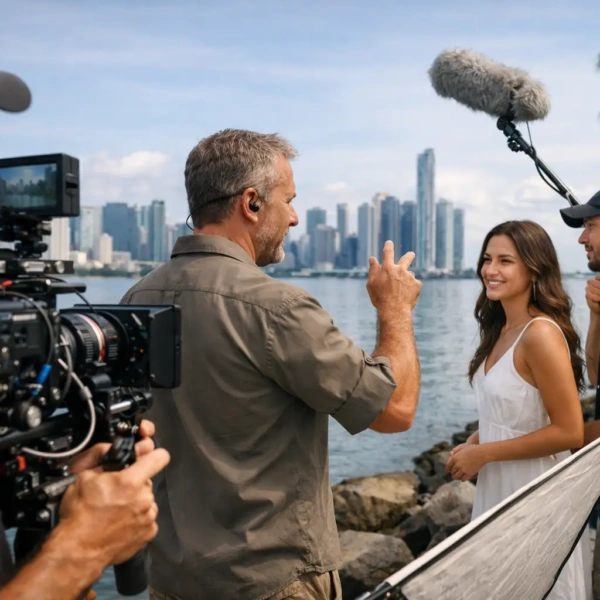
Panama is competitive because the rebate sits on top of other production advantages. The country offers urban skylines, beaches, rainforest, islands, colonial architecture, and industrial zones within relatively short travel windows. That geographic efficiency can reduce company moves, travel days, and crew duplication. When those savings are paired with an incentive, the budget case becomes stronger.
Who should pay close attention to the Panama filming tax rebate
The Panama filming tax rebate is especially relevant for producers comparing several territories with similar visual appeal but different cost structures. If your team is balancing creative requirements against line-item pressure, Panama deserves a serious look.
Feature films and scripted series benefit when they have a meaningful level of local expenditure and enough prep time to structure the production correctly. Commercials and branded shoots can also benefit, although the answer depends on project scale, schedule, and whether the qualifying spend justifies the compliance process. Reality and unscripted teams often find Panama appealing because the country offers production variety without requiring long domestic jumps between radically different looks.
Not every shoot is an automatic fit. If the local spend is too small, or the production schedule is compressed to the point that documentation and approvals cannot be managed properly, the rebate may not be the deciding factor. This is where experienced local planning matters. The question is not just whether Panama has an incentive. The question is whether your production can capture it cleanly.
Qualifying spend is where the rebate is won or lost
Most international productions understand incentives in theory. The trouble begins with spend classification, vendor setup, and document control. A rebate is only as strong as the paper trail behind it.
In Panama, qualifying local expenditure generally needs to be tied to approved production activity and processed in a compliant way. That usually means working through the proper local production structure, using legitimate local vendors, retaining invoices and contracts, and ensuring payments can be audited clearly. Cash-heavy workarounds, informal bookings, or loosely documented crew arrangements can create problems later.
This is why producers should think about the rebate during budgeting, not after principal photography starts. If a line producer knows which costs are likely to qualify, the production can route spending through the right channels from day one. If not, you may complete the shoot successfully and still leave recoverable money behind.
There is also a strategic point here. Sometimes the cheapest operational choice is not the best rebate choice. A producer might save a little by handling a service informally, but lose far more by making that spend ineligible. It depends on the project, but on many shoots the right compliant structure produces a better final net cost than the apparently cheaper shortcut.
Local production support is not optional if you want a clean claim
International teams rarely struggle with creative delivery in Panama. They struggle with local process. Permits, labor coordination, customs considerations, transport flows, and vendor management all affect whether the incentive claim remains organized and defensible.
A reliable local production partner helps align the practical side of the shoot with the financial side. That means setting up the correct workflow for purchases, collecting support documents as the production progresses, coordinating local crew and service providers, and keeping the project aligned with both filming requirements and rebate expectations. On paper, this sounds administrative. In reality, it directly affects the project margin.
The difference shows up quickly on active shoots. A location manager solves access issues. A production coordinator tracks approvals. A local producer keeps vendors aligned with billing requirements. Legal and accounting oversight support the rebate file instead of trying to reconstruct it after the fact. That is the kind of groundwork that makes an incentive usable rather than theoretical.
For foreign producers entering Panama for the first time, this matters even more. Building an in-country network from scratch can cost time you do not have. A one-stop local team reduces friction and helps keep the incentive path viable while the production focuses on execution.
Budgeting beyond the headline 25%
A rebate should improve a budget, not distort it. The 25% figure is attractive, but experienced producers will still model the full picture before committing territory.
First, consider the scale of qualifying local spend. A high rebate percentage on a modest local base may be less meaningful than a lower percentage in a territory where more of your budget qualifies. Second, consider timing. Cash rebates are not the same as upfront grants. Your finance team needs to account for when funds are received and how that affects production cash flow.
Third, look at operational savings outside the incentive itself. Panama can reduce costs through location diversity, accessible logistics, and strong local support. If your shoot can capture multiple looks without moving across several countries, the savings may be substantial. On the other hand, if your project requires highly specialized elements that must be imported or flown in, the cost advantage may narrow. Again, it depends on the production design and schedule.
The smartest approach is to evaluate Panama on net production value. Incentive, logistics, local crew depth, speed of movement, and visual range all belong in the same conversation.
Common mistakes international productions make
The most common error is waiting too long. Producers may decide to pursue the incentive after locations are booked and spending patterns are already set. By then, some costs may be difficult to reposition into a compliant structure.
Another mistake is assuming all local spend qualifies equally. It does not. Incentive programs work on rules, not assumptions. If there is any uncertainty around a vendor, service category, or payment process, that issue should be clarified early.
A third problem is treating local service support as a basic fixer function instead of a financial control point. Good local production service is not just about permits and drivers. It is about keeping the project efficient, compliant, and rebate-ready from prep through wrap.
Finally, some productions underestimate how much credibility matters with international stakeholders. Studios, agencies, and financiers want confidence that the incentive path is being handled professionally. A well-managed local operation reduces risk and makes internal approvals easier.
Why Panama keeps making the shortlist
Panama works because it is more than a rebate market. It is a production-ready territory with range. You can shoot contemporary urban environments, tropical coastlines, jungle roads, colonial settings, and polished commercial backdrops without overcomplicating the schedule. For producers, that translates into practical efficiency.
The incentive strengthens an already useful proposition. You are not forcing a project into a market solely because the rebate looks good on paper. You are choosing a country that can deliver visuals, crew support, production infrastructure, and a meaningful financial return when the job is set up correctly.
For international teams that want speed, control, and local expertise, Panama is often strongest when approached early and strategically. If the rebate is part of the conversation at the quoting stage, the entire production plan gets sharper. That is where experienced local support makes the difference between a possible saving and a captured one.
40 Grados Producciones works with overseas producers as a local production partner on exactly that basis – aligning permits, crew, logistics, and compliant spend so the shoot runs cleanly and the incentive opportunity is not wasted.
If Panama is already on your location shortlist, treat the rebate as a planning tool, not a bonus. The projects that benefit most are usually the ones that build the incentive into the production architecture from the beginning.