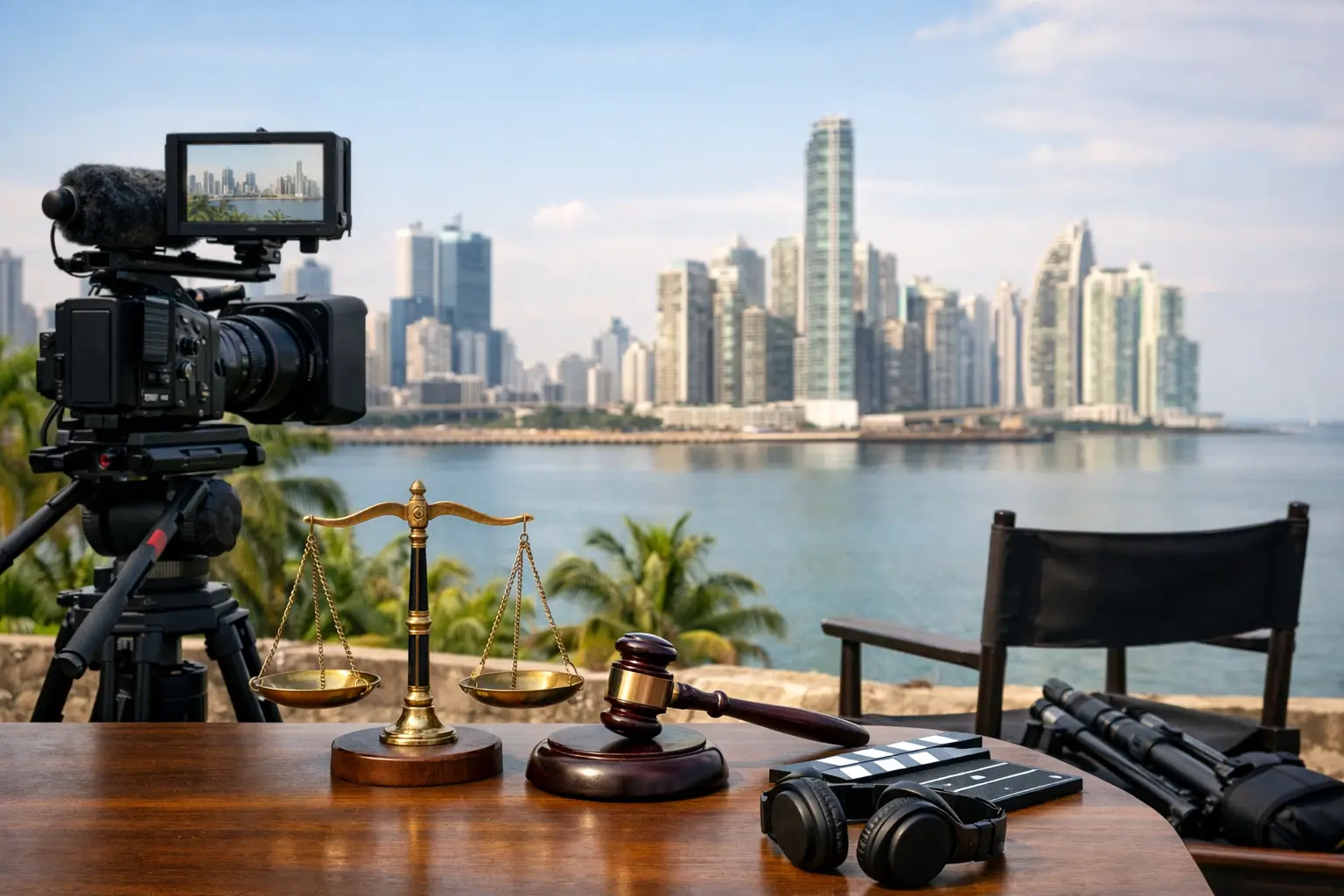
A strong location package means very little if your shoot gets delayed by a missing permit, a customs issue, or a location authorization that should have been secured a week earlier. The legal requirements to film in Panama are manageable, but they are not something international producers should treat as an afterthought.
Panama is a production-friendly market with diverse locations, experienced crew, and meaningful cost advantages. It is also a jurisdiction where filming rules can vary depending on what you are shooting, where you are shooting, how large the footprint is, and whether public agencies, drones, road control, minors, or imported equipment are involved. If you want a fast, compliant production, the legal side needs to be built into prep from day one.
What the legal requirements to film in Panama usually include
For most international productions, the legal process is a mix of permits, contracts, immigration planning, municipal or institutional approvals, insurance documentation, and production-specific compliance. There is no single one-size-fits-all permit that covers every scenario.
A small branded content crew filming handheld in a private hotel will face a very different approval path than a commercial locking traffic in Panama City or a reality series moving through multiple provinces with drone operations and foreign talent. That distinction matters because timelines, paperwork, and public authority involvement change quickly once your footprint expands.
At a practical level, producers should expect to review six areas early: location permissions, public filming permits, immigration status for foreign personnel, customs treatment for gear, insurance requirements, and activity-specific approvals such as drones, marine filming, or controlled road use.
Permits depend on location, footprint, and public impact
The first question is not whether you need a permit. It is what kind of permit structure your shoot actually triggers.
If you are filming on private property, the core legal requirement is usually the property owner’s written authorization or location agreement. That sounds simple, but private sites inside malls, hotels, office towers, ports, industrial areas, and residential developments may also require building management approval, security coordination, certificates of insurance, and restrictions on hours, noise, parking, electrical load, or public-facing branding.
Public locations are more layered. Streets, sidewalks, parks, plazas, historic areas, beaches, and government-controlled spaces may require approvals from municipal authorities, national institutions, or both. A shoot with visible equipment, crew vehicles, lighting setups, generators, talent holding, or public interruption will usually need more than informal verbal clearance.
The deciding factors often include crew size, whether pedestrian or traffic flow is affected, whether police support is needed, whether the location falls under a protected or sensitive zone, and whether the production uses special equipment. A stills crew with two people and no obstruction may be treated very differently from a commercial unit with grip trucks and playback.
Government and institutional approvals can overlap
One of the common mistakes foreign producers make is assuming one permit covers all jurisdictions. In Panama, that is not always the case.
A production shooting in a city location may need municipal authorization, but if the same setup involves a historic district, a government building, a port area, or a transportation corridor, an additional authority may also need to sign off. Beaches, islands, environmental zones, indigenous territories, schools, hospitals, and infrastructure sites can each carry their own approval logic.
This is where local coordination matters. The legal requirement is rarely just submitting a form. It is identifying which authority has real control over the space, what lead time they require, what supporting documents they expect, and whether your production plan needs to be adjusted to secure approval.
Immigration and work status should be reviewed before crew travel
Foreign producers also need to think carefully about who is entering Panama, for how long, and for what production purpose. Entry requirements and legal working status are not the same issue.
Depending on the nationality of your cast and crew, some travelers may enter easily as visitors, while others may need visas or pre-clearance. But even where entry itself is straightforward, the nature of the work being performed can still require review. A producer, DP, presenter, or technician traveling to participate in a professional shoot should not assume tourism status automatically answers the compliance question.
What is required can depend on the shoot duration, the production structure, the number of foreign personnel, and whether local hiring is part of the execution plan. For short-form projects, there may be practical ways to structure the production with local service support that reduce friction. For larger productions, more formal immigration and labor review may be necessary.
Customs and temporary import planning are part of compliance
If you are bringing cameras, lighting, grip, drones, audio gear, wardrobe, props, or specialty kit into Panama, customs should be addressed well before arrival. Delays at entry can damage a production schedule as quickly as a denied permit.
The legal side here is less about whether production gear is allowed and more about how it is declared, whether temporary import treatment applies, how serial-numbered equipment is documented, and whether local coordination is needed to clear items smoothly. Productions that split gear between checked baggage, carnet-supported freight, and local rentals need a consistent paper trail.
This is also where budget and legal strategy intersect. In some cases, it makes more sense to source part of the package locally and import only specialty equipment. That can simplify customs, reduce exposure to delays, and improve the economics of the shoot.
Insurance is often required before permits are issued
Many public entities, private locations, and institutional sites in Panama will ask for proof of insurance before confirming access. The exact requirement varies, but general liability coverage is a common baseline, and higher-risk shoots may need additional policies.
If your production includes road control, marine work, stunts, pyrotechnics, elevated rigs, drone flights, or large public-facing installations, expect more scrutiny. Some locations will also require the property owner or government entity to be named in the policy documentation.
Insurance is not just a box to check. It affects permit timing because approvals may remain conditional until certificates are reviewed and accepted. If you are using an international policy, make sure the documentation is suitable for local review and aligned with the named entities and production dates in your permit file.
Drone filming in Panama requires separate attention
Drone use is one of the areas where producers most often underestimate the legal requirements to film in Panama. A filming permit does not automatically authorize drone operations.
Drone flights may be subject to aviation rules, airspace restrictions, operator requirements, and location-specific limitations. Urban zones, government areas, airports, waterfront infrastructure, and densely populated public spaces can all trigger restrictions or additional scrutiny. In some cases, a flight that seems operationally simple is not legally viable at the preferred time or location.
That means drone planning should happen early, with route, altitude, launch zone, operator credentials, and contingency options reviewed in advance. If the drone footage is central to the creative, do not leave this for the last week of prep.
Talent releases, music rights, and public capture still matter
Physical production compliance is only part of the picture. If you are filming identifiable people, private brands, artwork, performances, or controlled interiors, rights clearance should be treated seriously.
Commercial productions, branded content, documentaries, and reality formats each carry different exposure. A crowd-filled public background may be workable in one context and legally risky in another. The same goes for storefront logos, incidental music, or artwork visible in frame.
Panama is production-friendly, but friendly does not mean rights-free. Producers should align release practices, client expectations, and intended distribution with what is being captured on location.
Rebate access requires clean paperwork and compliant structure
Panama’s 25% cash rebate is a major draw for international productions, but it is not automatic. If your project intends to pursue the incentive, legal and accounting compliance should be built into the production plan from the start.
That usually means making sure the local production structure, vendor records, payment flow, contracts, and supporting expense documentation are handled correctly. A project can spend real money in-country and still create rebate problems if the paperwork is inconsistent, incomplete, or not aligned with program requirements.
For producers, the key point is simple: incentive strategy should sit alongside permitting and budgeting, not after principal photography. A one-stop local production partner can make a substantial difference here because the same team managing permits, vendors, crew, and cost tracking can also help keep the production compliant across the full execution chain.
Timing is often the real legal risk
Most shoots do not run into trouble because Panama is difficult. They run into trouble because the legal process starts too late.
Public approvals can take time. Sensitive locations can require back-and-forth. Immigration questions are easier to solve before travel than at the airport. Insurance certificates often need revisions. Drone plans may need alternatives. Customs documentation can fail over something as small as an incomplete equipment list.
The smartest approach is to treat legal prep as part of line production, not a separate administrative task. When permits, logistics, and local authority coordination are managed together, productions move faster and with fewer expensive surprises.
If you are bringing a project into Panama, the right question is not just what permits you need. It is how early you can build a compliant production plan that protects the schedule, the budget, and the shoot itself.