

A Panama shoot can move fast once the right pieces are in place. The problem is that many international teams arrive with a strong creative plan but an incomplete local production plan. The top mistakes foreign producers make are rarely about camera choices or casting. They happen in permits, budget assumptions, freight decisions, crew scheduling, and the small operational details that can affect an entire shooting day.
Panama offers major advantages for film, television, commercials, reality programming, and branded content: dense location variety, experienced local technicians, international connectivity, and a competitive production environment. But it is not a destination where a visiting production should rely on generic assumptions from another market. The strongest shoots are built around early local coordination and clear lines of responsibility.
Treating Panama Like a Single Location
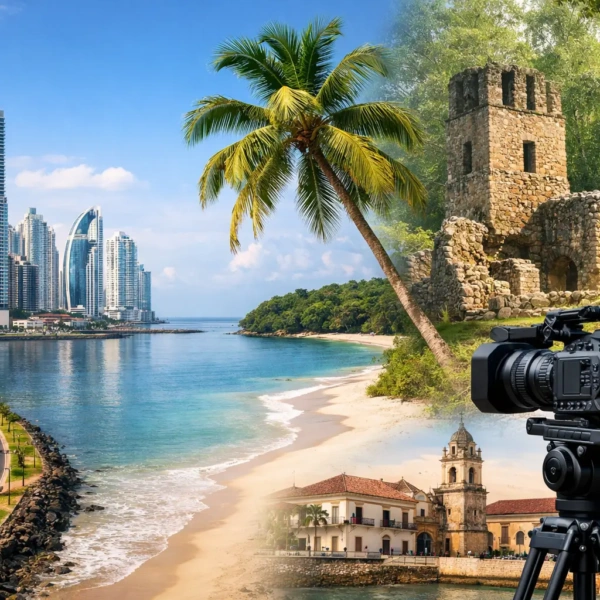
Panama is geographically compact on a map, but travel times, weather patterns, access conditions, and municipal requirements can vary considerably from one location to the next. A rainforest exterior, a colonial street, a modern financial district, a beach, and a remote island may all be available within the same production, but they do not operate under the same logistical conditions.
A common mistake is scheduling a location move based only on mileage. A route can be short and still require additional time for traffic, road conditions, boat transfers, load-ins, security coordination, or limited crew parking. Producers should assess every location as a working environment, not just a visual backdrop.
Build schedules around access, not just scenery
During scouting, confirm where trucks can park, how equipment will reach set, whether generators are needed, where talent can hold, and what happens if rain changes the plan. These questions are especially critical for remote exteriors and protected natural areas. A beautiful location that needs a two-hour equipment transfer may still be the right choice, but the schedule and budget must reflect that reality.
Starting Permits After Creative Is Locked
Permits are often treated as an administrative task to complete after the creative is approved. That approach can create unnecessary pressure. Location permissions, municipal processes, road control, drone operations, police support, protected-area access, and special effects can all affect the practical terms of a shoot.
The issue is not simply getting a permit. It is allowing enough time to secure the correct permission, understand its limitations, and coordinate the agencies or stakeholders involved. A late change to a shot list can require more than a quick call if it changes traffic impact, crowd control, aerial filming, hours of operation, or the type of equipment on set.
Foreign producers should bring local production support into the location and schedule conversation early. It gives the creative team real choices before a preferred setup becomes an expensive or impractical commitment.
Assuming a US Crew Structure Transfers Exactly
Panama has skilled crews across production, camera, lighting, grip, art, sound, transportation, and location departments. However, crew classifications, day rates, overtime practices, kit expectations, and department workflows may not mirror the structure of a US production.
The mistake is not hiring locally. It is failing to define expectations before prep begins. An international line producer may assume a specific crew role includes certain equipment, prep days, or responsibilities. A local technician may have a different standard based on the project scale and agreed deal. Neither side is wrong, but ambiguity becomes costly when it reaches the set.
A clear production plan should specify department heads, crew numbers, work hours, prep and wrap requirements, equipment responsibilities, transport plans, meals, and communication channels. Local crew coordination works best when the service producer can translate the visiting production’s needs into a practical local structure.
Booking Equipment Without a Backup Plan
It is possible to source professional production equipment in Panama, but international producers should not assume every preferred package, specialty lens, high-output fixture, or backup body is immediately available in the same quantity as a major US production hub. Availability depends on dates, competing projects, import timing, and the technical demands of the job.
The right approach is to create an equipment plan during prep, not during the final week before travel. Confirm what is available locally, what needs to be brought in, what can be substituted without affecting the image, and what requires redundancy. This is particularly important for specialty cameras, underwater work, aerial units, complex rigging, and large commercial lighting packages.
Bringing equipment from abroad can be the correct decision, but it introduces its own work: freight timing, customs documentation, insurance, carnet requirements where applicable, battery transport rules, and return logistics. The cheapest choice on a bid is not always the least expensive choice once downtime risk is added.
Underestimating Weather and Seasonal Planning
Panama’s tropical climate is an asset visually, but weather must be managed as a production variable. Rain can be brief and manageable, or it can alter access, ground conditions, water activity, and daylight plans. Coastal and rainforest locations require a different contingency mindset than controlled studio work.
The mistake is building a schedule with no recovery capacity. A weather cover set, adjusted call times, protected equipment areas, rain-safe transport, and realistic company moves can protect a production without changing its creative ambition. For some projects, the best answer is to schedule key weather-sensitive material during the more favorable period. For others, a flexible shooting order is enough.
Local knowledge matters because weather decisions are not only about a forecast. They are about how specific roads, docks, beaches, neighborhoods, and locations behave after rain.
Treating the 25% Cash Rebate as Automatic
Panama’s 25% cash rebate is a meaningful financial advantage for qualifying productions, but it should never be treated as a flat discount applied to every line of a preliminary budget. Incentives have eligibility requirements, documentation standards, qualifying expenditure rules, timing considerations, and approval processes.
One of the top mistakes foreign producers make in Panama is advertising a rebate before confirming how the production will qualify and what records it must maintain. A project may be creatively ready and still need a more disciplined local spend plan to support its incentive strategy.
Producers should review the incentive pathway during budgeting, not after principal photography. That includes identifying qualifying local expenses, payment and invoice requirements, company structure considerations, and the paperwork needed throughout production. A local partner can help align the production office, accountant, and production management team so that documentation is built into the workflow rather than reconstructed later.
Leaving Legal, Labor, and Immigration Questions Until Travel
International shoots can involve visiting cast, directors, producers, photographers, executives, and technical specialists. Depending on each person’s role and duration of work, immigration, work authorization, tax, labor, and contract considerations may apply. These are not details to solve at the airport or after a call sheet has been distributed.
The practical solution is early visibility. Provide the local production team with accurate crew and talent lists, job descriptions, travel dates, equipment manifests, and entity information as soon as possible. Late additions are common in production, but a structured process makes them easier to manage.
Legal compliance also protects the production’s reputation with local crew, property owners, public authorities, and clients. It is part of keeping the work moving, not a separate corporate exercise.
Running All Decisions From Abroad
Remote decision-making is useful during development, but it can create friction during prep and principal photography when every local question waits for approval across time zones. Small delays multiply quickly: a truck route changes, a location owner requests an adjustment, weather forces a move, or a prop replacement is needed that afternoon.
Foreign producers should maintain control of creative, budget, and key client decisions. At the same time, they should give the local production manager and line producer defined authority to solve routine operational issues within agreed parameters. That balance avoids unnecessary escalation while preserving financial oversight.
Daily production reports, cost tracking, bilingual call sheets where useful, and one clear point of contact on each side keep everyone aligned. The goal is not to reduce visibility. It is to prevent the production from stopping while a minor decision waits for a reply.
Choosing a Fixer Only After the Budget Is Built
A local production partner is most valuable before the numbers, schedule, and location plan harden. Bringing local expertise in after a destination has been sold to a client can force a team to correct assumptions under deadline pressure. That is when producers discover that a remote day needs additional transport, a street setup requires more coordination, or an incentive estimate does not match the qualifying spend plan.
Early local involvement gives a production better options. It can identify location combinations that reduce company moves, build a crew package that fits the project, flag permit lead times, and design logistics around the real scope of work. It also gives international teams one accountable production resource on the ground rather than a patchwork of individual vendors.
A well-prepared Panama shoot should feel controlled, even when the work is ambitious. For producers planning a commercial, series, feature, or reality production, 40 Grados Producciones can turn early creative and budget conversations into a workable local plan before the first crew flight is booked.