

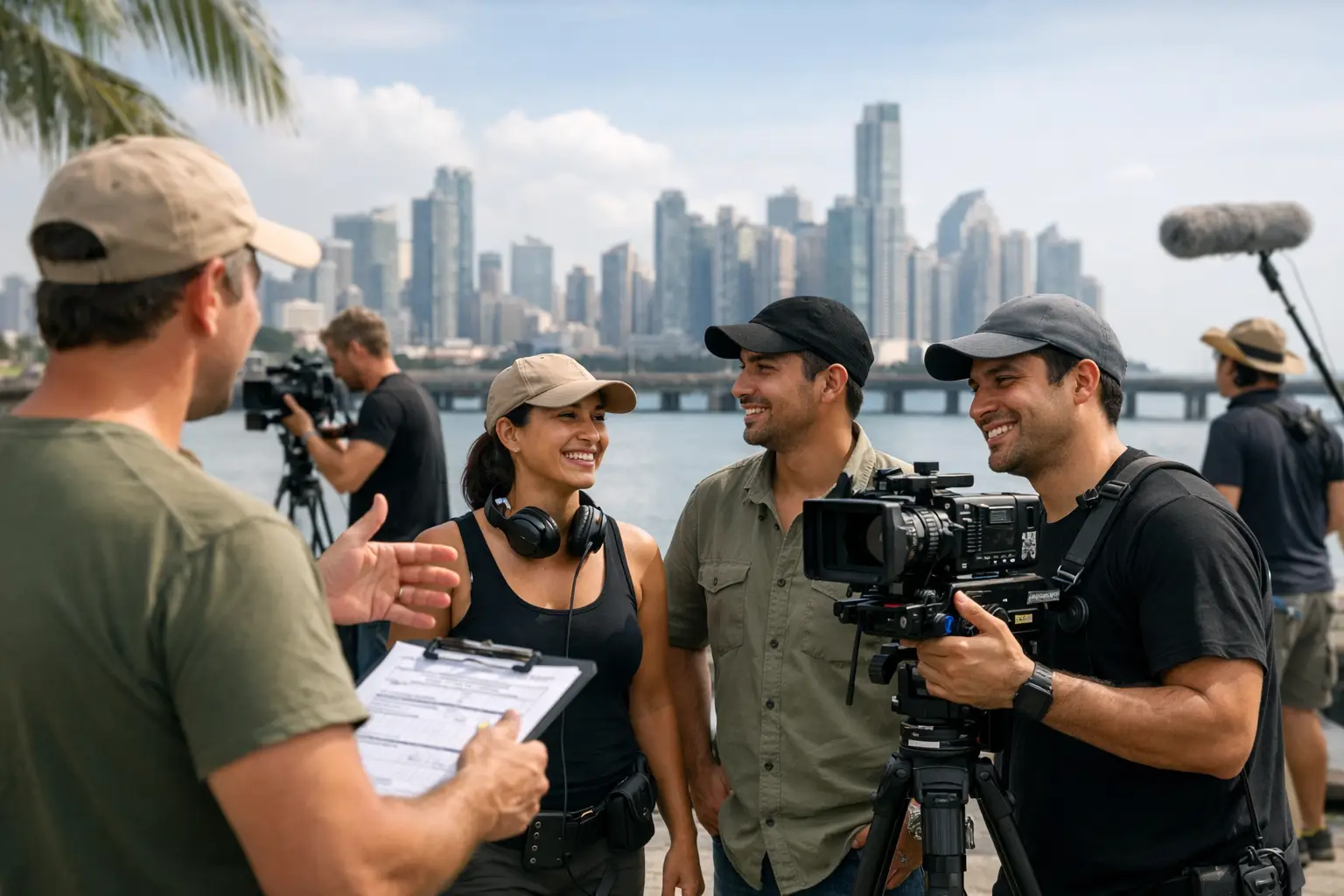
A Panama shoot can move quickly from a sunrise call at a Caribbean beach to a night exterior in Panama City. The difference between an efficient production day and a costly reset often comes down to how to coordinate local crews before the first truck is loaded. International productions need more than available labor. They need a local team that understands the creative brief, the chain of command, the working conditions, and the practical limits of each location.
For foreign producers, local crew coordination is not simply a staffing task. It is a production control function. When handled properly, it protects the schedule, gives department heads the support they need, and prevents small communication gaps from becoming expensive problems on set.
How to Coordinate Local Crews Before Prep Begins
The strongest crew days are built in prep, not repaired at call time. Start by translating the production plan into a clear local staffing structure. A script, shot list, schedule, location plan, equipment list, and department breakdown should be reviewed together before crew recommendations are finalized.
A commercial with a compact footprint may need a lean, highly versatile local team. A reality series working across multiple provinces may require separate field units, drivers, fixers, data support, and advance teams. A feature film may need department depth that allows for prep, shoot, and wrap responsibilities to run in parallel. There is no universal crew template. The right structure depends on the format, number of shooting days, travel distance, technical complexity, union or client requirements, and how much equipment is being brought into Panama.
Local production management should identify where international department heads require direct counterparts. This usually includes production, locations, camera, grip and electric, art, wardrobe, hair and makeup, transportation, catering, and health and safety. Assigning a point person in each department avoids the common mistake of routing every question through one overloaded production coordinator.
Crew hiring should also account for local knowledge, not only credits. A location assistant who knows access routes, community contacts, weather patterns, and municipal procedures can save hours during a remote shoot. A transportation captain who understands city traffic restrictions and rural road conditions can protect a company move that looks simple on paper but is difficult in practice.
Build a Clear Chain of Command
International crews often arrive with established workflows, while local crews bring valuable regional experience and vendor relationships. Both are assets, but they need a defined reporting structure. Ambiguity creates duplicated work, conflicting instructions, and delays that no one has budgeted for.
Before prep starts, confirm who has approval authority for schedule changes, overtime, equipment substitutions, location access, petty cash, and vendor decisions. Make those approvals visible in the production book and daily communications. Crew members should know whether a request belongs with the line producer, production manager, first assistant director, local coordinator, or department head.
The production office should establish one official channel for operational updates. Messaging apps are useful for fast field communication, but they should not become a stream of informal instructions that contradict call sheets or department plans. Use a clear process: formal changes go through production, department heads relay relevant updates, and the revised instruction is acknowledged by the people responsible for execution.
Language should be planned, not assumed. Many Panama-based film professionals work comfortably in English, but not every vendor, driver, community contact, or day player will. Bilingual coordination is especially valuable when safety instructions, location rules, permit conditions, or timing changes must be understood precisely. A short, direct briefing in the right language is far more effective than a long explanation that gets partially translated on the fly.
Give Departments the Information They Need
A call sheet alone is not enough for departments managing a complex day. Camera needs access and power details. Grip and electric need load-in timing, site restrictions, generator placement, and rain contingencies. Art needs dimensions, delivery windows, and restoration expectations. Transportation needs passenger counts, parking instructions, route plans, and driver call times.
Share information at the correct level of detail. A local crew does not need a vague instruction to be “ready for anything.” They need to know what is expected, when it is needed, and who will make the final decision if conditions change. That clarity builds confidence and allows experienced crew members to solve practical problems before they reach the producer.
Match Crew Calls to Panama’s Real Conditions
Panama offers city skylines, colonial streets, rainforest, islands, beaches, rivers, and rural landscapes within manageable travel distances. That range is a major production advantage, but it also means that crew coordination must reflect actual location conditions.
A remote beach day may require earlier transport calls, marine coordination, shade and hydration planning, additional generators, secure communications, and a longer wrap process. A historic district may involve restricted vehicle access, limited parking, noise controls, and strict protection of public spaces. A downtown location may be operationally easier to reach but more exposed to traffic, pedestrian flow, and business-hour limitations.
Weather planning deserves the same attention as the shooting plan. Panama’s rainy season can affect access roads, exterior setups, water transport, and crew movement. Build weather holds, cover sets, and equipment protection into the daily plan rather than treating rain as an unexpected exception. Local crew members can offer practical guidance on seasonal patterns, but production still needs a documented contingency plan with clear trigger points.
Crew welfare is also schedule management. Provide realistic meal timing, drinking water, rest opportunities, clean facilities, and transport that reflects the length and difficulty of the day. On long exterior days, fatigue can quickly reduce efficiency and increase safety exposure. Saving a small amount on logistics is rarely worth losing time during the final setups.
Coordinate Local Crews Around Permits and Locations
Permits are not paperwork that sits outside the crew plan. Permit conditions directly affect how departments work. Restrictions may govern shooting hours, street use, parking, drone operations, marine access, public areas, police support, noise, or the number of vehicles and personnel allowed at a site.
Brief relevant department heads on these conditions before the day of filming. If a permit allows a specific load-in window, transportation, grip, art, and locations must be aligned around it. If a beach or public site requires specific access protection, the locations team needs the labor and materials to maintain it. If a municipal authority requires a site representative, that responsibility should be assigned rather than assumed.
A local production partner can coordinate these moving parts while giving the visiting production a single point of accountability. 40 Grados Producciones supports international teams with crew sourcing, location coordination, permits, logistics, and on-the-ground supervision so that production decisions are connected to local execution.
Protect the Budget Without Understaffing the Day
Crew coordination has a direct effect on cost. Understaffing may appear efficient during bidding, but it often produces overtime, slower resets, rushed safety decisions, and avoidable rental extensions. Overstaffing without a defined purpose can also drain the budget. The goal is not the largest crew. It is the crew size and mix that can complete the planned work safely within the available time.
Track labor hours against the schedule every day. If a recurring delay is caused by travel, access, approvals, or equipment movement, address the root cause before it becomes a pattern. Do not assume the crew is moving slowly when the real issue is a call time that ignores travel conditions or a location plan that did not allow enough time for load-in.
Local hires can also support cost control through realistic vendor recommendations, efficient sourcing, and fewer last-minute substitutions. However, producers should still set standards for quotes, purchase orders, petty cash, overtime approvals, and wrap documentation. Local knowledge is most valuable when it operates within clear financial controls.
Run Better Daily Briefings and Wraps
A useful morning briefing is short and specific. Cover the day’s shooting priorities, safety concerns, weather outlook, access restrictions, transport changes, client or talent considerations, and the communication path for urgent issues. Department heads should leave knowing the critical risks, not listening to a repeat of the entire call sheet.
At wrap, production should capture what changed and what must be corrected for the next day. Did transport arrive late? Did a location restriction affect the lighting plan? Did the crew need additional rain cover or more time for a company move? These notes should become actions assigned to named people, not observations that disappear after the trucks leave.
When local crews are treated as informed production partners, they can anticipate needs, protect relationships with communities and vendors, and keep the set moving. Give them a clear plan, authority at the right levels, and enough information to do their jobs well. That is how a visiting production gains the control of an established local operation without spending weeks building one from scratch.