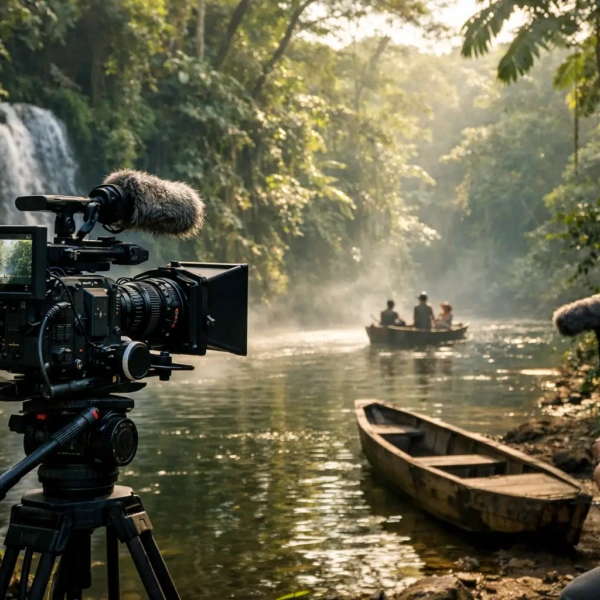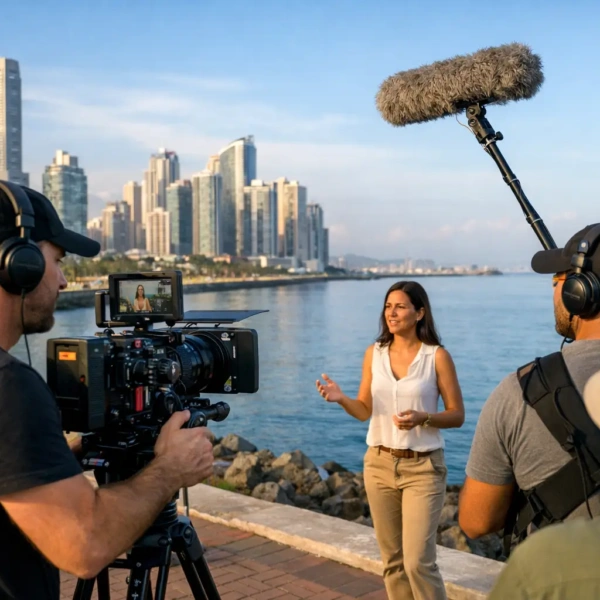

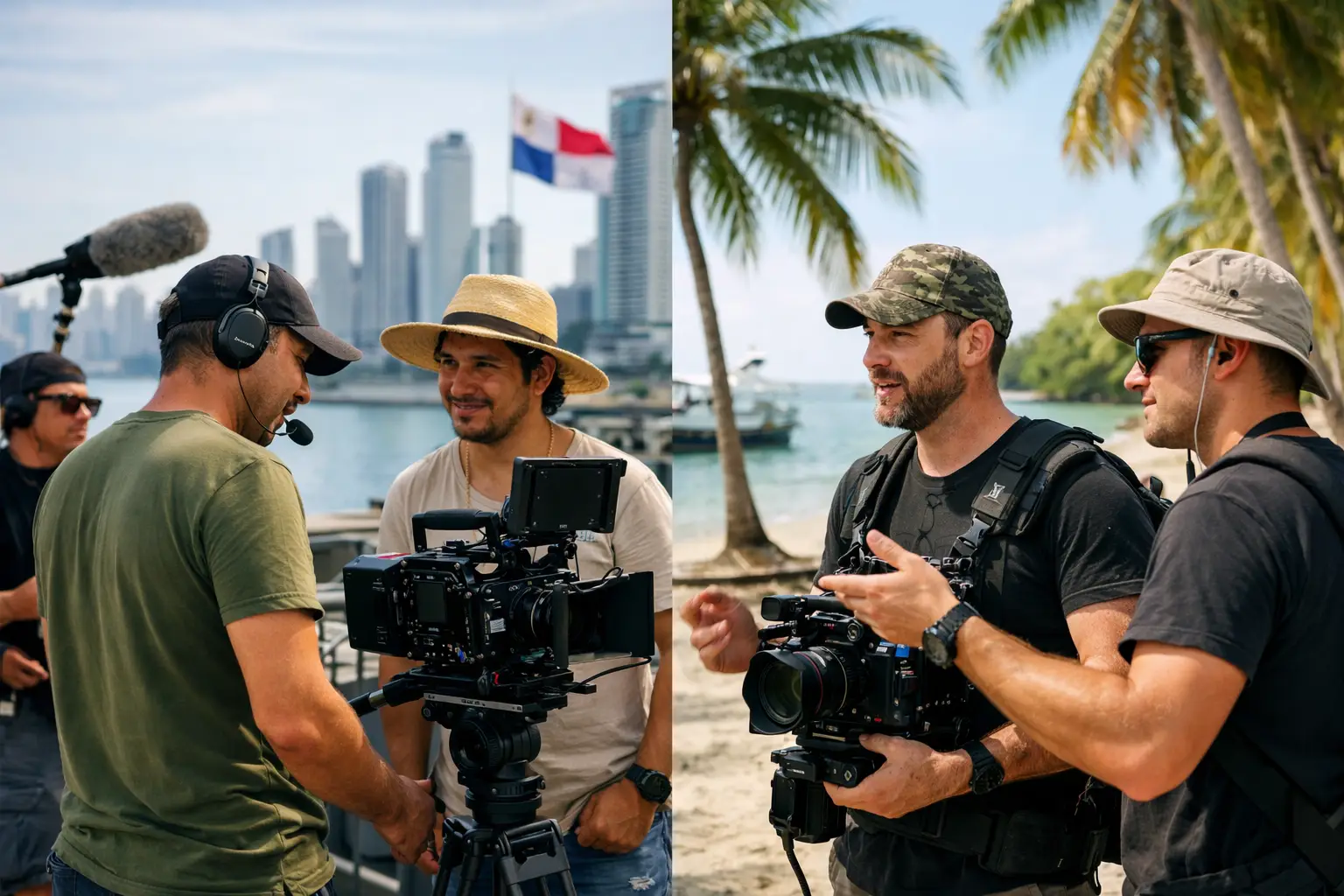
A crew decision can shape a Panama production long before the camera package arrives. The local crew vs fly-in crew question is not simply about day rates. It affects permit timing, freight, labor coordination, communication on location, and how quickly your team can solve a problem when the schedule changes.
For international productions, the strongest approach is rarely an all-or-nothing choice. Bring the key creative and technical personnel whose established working relationships matter to the project. Build the rest of the department structure with trusted Panamanian professionals who know the country, the vendors, and the practical realities of filming here.
Local Crew vs Fly-In Crew: What Is Actually at Stake
A fly-in crew can preserve a familiar production rhythm. Your director of photography may already have a precise shorthand with a camera operator, gaffer, or key grip. A commercial agency may require a specific production designer or stylist. On a feature, department heads with long-standing creative relationships can protect continuity across a multi-country schedule.
That value is real. But it comes with costs that extend beyond airfare and hotel rooms. International crew travel requires more advance coordination, additional baggage planning, work authorization considerations, transport, per diems, and backup plans for delays. A schedule built around arriving crew can become vulnerable when one connection is missed or a shipment is held in transit.
A local crew changes that equation. Panama has experienced professionals across production, camera, grip and electric, art, wardrobe, hair and makeup, sound, locations, transportation, marine coordination, and safety support. Local department teams arrive with market knowledge that cannot be packed into a flight case: which roads flood after heavy rain, where to stage trucks near a historic district, how long a remote transfer actually takes, and which supplier can replace a failed item on short notice.
The question is not which workforce is better. It is which positions need to travel and which are better staffed in country.
Where Local Hiring Creates Immediate Production Value
The most obvious benefit of hiring local crew is budget control. Every local hire can reduce travel, accommodation, airport transfers, baggage costs, per diems, and downtime associated with international arrivals. On a larger shoot, those savings can be redirected into additional shooting days, a stronger art build, more specialized equipment, or contingency.
The more meaningful advantage is operational speed. A Panama-based assistant director, location manager, production coordinator, or transportation captain understands local routes, call-time realities, vendor expectations, and municipal processes. They can communicate directly with site contacts and respond in real time when access conditions change.
Local crews also help productions work with the country rather than around it. Panama can offer tropical coastline, rainforest, modern city skylines, colonial architecture, islands, rivers, industrial areas, and rural landscapes within practical reach of a production base. Making those contrasts work on schedule depends on accurate local planning. A crew that has worked those routes knows when a company move is realistic and when it becomes an expensive gamble.
There is also a compliance benefit. International productions need a clear structure for permits, location agreements, labor arrangements, importation, insurance, and local coordination. A qualified local production partner can organize the right people around those requirements from prep through wrap, reducing avoidable friction on set.
When Flying In Crew Is the Right Call
Some roles should travel because the creative risk of replacing them is higher than the logistical cost. This is common for directors of photography with proprietary visual workflows, specialized camera teams, stunt coordinators, show runners, lead production designers, key talent teams, and agency creatives responsible for brand approval.
Specialized technical requirements can also justify fly-ins. If a production depends on a particular motion-control system, underwater unit, high-end beauty workflow, or complex virtual production process, bringing the operator who knows that system may protect both time and quality.
The key is to avoid flying in an entire department by default. That approach often duplicates skills already available locally while adding unnecessary travel pressure to the budget. It can also create a divided set, where visiting crew and local teams are introduced too late and lack a clear reporting structure.
A better plan identifies the essential traveling roles early, then pairs them with local department leads during prep. A visiting gaffer, for example, can work effectively with a local best boy, electricians, and rental support when the lighting plan, equipment list, and power requirements are aligned before the first load-in.
Build a Hybrid Crew Around the Schedule
For most film, television, reality, and commercial projects, a hybrid model delivers the best balance of creative control and production efficiency. The traveling team protects the project’s core creative language. The local team provides the scale, market access, and practical knowledge needed to execute it in Panama.
Start by separating roles into three categories: creative continuity, specialized technical leadership, and locally scalable departments. Creative continuity includes positions tied directly to the look, performance, or approval process. Specialized leadership covers technical roles that require a specific system or unusual experience. Locally scalable departments are the positions that can be crewed efficiently in Panama once the production plan is clear.
Production, locations, transportation, accounting support, casting coordination, runners, assistants, drivers, security, and many on-set operational roles are often strongest when locally staffed. Camera, grip, electric, art, wardrobe, and sound can be built as mixed teams based on the project’s needs. The right balance depends on format, budget, equipment, language requirements, and the pace of the shoot.
For a fast-moving reality series, local field support and transportation knowledge may be the difference between making a location window and losing it. For a high-concept commercial, the priority may be a traveling creative core supported by local production and technical departments. For a feature with a longer schedule, investing in a well-integrated local team can generate meaningful savings over several weeks of production.
Plan the Handoff Before Crew Travel Is Booked
A hybrid model succeeds when the handoff is designed in prep, not improvised during the tech scout. Department heads should receive local crew breakdowns, equipment availability, location conditions, and production timelines early enough to make informed decisions. Local leads need the same clarity on creative priorities, communication channels, chain of command, and expected deliverables.
Crew calls, equipment specifications, and language needs should be confirmed well before principal photography. If key documents are only available to the traveling team, the local departments lose time translating intent into action. Clear call sheets, bilingual communication where needed, and department-specific prep meetings keep the operation aligned.
It is also wise to establish a realistic contingency plan. Panama’s weather, terrain, and location access can create variables that need active management. Local teams are especially valuable here because they can identify alternate routes, backup locations, covered work areas, replacement vehicles, and nearby vendors before a problem becomes a lost day.
Look Beyond the Daily Rate
Comparing day rates alone can produce the wrong staffing decision. A less expensive fly-in rate may become costly after travel, lodging, per diem, excess baggage, transport, and lost prep time are included. Conversely, a senior traveling department head may cost more but prevent expensive reshoots if the project depends on a highly specific technical or creative process.
Assess crew choices against the total cost of execution: travel exposure, schedule risk, local knowledge, equipment access, communication, compliance, and creative consequence. That is the calculation executive producers and line producers need to make.
40 Grados Producciones helps international teams build crew plans that fit the real requirements of a Panama shoot, not a generic staffing model. The goal is a properly supported set where visiting specialists and local professionals can work as one production unit.
The best crew plan is the one that lets your creative team focus on the frame while the production has the local knowledge, manpower, and control to keep every day moving forward.