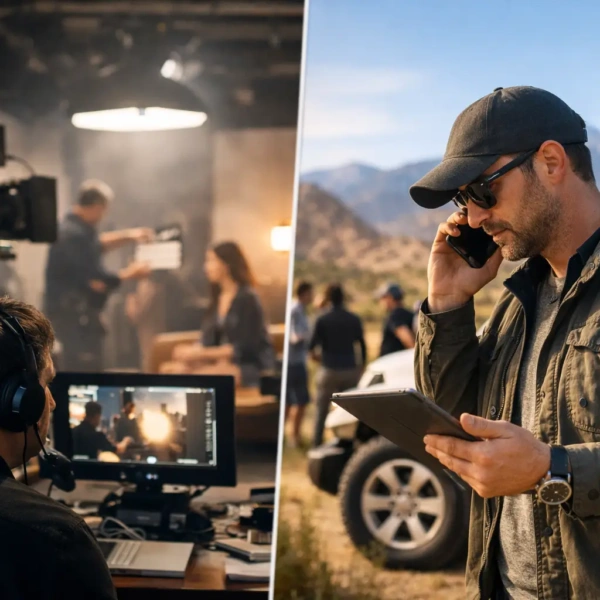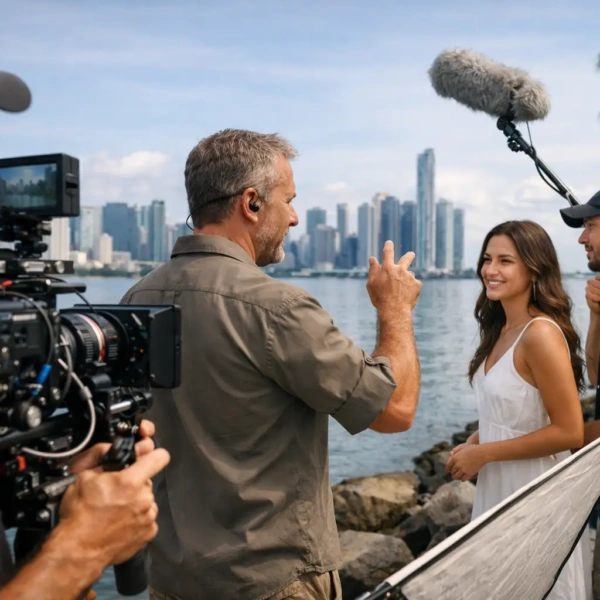
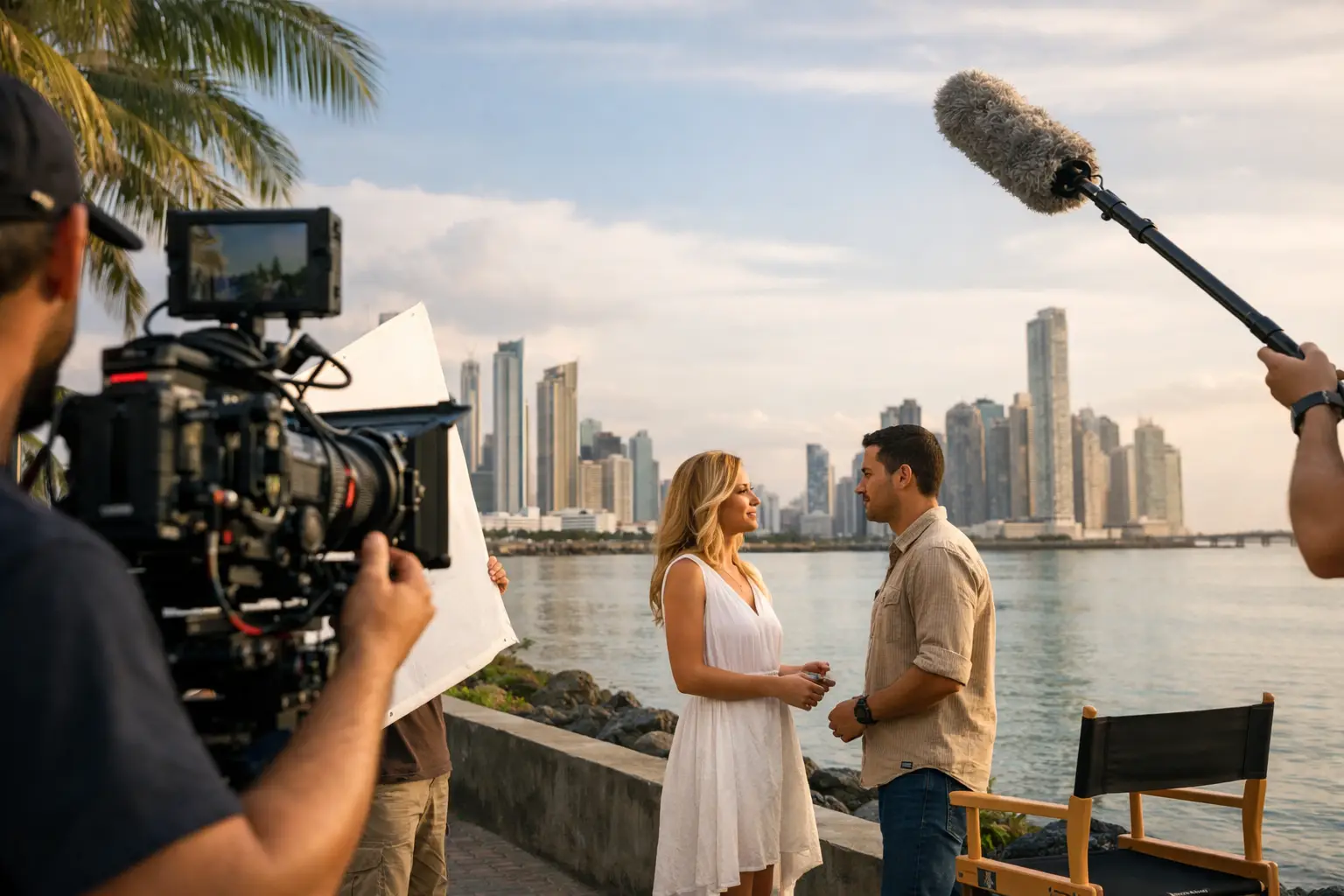
A shoot day in Panama can move from skyline glass towers to rainforest canopy to Caribbean water in a matter of hours. That is the practical appeal behind foreign film production Panama – not just visual range, but the ability to get multiple production values without dragging a budget across several countries.
For producers, though, the real question is never whether Panama looks good on camera. It is whether the country can support the schedule, legal requirements, crew expectations, and financial model of an international production. The answer is yes, but only when the project is built around local execution, not assumptions imported from another market.
Why foreign film production Panama keeps getting attention
Panama works because it gives producers a rare combination of visual diversity, regional access, and manageable scale. You can shoot urban business districts, colonial streets, tropical beaches, islands, jungle roads, mountain areas, and industrial infrastructure without relocating the entire production across long domestic distances. That matters when time is tight and company moves affect the budget as much as the location fee.
The other reason is cost efficiency. Compared with many North American and European production hubs, Panama can offer meaningful savings on labor, logistics, and location access. Those savings are not automatic. They depend on how the production is designed, where equipment is sourced, how many traveling heads are brought in, and whether local crew capacity is used correctly. Still, for many feature, television, commercial, and branded content teams, Panama is attractive because it can deliver high production value without the financial drag of more saturated markets.
Then there is the 25% cash rebate incentive, which is often one of the first talking points in any serious location conversation. It can be a strong advantage, but producers should treat it as part of the financing structure, not as a catch-all solution. Eligibility, documentation, spend categories, and timing matter. A project that plans for the rebate from day one is in a much stronger position than a project trying to organize paperwork after principal photography is already underway.
What international producers need to solve first
The biggest mistake in foreign production is assuming the creative is the hard part and everything else can be arranged locally once dates are locked. In Panama, as in any market, production success depends on prep discipline.
Permits are the first pressure point. Panama offers a broad range of public and private filming environments, but access is not one-size-fits-all. A beach setup, a city street closure, a drone operation, and a shoot in a protected area all involve different levels of authorization. Some are straightforward. Some require coordination across multiple entities. The timeline changes depending on the location, the footprint, and the nature of the content.
Customs and equipment planning come next. Some productions travel with key camera packages or specialty gear, while others benefit more from sourcing locally and only importing essential items. The right choice depends on format, technical standards, availability, insurance, and schedule risk. Bringing everything in can feel safer on paper, but it may create avoidable transport and clearance complications. Relying entirely on local sourcing can save money, but only if the package truly matches production requirements.
Crew structure is another major decision. Panama has skilled local professionals across production management, camera, grip, electric, art, sound, transport, and field coordination. The question is not whether local crew exists. The question is how to build the right hybrid model. A commercial may fly in agency-facing department heads and localize the rest. A factual television series may keep only a few key creatives traveling and build heavily with local support. A feature may need a more layered structure. It depends on the project, but underusing local crew usually creates unnecessary cost.
The operational advantage of working with a local production partner
Foreign film production Panama is usually most efficient when handled through a one-stop local production company that can manage permits, scouting, legal coordination, logistics, vendor sourcing, and on-the-ground execution under one roof.
That is not just a convenience argument. It is a control argument.
When producers split these responsibilities across multiple local contacts, they often lose visibility. Timelines become fragmented. Budget forecasting gets weaker. Accountability blurs when a permit is delayed, transport changes, or a location agreement needs revision. A strong local partner closes those gaps by centralizing communication and translating local realities into production terms that international teams can work with quickly.
This matters even more on shoots with compressed prep. International teams often arrive with aggressive calendars and little tolerance for uncertainty. In that environment, local knowledge is not a nice extra. It is what keeps the shoot compliant, moving, and protected from preventable downtime.
Locations are the headline, but logistics close the deal
Panama’s locations are easy to pitch. The country offers modern city architecture, old-world streetscapes, jungle, coastline, islands, ports, highways, and rural environments in relatively close range. For screen projects that need visual variety, that range can reduce the need for multiple country moves.
But experienced producers know a location is only valuable if it works operationally. Access windows, parking, holding, crew movement, weather patterns, noise control, public traffic, and backup options all matter. A location that looks perfect in a scout photo but cannot support a basecamp or gear movement is a budget problem waiting to happen.
That is why scouting in Panama should be done with production logic, not just aesthetics. The right local team does not simply present good-looking options. It vets those options against your schedule, footprint, lighting plan, road access, and permit pathway. That is the difference between a location deck and an executable shoot plan.
The rebate can be a strong advantage if you build around it
Producers are right to ask early about incentives. Panama’s 25% cash rebate can materially improve project economics, especially on productions with qualified local spend. But rebate value depends on discipline.
You need a realistic assessment of whether the project qualifies, what spend is likely to count, what local corporate structure or registration steps may apply, and how costs will be tracked. If the production waits too long to define this, the rebate becomes less of a strategic advantage and more of an administrative scramble.
There is also a practical budgeting issue. Rebates help cash flow after the fact, but they do not replace the need for production liquidity during prep and principal photography. Producers should plan for both realities at once: how to maximize eligible spend and how to keep the live production funded properly while the incentive process runs its course.
Where Panama fits best by production type
Panama is especially effective for commercials, branded content, travel series, reality programming, unscripted field production, music videos, and features that need multiple environments in one country. It is also a strong choice for projects that want Latin American geography with reliable urban infrastructure and international accessibility.
That said, not every project benefits in the same way. A highly controlled studio-heavy production may not gain much from Panama’s location diversity. A project with very specific specialty gear needs may require more technical planning around sourcing. A production with a small footprint and fast turnaround, on the other hand, can move extremely well here if local permits, crew, and transport are lined up early.
This is where experience matters. The right approach is not selling Panama as the answer to every brief. It is identifying where the country provides a measurable edge and designing the production around those strengths.
What a well-run shoot in Panama actually looks like
A well-run international shoot in Panama feels organized before the crew lands. Permits are already in motion. Scouting has narrowed the realistic options. Local crew roles are confirmed. Transport, lodging, call flow, customs planning, and legal support are mapped against the schedule. The rebate strategy is not a side conversation. It is integrated into the budget process.
Once the production is live, the local team should be handling the friction points before they become producer problems. That includes permit follow-through, municipal coordination, location relations, day-to-day logistics, crew adjustments, and real-time problem solving. This is the level where a service company proves its value.
For overseas producers, that is the real promise of a market like Panama. Not just a good destination, but a manageable one – provided the local execution is strong. Companies such as 40 Grados Producciones are built for exactly that role, serving as the in-country production partner that keeps the creative moving while the operational side stays controlled.
If Panama is on your shortlist, treat it like a production decision, not a postcard decision. The country gives you range, value, and incentive potential, but the real gain comes from putting the right local structure under the job from the start.