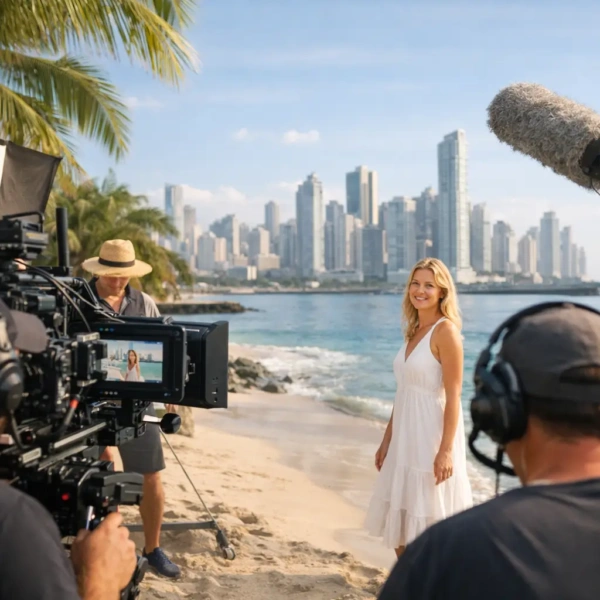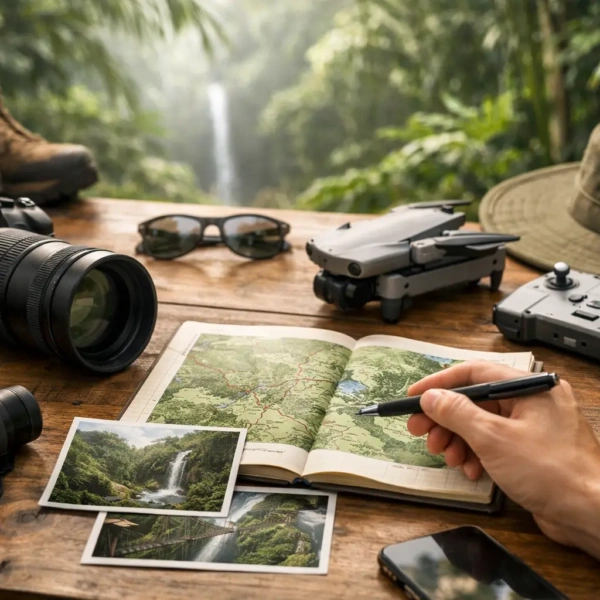

A dawn call at a Caribbean beach, a midday company move into a modern financial district, and a night exterior in the rainforest can all be realistic options within one production schedule in Panama. That practical range is central to the future of filming in Panama. For international producers, the opportunity is not simply access to attractive scenery. It is the ability to build a more efficient production plan around locations, incentives, experienced local support, and a country designed for regional connectivity.
Panama has long been known as a strategic crossroads for trade and travel. Its next chapter as a production destination will be shaped by the same advantage: international teams can arrive quickly, move across distinct visual environments without excessive travel days, and work with local professionals who understand how to execute for overseas clients. The projects that benefit most will be the ones that treat Panama as a serious production base, not a last-minute location substitute.
Future of Filming in Panama: Built for Smarter Schedules
The strongest reason to consider Panama is visual production value per shooting day. A compact geography gives producers access to tropical coastline, islands, rainforest, rivers, colonial streets, contemporary architecture, agricultural areas, and dense urban environments. Depending on the script, a unit can create several country looks without adding multiple border crossings, long domestic flights, or a fragmented vendor base.
This matters more as production teams face pressure to protect schedules and justify every company move. A location may look perfect in a pitch deck, but its production value falls quickly if access, permits, transport, accommodations, and equipment availability add friction. Panama’s advantage is that many contrasting looks can be organized from a manageable operational center.
That does not mean every location is interchangeable. Remote islands, protected areas, historic districts, and public infrastructure may require different lead times, access plans, safety measures, and approvals. Weather also needs to be part of the schedule from the first breakdown. The wet season can deliver dramatic skies and lush landscapes, but it calls for realistic contingency planning. A local production partner helps producers make those decisions based on actual shooting conditions rather than assumptions.
Panama City Will Keep Expanding Its Production Role
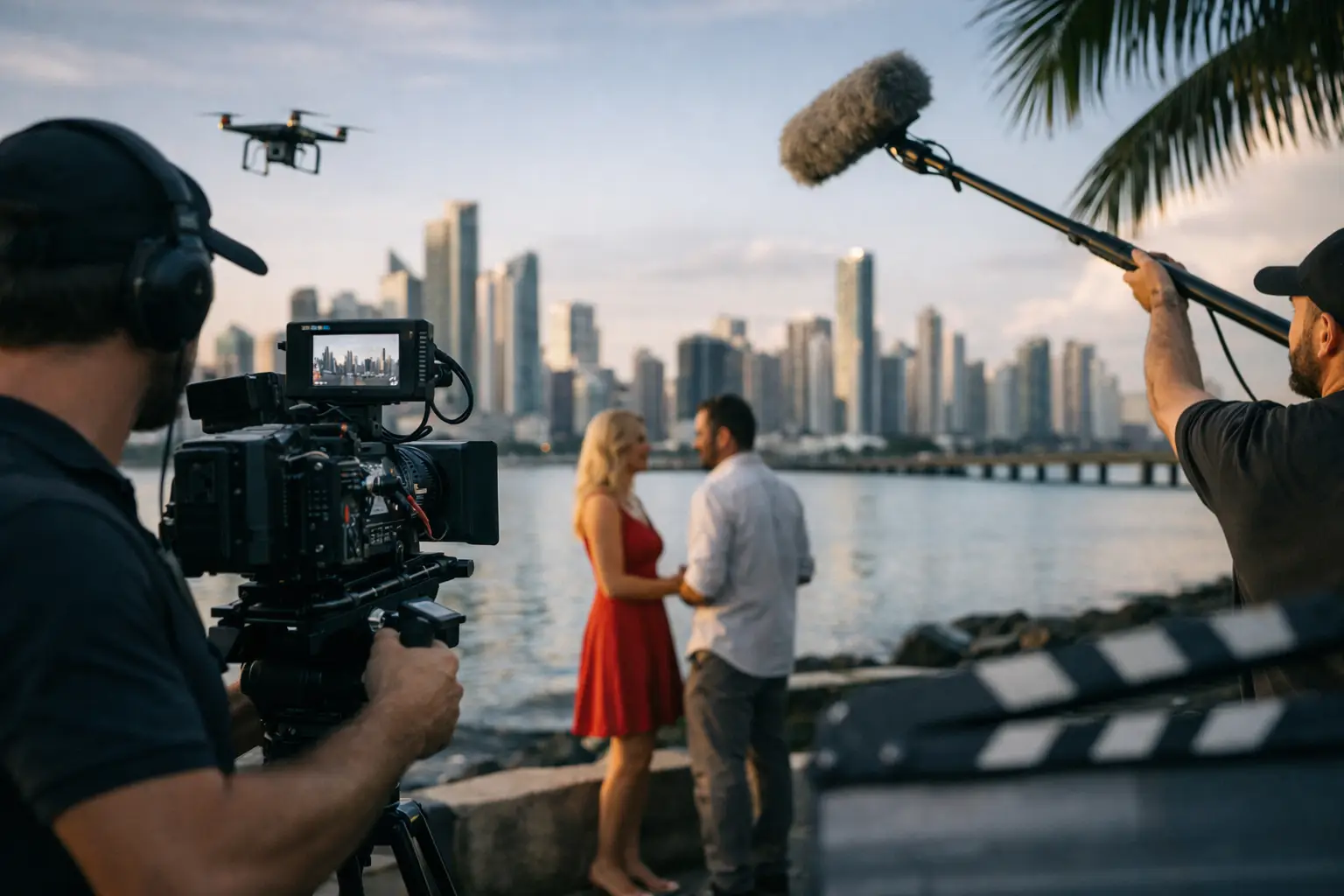
Panama City is more than an arrival point. It provides an urban production base with international hotels, commercial districts, highways, ports, modern residential areas, and a skyline that can play for several global markets. It also concentrates many of the services a visiting production needs: crew, rental coordination, casting support, transportation, communications, catering, and production offices.
For commercials, branded campaigns, television, and reality programming, that concentration can be especially valuable. A crew can shoot a polished city sequence, then transition to a beach, rainforest, or colonial environment with fewer logistical resets than a multi-country plan would require. For feature work, the city can support a main unit while a smaller team prepares more distant locations.
The future is likely to bring more projects that use Panama City as both a narrative setting and a practical hub for broader Central American production. That depends on producers planning local prep early enough to secure locations and build efficient routes around traffic, filming windows, and neighborhood requirements.
Incentives Will Reward Early, Compliant Planning
Panama’s 25% cash rebate incentive is one of the country’s most compelling production advantages for qualifying projects. It can materially improve the financial case for a feature film, television production, commercial project, or other eligible audiovisual work. But the incentive should never be treated as an automatic discount applied after the budget is locked.
Rebate access depends on eligibility, qualifying local expenditure, documentation, application procedures, and the specific requirements in effect for the project. The right approach is to assess incentive potential during budgeting, before major commitments are made. Producers need a clear view of which costs may qualify, what records are required, how payments should be handled, and what timeline applies to review and reimbursement.
This is where local oversight protects both the budget and the production. A service company can coordinate the operational side of the shoot while helping the production maintain the paperwork and local compliance needed to pursue available incentives. The goal is not to make an aggressive savings claim. The goal is to build a credible, auditable plan that can withstand review.
As international production becomes more cost-sensitive, destinations with transparent incentive pathways and dependable execution will stand apart. Panama is well positioned, provided projects treat compliance as part of production management rather than an administrative afterthought.
Local Crew Depth Will Matter More Than Low Day Rates
Lower costs are attractive, but experienced producers know that the cheapest plan is not always the most economical. A delayed permit, poorly timed transport, unavailable specialty gear, or miscommunication between departments can erase apparent savings quickly. The future of filming in Panama will be defined by production reliability as much as competitive pricing.
Panama has a growing base of local crew and production professionals with experience supporting international film, television, reality, commercial, and digital projects. The best service structure pairs that local knowledge with clear reporting to the visiting producer, line producer, or production manager. Callsheets, equipment lists, vendor confirmations, safety plans, cash flow, and location requirements must be managed with the same discipline expected on any international shoot.
Crew configuration should reflect the project, not a standard package. A small branded-content unit may need a lean bilingual team and fast-moving logistics. A scripted production may require more extensive department staffing, art support, legal coordination, security, picture vehicles, and specialized equipment. The most effective plans identify which department heads should travel and where strong local crew can increase value without compromising creative control.
Technology Will Improve Prep, Not Replace Local Judgment
Remote scouting, virtual location presentations, digital production tracking, and real-time communication have changed how international productions prepare. Producers can review options earlier, compare travel routes, and make faster decisions from another country. This will make Panama easier to evaluate before a physical scout.
Still, technology cannot fully answer questions about road access for trucks, sun direction at a specific hour, local sound conditions, neighborhood activity, public access, or rain cover options. A strong location scout remains one of the most valuable investments in the prep period. The future is a hybrid model: fast remote decision-making followed by verified on-the-ground planning.
For productions with compressed schedules, this approach is particularly useful. The local team can begin permit mapping, vendor availability checks, and preliminary location holds while the international team reviews creative options. Once the production commits, those early details can become a workable shooting plan rather than a rushed response.
Permits, Safety, and Sustainability Are Becoming Production Priorities
More productions are being judged not only by what appears on screen but by how the work is carried out. Public-space management, environmental considerations, community relations, labor practices, and safety procedures increasingly affect a production’s reputation and risk profile.
Panama’s protected natural environments are a major visual asset, and they require thoughtful handling. Filming in sensitive locations may involve specific restrictions, limited access, additional permits, waste-management requirements, or rules affecting generators, drones, vehicles, and large crew footprints. These are not obstacles to avoid. They are production realities to account for during the location and technical planning stages.
A capable local partner can coordinate with relevant authorities, property owners, and communities while helping the production protect the creative brief. That includes scheduling around public activity, securing required permissions, organizing transport, and setting expectations for site restoration. When this work is done early, it reduces costly surprises during principal photography.
Why a One-Stop Local Partner Changes the Equation
International producers do not need more names on a vendor list. They need one accountable team that can turn a creative brief and budget into a controlled local operation. That means connecting permits, scouting, crew, equipment, transportation, accommodations, legal guidance, fixers, and incentive coordination under one production plan.
For 40 Grados Producciones, the work begins well before the first camera arrives. A practical assessment of the script, desired locations, crew structure, schedule, and budget priorities allows the production to identify risks while there is still time to solve them. It also gives decision-makers a clear answer to the question that matters most: can this country deliver the work at the required level, on the required timeline, within a defendable budget?
Panama will not be the right answer for every project. A story needing winter landscapes, large-scale studio infrastructure, or very specific technical resources may require another solution or a multi-country approach. But for productions seeking tropical scale, urban range, regional accessibility, capable on-the-ground execution, and a meaningful incentive opportunity, Panama is becoming harder to overlook.
The strongest next step is simple: bring the script breakdown, target shoot dates, and budget parameters into the conversation early. That is when Panama’s locations, local resources, and incentive potential can be shaped into a production plan that works on paper and on set.