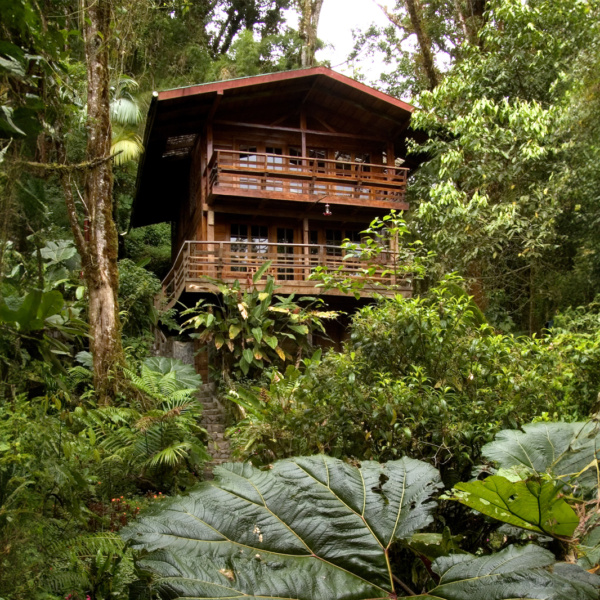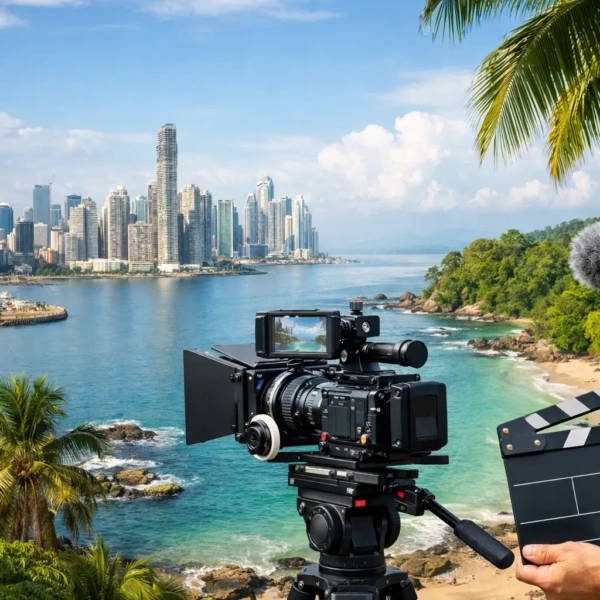

A tropical beach sunrise, a dense rainforest, a modern skyline, and a historic colonial district can all sit inside the same shooting schedule in Panama. That range is a major advantage, but it also raises the stakes for prep. Knowing how to plan destination shoots means converting a strong creative brief into a schedule, budget, and operational plan that can hold up once cameras arrive.
For international productions, destination work is rarely complicated because of one major obstacle. It becomes difficult when permits, location access, crew calls, customs, ground transport, weather coverage, and client expectations are treated as separate tasks. The strongest shoots are built around one local plan that connects them from the first scout through final wrap.
Start With a Production Brief That Can Be Executed
Before selecting locations or booking flights, define what the production needs to achieve on the ground. A creative deck is useful, but a destination production brief needs practical detail: script pages or shot descriptions, cast size, stunt or specialty requirements, equipment needs, expected working hours, travel dates, and delivery priorities.
The question is not simply, “Can we shoot this in Panama?” The better question is, “What version of this concept can be delivered efficiently, safely, and within the available schedule?” A jungle sequence, for example, may look close to a city on a map while still requiring extra transport time, weather contingencies, communications planning, and a different crew configuration.
Set the decision-making structure early. Identify who approves locations, who controls budget changes, who signs off on client-facing creative choices, and who has authority to adjust a day when weather or access changes. International teams lose time when local crews are waiting for approvals that must travel across time zones.
How to Plan Destination Shoots Around Locations
Panama offers unusual visual density. A production can access Panama City’s contemporary architecture, the Casco Viejo historic district, beaches on both coasts, islands, rainforest, agricultural landscapes, and the Panama Canal region without building a multi-country itinerary. That does not mean every combination belongs in a single schedule.
Location planning should begin with visual priorities, then move quickly to access and control. A location that looks ideal in a treatment may have limited vehicle access, public activity, noise restrictions, seasonal conditions, or a permit timeline that affects the entire shoot. The best scout is not a photo tour. It is a production assessment.
During a technical scout, confirm the real operating conditions: basecamp space, load-in routes, power availability, parking, holding areas, restrooms, cell coverage, nearby medical support, weather shelter, and nearby alternate angles. If a location requires boats, off-road vehicles, or extended hiking access, build those minutes into the schedule rather than treating them as a minor note.
For commercials and branded content, location consolidation is often the clearest budget win. Grouping scenes by geography can reduce company moves, transport requirements, overtime exposure, and equipment handling. The trade-off is creative flexibility. A line producer and director should decide together where the schedule can be efficient and where the image genuinely justifies a more complex move.
Build Weather Coverage Into the Creative Plan
Panama’s tropical conditions can deliver dramatic skies and rich landscapes, but rain planning cannot be an afterthought. Weather affects road access, exterior continuity, water work, drone operations, and talent comfort. A rain date helps, but it is not enough on a tight international schedule.
Create a usable weather cover plan for every exterior day. This may mean an interior option nearby, a covered set-up that still serves the story, or a second exterior location with more reliable access. A good cover plan has crew, transport, equipment, and permit implications already considered. It is not a vague promise to “find something else.”
Confirm Permits, Legal Requirements, and Local Access Early
Permitting is one of the first areas where a local production partner earns its value. Requirements vary by location type, municipality, public authority, protected area, private property, waterway, and scope of activity. Drone filming, traffic control, pyrotechnics, large lighting packages, and specialized work can trigger additional review.
Do not wait for final creative approvals before beginning permit conversations. Start with a realistic shooting window, a preliminary location list, cast and crew size, vehicle count, and equipment profile. This gives local producers enough information to identify lead times, restrictions, and costs before they become schedule problems.
Legal preparation also includes contracts, insurance requirements, releases, labor considerations, import documentation, and any production-specific compliance obligations. The right approach depends on the format. A small documentary unit has different needs from a large commercial or scripted production with overseas cast, brand representatives, agency personnel, and multiple vendors.
When a permit cannot accommodate the original plan, protect the production by identifying alternatives early. A comparable private location may offer greater control than a public site. A revised camera position may eliminate a traffic issue. These are not creative compromises by default. They are often the decisions that keep the day moving.
Build a Crew and Equipment Plan for the Actual Shoot
Flying in key creative leadership can make sense. Flying in every department often does not. Panama has experienced local professionals across production, camera, grip and electric, art, wardrobe, locations, transportation, and more. Building the right mix of traveling and local crew can control costs while preserving the director’s preferred workflow.
The decision depends on the project. A production with a proprietary camera system, specialized motion-control work, or a long-standing agency team may travel with more department heads. A lean branded-content shoot may benefit from a locally staffed unit led by a small visiting creative team. The priority is clarity: define responsibilities, reporting lines, equipment standards, and language needs before crew call.
Equipment planning deserves the same discipline. Confirm local availability, prep days, back-up options, power requirements, transport cases, and compatible consumables. If gear must travel internationally, map out temporary import procedures and customs timing well before the flight departs. The cost of shipping a single critical item can be justified. Shipping equipment already available locally often adds expense and risk without adding creative value.
Budget the Entire Move, Not Just the Shoot Days
A destination budget should reflect the full production footprint. Location fees and camera packages are visible line items, but costs often move in transport, accommodation, freight, permits, security, catering, per diems, communications, overtime, and contingency planning.
Schedule is the main budget lever. Every additional company move affects crew hours, vehicle use, meal timing, gear handling, and daylight. A shorter shoot is not automatically less expensive if it forces unsafe turnaround, rushed permits, or a high-risk travel plan. The goal is an efficient schedule with enough margin to absorb normal production variables.
Panama’s 25% cash rebate incentive can be a meaningful part of a qualifying production’s financial strategy. It should be assessed at the budgeting stage, not presented as a last-minute saving. Eligibility, qualifying expenses, documentation, application requirements, and timing matter. Build the incentive process into the production plan so the team can track the appropriate expenses from day one.
Keep Contingency Specific
A generic contingency line is useful, but it does not replace scenario planning. Identify the risks most likely to affect this particular project: weather, remote access, water transport, cast travel, customs clearance, specialty equipment, or restricted location hours. Then assign an operational response and a budget allowance where appropriate.
That approach gives producers better control over changes. It also prevents small disruptions from becoming expensive decisions made under pressure.
Treat Travel and Logistics as a Department
Travel logistics can shape the quality of a destination shoot as much as the camera package. International arrivals, hotel proximity, immigration timing, driver schedules, local transport, food requirements, security, and airport transfers should be coordinated through a single current movement plan.
Keep that plan practical. Include flight details, baggage or carnet needs, hotel contacts, vehicle assignments, call-sheet distribution, key emergency contacts, and arrival instructions for traveling crew. For remote locations, add fuel, water, communications, medical provisions, and return-to-city timing.
The production office should also establish a clear communication rhythm. Daily production reports, schedule updates, budget change approvals, and client check-ins keep international stakeholders informed without pulling the local team into unnecessary meetings. Reliable reporting is especially valuable when executives are reviewing progress from another country.
Work With a Local Partner Before the Plan Is Fixed
The most cost-effective time to involve a local production service company is before flights, locations, and crew assumptions are locked. Early local input can test whether a concept is practical, identify better location options, establish permit lead times, and build a budget that reflects real operating conditions.
40 Grados Producciones supports international teams with location scouting, permits, local crew, equipment coordination, legal and logistical guidance, and on-the-ground execution in Panama. The purpose is straightforward: give visiting producers one accountable local point of contact while protecting creative intent, schedule, and budget.
A destination shoot should feel controlled before the first case is loaded. When the location plan, permits, crew structure, logistics, and financial strategy are built together, Panama becomes more than a visually strong backdrop. It becomes a production base capable of carrying the work from first scout to final wrap.