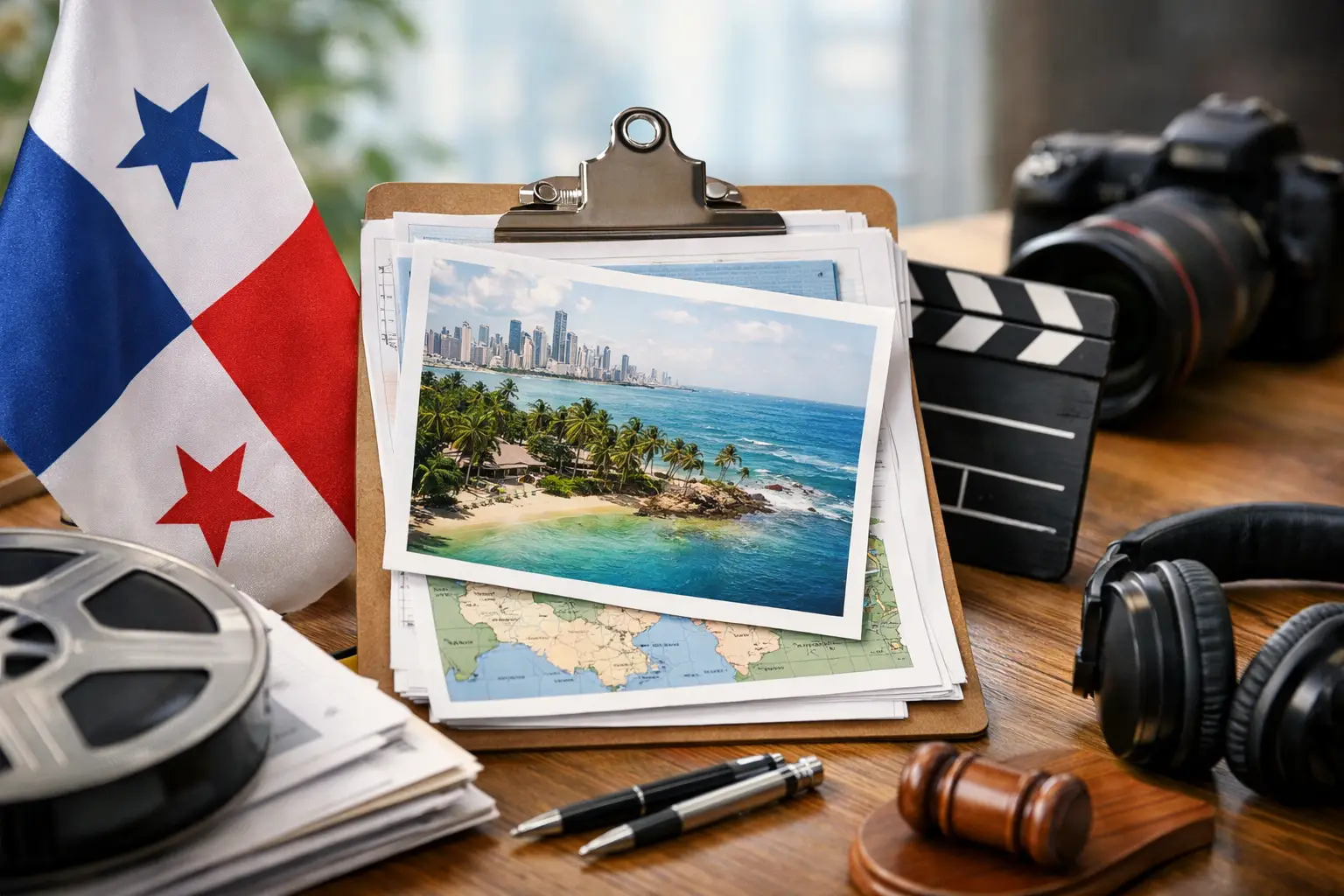
A shoot can fall behind before the first call sheet goes out if permits are treated like paperwork instead of production strategy. The panama production permits process is usually straightforward when the project is scoped correctly early, but delays show up fast when locations, drone use, traffic control, or public access issues are addressed too late.
For international producers, that matters because Panama is efficient, film-friendly, and visually diverse, but it is still a live operating country with municipalities, public institutions, private stakeholders, and site-specific rules. If you want a compliant shoot that stays on schedule and protects the budget, permits need to be built into prep from day one.
How the Panama production permits process works
At a practical level, the Panama production permits process is not one single application filed with one authority. It is a coordinated approval path that depends on what you are shooting, where you are shooting, how much footprint you need, and whether your activity affects public space, aviation rules, traffic, protected zones, or commercial operations.
A small branded content crew filming inside a private property with minimal gear may only need owner authorization, insurance support, and basic production paperwork. A commercial with road control, drone operations, police coordination, and multiple public-facing locations will require a more layered permit package. The difference is significant, which is why experienced local coordination matters.
In most cases, the work starts with a script or treatment review, a location breakdown, and a clear production footprint. Authorities and site managers do not approve abstract ideas. They approve dates, times, headcount, equipment, vehicles, access plans, safety measures, and disruption levels. The more precise the brief, the faster the decision-making.
What determines which permits you need
The biggest mistake foreign productions make is assuming that all filming permits are the same. They are not. Permit needs in Panama usually depend on five variables: location type, crew size, equipment profile, impact on the public, and special technical elements.
If you are filming on private property, the key issue is control of the space and written authorization from the owner or operator. If you are filming on streets, sidewalks, plazas, beaches, government-managed areas, or transport infrastructure, public permissions may come into play. If the production includes drones, pyrotechnics, weapons props, marine activity, night work in active areas, or lane closures, the approval path becomes more technical.
There is also a difference between low-impact documentary-style capture and fully managed commercial production. A two-person team with handheld gear may move differently through approvals than a campaign with talent holding areas, grip trucks, generators, and branded set builds. Neither approach is better. They just trigger different operational requirements.
Public locations are where planning matters most
Public-facing shoots tend to need the most lead time because they can involve municipal review, law enforcement coordination, traffic considerations, and public access management. Historic districts, civic areas, parks, and waterfront zones can also have extra oversight depending on the exact site and use.
That does not mean public filming is difficult. It means it needs structure. Producers who lock key locations early generally have more flexibility on dates, movement, and contingency planning than crews trying to secure approvals after travel is booked.
Private locations still need formal clearance
Private property is often faster, but not always simple. Hotels, commercial buildings, residential towers, malls, restaurants, and industrial sites may have their own legal requirements, access protocols, security rules, and usage fees. Some properties also require proof of insurance, restricted shoot hours, or operational deposits.
A location agreement is not just a courtesy document. It defines what the production can actually do on site, when it can do it, and what liabilities sit with the producer.
Typical steps in the permit workflow
The permitting workflow usually begins with a location and production assessment. That means identifying every site, production date, estimated headcount, technical package, parking need, and any action that could affect normal operations. Once that is mapped, the local production team can determine which authorities, owners, or administrators need to approve the activity.
The next step is document preparation. Depending on the project, that can include company information, passport copies for key foreign crew, production dates, equipment lists, vehicle lists, drone specifications, synopsis or script pages, insurance documents, safety plans, and location maps. The details matter because incomplete submissions are one of the main reasons permit timelines stretch.
After submission, there is often a review period that may include follow-up questions, revisions, or coordination meetings. Some permits are administrative. Others require practical negotiation around access windows, traffic flow, public safety, or neighborhood impact. If a location is highly visible or commercially sensitive, approvals may involve several stakeholders rather than one sign-off.
Once permits are granted, the operational phase begins. This is where many productions underestimate the work. Approved filming still needs on-the-ground management: printed authorizations, liaison with security, crew briefing, timing control, public interface, and compliance with the terms of approval. A permit is not the finish line. It is the framework that lets the shoot move without interruption.
Panama production permits process timelines
Timeline depends on complexity. Some low-impact shoots can be cleared relatively quickly, especially on private property with responsive owners. Larger shoots should assume a longer prep window, particularly if they involve government-controlled spaces, aviation-related approvals, heavy traffic management, marine areas, or multiple public jurisdictions.
The safest approach is not to ask, “How fast can this be permitted?” It is to ask, “What is the real approval path for this concept?” Speed comes from accurate scoping, not from pressuring the process.
As a rule, concept changes late in prep create the most expensive permit problems. Moving a shoot from a contained private location to an active public area can change the full operating plan. Adding drones, street lockups, or crowd scenes after initial submissions can also restart parts of the approval cycle. Producers who want predictable schedules should lock the production footprint before travel and crew booking are finalized.
Common permit issues international productions run into
One common issue is treating scouting images as confirmation that a location is filmable. A site may look accessible and still have restricted filming windows, neighborhood limitations, management conditions, or layered oversight. Visual suitability and legal access are not the same thing.
Another issue is underestimating footprint. Producers sometimes describe a shoot as “small” because the crew count is modest, while forgetting that wardrobe, video village, client attendance, vehicle parking, and generator placement create a much larger real-world presence. Authorities and property managers respond to actual impact, not shorthand labels.
Drone filming is another area where assumptions create delays. Drone work can be highly effective in Panama, but it should never be treated as an add-on handled the day before the shoot. Airspace, urban density, proximity to infrastructure, and operational safety all affect feasibility.
There is also the question of incentives. Permit compliance and rebate planning are connected, but they are not interchangeable. A production may qualify financially under one framework while still needing proper location, municipal, or operational approvals under another. Smart producers plan both tracks together.
Why local permit management pays off
The value of local production support is not just language or paperwork handling. It is knowing how to structure the ask so authorities, municipalities, property operators, and service partners can approve the project efficiently. That includes matching the production concept to realistic location use, anticipating technical concerns, and preventing avoidable revisions.
It also protects the budget. Every day lost to permit confusion affects crew bookings, equipment holds, talent schedules, and client travel. The cheapest permit plan on paper can become the most expensive path if it creates uncertainty during prep or interruptions on shoot day.
For international teams, a local partner also gives producers a more reliable yes or no earlier in the process. That is critical. A fast honest answer is more valuable than a vague maybe when flights, cash flow, and delivery deadlines are already in motion.
A company like 40 Grados Producciones typically approaches permitting as part of the full production build, not as a disconnected admin task. That means location strategy, legal compliance, local crew planning, and operational logistics are aligned from the start.
The best way to approach permits before you shoot
If you are considering Panama, the best move is to start permit planning as soon as the shortlist of locations and technical needs is clear. Bring the real concept forward, including footprint, action, aerial plans, access needs, and schedule pressure. That gives your local production team room to build the right approval path instead of patching holes after bookings are made.
Panama rewards prepared productions. The country offers strong visual range, experienced crews, competitive costs, and real production value, but the projects that move best are the ones that treat permits as a production function, not an afterthought. Get the approvals right early, and the rest of the shoot has a much better chance of running the way it should.