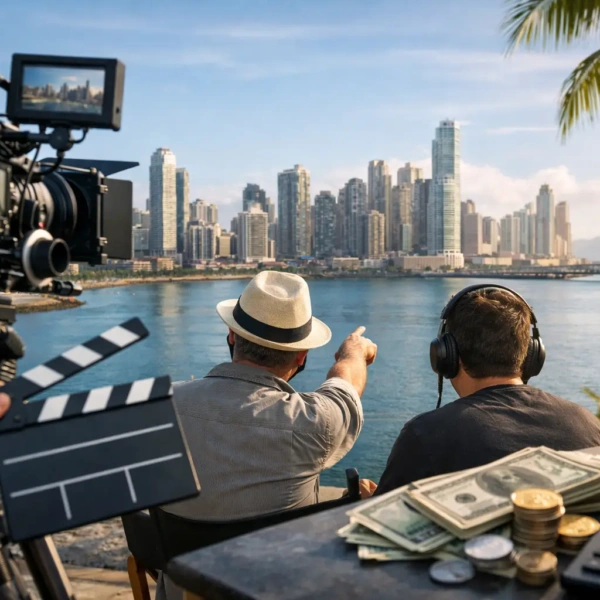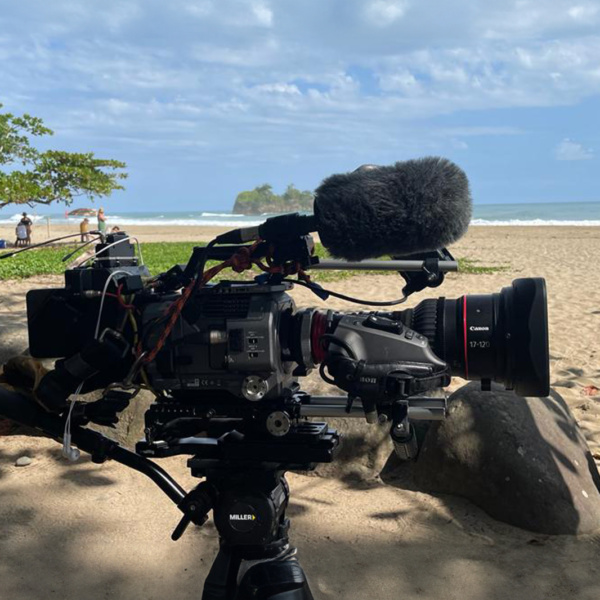

When a project can work in either Central or South America, the real decision is rarely about scenery alone. Panama vs Colombia filming usually comes down to control: how fast you can prep, how predictable the permit process is, how far your budget stretches, and how much friction your team is willing to absorb once boots are on the ground.
For international producers, both countries are credible filming destinations. Both offer strong visual range, experienced crew bases, and established production infrastructure. But they do not solve the same production problems in the same way. If your priority is scale at all costs, your answer may be different than if your priority is efficiency, ease of movement, and a cleaner operating environment.
Panama vs Colombia filming: the practical difference
Colombia is often part of the conversation because of its scale. It has a larger domestic production market, more major cities, and a wider volume of crews and vendors. If you are mounting a large dramatic production with substantial local cast needs, long shooting schedules, or city-specific story demands, Colombia can make strong sense.
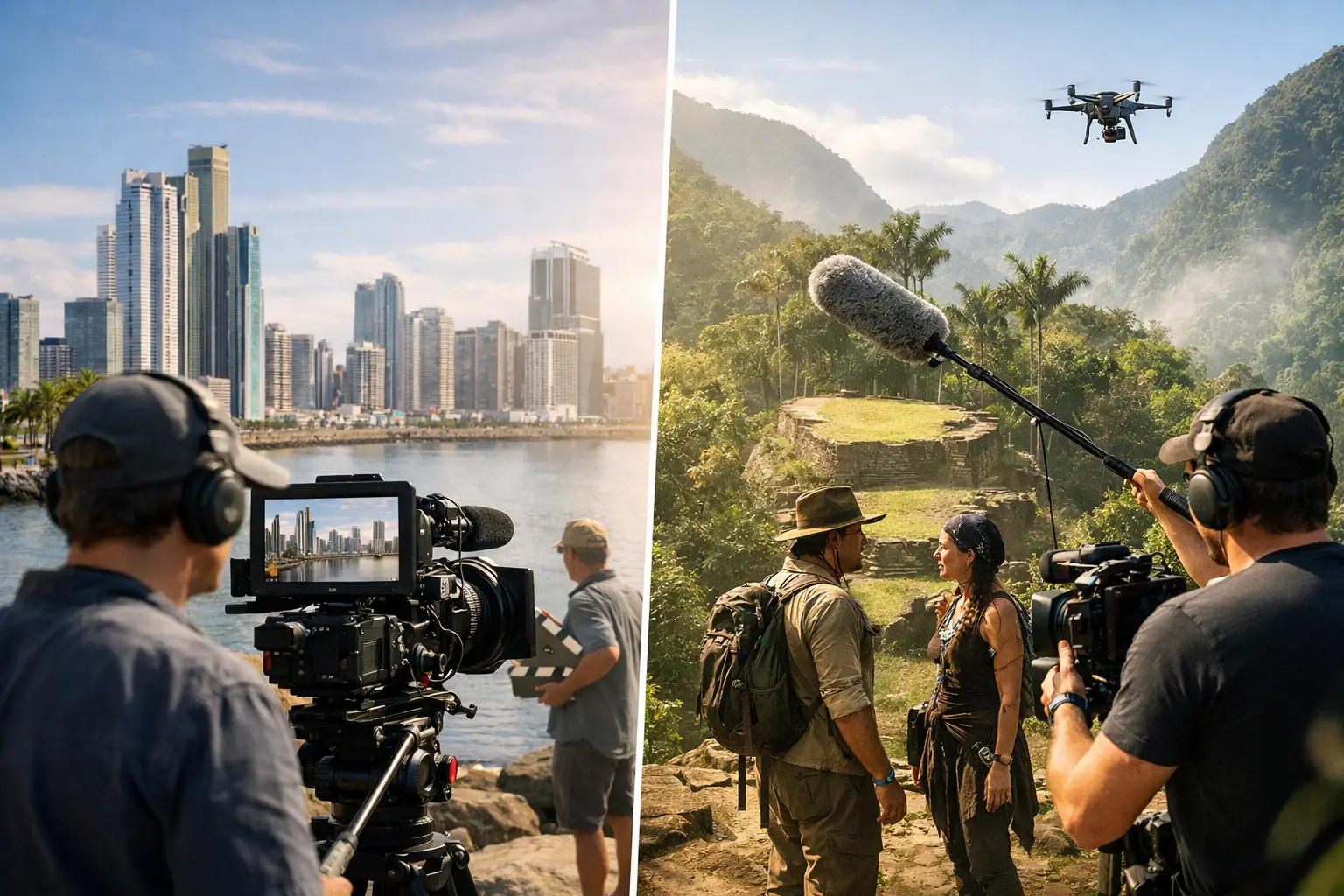
Panama competes differently. It is not trying to outsize Colombia. Its advantage is operational efficiency. For many international shoots, especially commercials, branded content, reality, travel programming, music videos, and lean scripted projects, Panama offers a tighter, faster, more manageable setup. You can move between urban skylines, tropical beaches, jungle, islands, colonial streets, and mountain settings without building a sprawling travel plan around your shoot.
That matters more than many teams expect. Every extra domestic flight, hotel block, cargo move, and permit layer increases risk. When your schedule is aggressive and client-facing, simplicity becomes a production asset.
Locations and visual range
On pure variety, both countries perform well. Colombia gives you major urban environments like Bogota and Medellin, Caribbean looks in Cartagena, mountain regions, jungle, and rural roads. It is a broad visual market with real range.
Panama offers a different kind of concentration. Within a relatively compact geography, productions can access modern city architecture, rainforest, beaches on two coasts, islands, ports, highways, historic districts, and upscale residential areas. For producers trying to maximize shoot value in fewer days, that density is useful. You lose less time in transit and gain more actual production hours.
This is where the script matters. If your story specifically needs the scale or recognizable urban identity of Colombia, then the answer is straightforward. But if your brief is flexible and you need multiple looks inside one efficient schedule, Panama often punches above its weight.
Incentives and budget reality
For many decision-makers, incentives move the conversation from creative preference to financial strategy. Panama offers a 25% cash rebate, and for foreign productions that can qualify, that changes the economics quickly. It gives producers a direct reason to evaluate Panama not just as a backup option, but as a primary filming base.
Colombia also has incentive structures and a known international production profile. Depending on the project type, spend level, and timing, Colombia can still be attractive. But incentives only matter when they are paired with a workflow your production can actually manage. A theoretical advantage on paper does not help if administrative timing, location movement, or local logistics create overruns elsewhere.
The more disciplined question is not which country has a headline incentive. It is which country gives your production the best net outcome after permits, crew sourcing, transport, lodging, customs, schedule compression, and local support are factored in.
For many mid-size and fast-turn productions, Panama’s rebate combined with lower operational drag can produce a very competitive overall result.
Permits, logistics, and speed
This is where producers usually feel the difference most sharply.
Colombia has mature production capability, but a larger and more dispersed operating environment can mean more moving parts. Depending on where you shoot, permits and municipal coordination can vary by city and jurisdiction. That does not make it unworkable. It just means planning needs to be exact, and local execution has to be well managed.
Panama’s smaller footprint can be an advantage here. International teams often find it easier to coordinate locations, moves, government processes, and support services without the same level of fragmentation. For productions that need quick turnaround, fewer variables, and close local handling, this matters.
A location should never be chosen only because it looks good in a deck. It needs to function on production day. That means legal clarity, permit pathways, responsive authorities, reliable transport, and local partners who can solve issues in real time instead of escalating delays.
Crew depth and vendor ecosystem
Colombia has the edge in overall market size. Its crew pool is larger, and for certain complex productions that need heavy staffing across many departments, that scale can be useful. There is strong experience there across features, series, and commercial work.
Panama’s crew market is smaller, but that should not be confused with a capability gap. The local industry supports international productions across commercials, television, unscripted content, branded shoots, and film projects with experienced technicians and service teams. For many foreign producers, the question is not whether the country has the largest labor pool in the region. The question is whether the right crew can be assembled quickly, managed effectively, and integrated into an international workflow.
In Panama, that process is often more direct. The market is easier to navigate when supported by the right local production partner, and communication lines can be shorter. For leaner productions, that can be an advantage over a larger market with more complexity.
Travel and international access
Access matters, especially for agencies, broadcasters, and producers moving clients or senior stakeholders.
Panama is exceptionally strong here. Its air connectivity and position as a regional hub make inbound travel easier for many US and international teams. Once in country, getting talent, executives, and crew between key locations is generally more manageable because distances are shorter.
Colombia is also well connected internationally, but domestic movement often becomes a more significant line item. If your project spans multiple looks in different regions, the travel burden can rise quickly. That is not always a problem on a feature with a broad schedule. It can be a real issue on a six-day commercial prep with agency attendance.
This is one of the most common it-depends decisions in Panama vs Colombia filming. If your production benefits from regional breadth and a larger internal market, Colombia may justify the extra movement. If your goal is to consolidate looks and reduce travel friction, Panama is often the cleaner choice.
Risk, predictability, and production control
Experienced producers know that the cheapest option is not always the least expensive by the time the job wraps. Predictability has value. So does having a country and local team that can keep permits, payroll coordination, transport, customs support, and day-to-day production execution under control.
Panama tends to appeal strongly to productions that want a reliable, contained operating environment. That includes shoots where time is tight, client expectations are high, and there is limited tolerance for surprises. It is especially well suited to teams that want a one-stop solution on the ground rather than stitching together multiple vendors and contacts.
Colombia remains a serious option for productions that need more scale, more city diversity, or a larger local labor market. But larger ecosystems can require more oversight. That is not a negative if your production is staffed for it. If it is not, the added coordination can erode the savings or creative gains you expected.
Which country is the better fit?
If you need broad scale, deeper local casting volume, or a larger production ecosystem for a complex scripted build, Colombia may be the better fit.
If you need visual diversity, faster location access, strong international connectivity, rebate potential, and a more efficient operating model, Panama is often the smarter production decision.
That is why many international teams do not evaluate Panama as a smaller alternative. They evaluate it as a strategic base for projects where speed, budget control, and execution matter as much as the image on screen. With the right local support, Panama can deliver a highly efficient production setup without compromising visual range or production standards.
For producers making the call, the best question is not which destination sounds bigger. It is which one gives your project the best chance to finish on time, stay compliant, and come home looking more expensive than it was. That is usually where the real answer lives.