
A shoot can be perfectly budgeted, fully staffed, and creatively locked – then lose a day because a pallet of cameras is sitting in customs waiting for the wrong paperwork to be fixed. That is why Panama customs for film gear matters long before your cases reach the airport or port. For international productions, customs is not a side task. It is part of the production plan.
Panama is an efficient market for filming, but customs clearance still depends on accuracy, timing, and the specifics of your production. The process is usually manageable when it is handled early and locally. It becomes expensive when producers assume a standard cargo approach will work for specialized equipment, temporary importation, or mixed-use shipments that include both production gear and expendables.
How Panama customs for film gear usually works
Most visiting productions bring equipment into Panama on a temporary basis. That means the gear enters the country for the duration of the shoot and then leaves again after production wraps. In practical terms, customs authorities want to know what is entering, why it is entering, who is responsible for it, and when it will exit the country.
The core documents often include a detailed gear list, commercial or customs value documentation, transport details, passport and company information, and paperwork tied to the local production entity or authorized representative handling the import. Depending on the shipment method, the production timeline, and the country of origin, additional documentation may be required.
This is where many productions underestimate the process. A camera package is not just a camera package from a customs standpoint. Serial numbers need to match. Descriptions need to be clear. Values need to be declared properly. If a manifest says “film equipment” without item-level detail, that can trigger delays. If the shipment arrives before the importer paperwork is ready, that can also create avoidable storage costs.
Temporary import vs. permanent import
For most foreign shoots, temporary importation is the correct route. It is designed for equipment that will remain in Panama only for the production period. That includes cameras, lenses, lighting, grip, sound, monitors, drones where permitted, and other technical assets being brought in and taken back out.
Permanent import is a different matter. If equipment is being purchased for use in Panama, left behind, sold locally, or transferred to another company in-country, the customs treatment changes. Duties, taxes, and local compliance issues can apply differently. The same is true for expendables and consumables. Gels, tape, batteries, wardrobe items, art materials, and production supplies may not always be treated the same way as core equipment intended to leave the country.
That distinction matters because customs planning should reflect the real use of the shipment, not the preferred budget scenario. If part of the package is temporary and part is consumable, it is better to structure the paperwork correctly from the start than explain inconsistencies later.
What international productions should prepare before shipping
The cleanest customs clearances usually start with disciplined prep from the production office. That means building a final gear manifest before departure, not after the shipment is already in transit. Every item should be clearly listed with make, model, serial number where applicable, and realistic declared value.
Producers should also align logistics and legal details early. Who is the importer of record? Who is authorized to present documentation? Is the gear arriving by carnet, air cargo, hand-carry, or ocean freight? Is the shipment split across multiple arrivals? These details affect both process and timing.
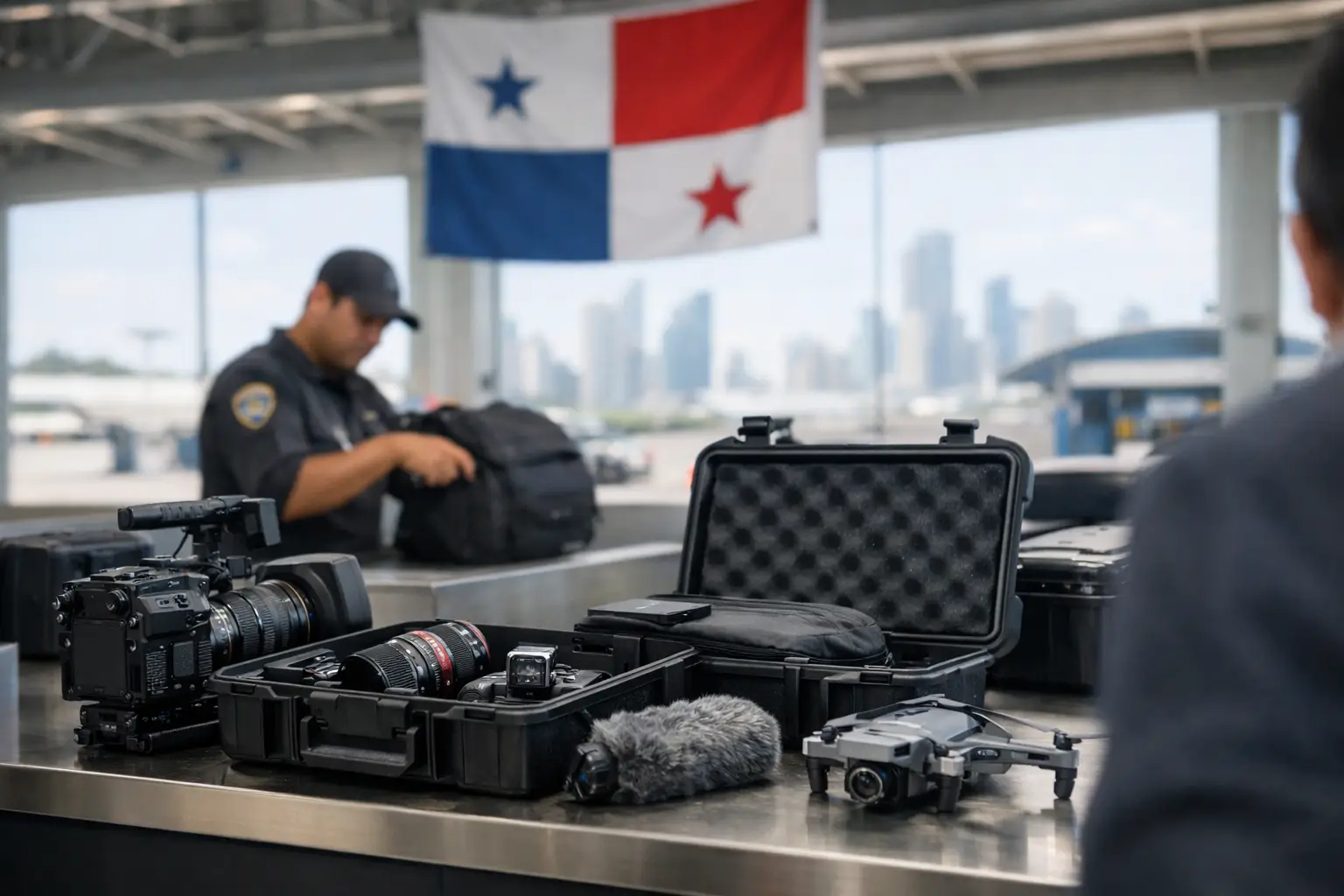
Hand-carry equipment can be straightforward for small documentary or branded shoots, but it still requires planning. Customs officers may ask questions at entry, especially when travelers are carrying high-value professional gear in multiple cases. A crew arriving with six bodies, twelve lenses, wireless audio, and drone cases is clearly not entering as a tourist party with hobby equipment. The documentation should reflect that reality.
Larger productions shipping cargo need even more lead time. Freight schedules, customs review, airline handling, and bonded storage windows can all affect the release date. If the shoot starts the morning after gear lands, the margin for error is too thin.
The common delay points
In Panama, customs delays are usually not random. They tend to come from a short list of preventable issues.
The first is incomplete or inconsistent documentation. If serial numbers on the gear list do not match the shipment, or if values look unrealistic, customs may request clarification. The second is timing. Shipments that arrive before supporting paperwork is approved or before the local handler is ready can sit longer than expected. The third is category confusion. Drones, specialized broadcast equipment, communications devices, or items with batteries can require additional review depending on the case.
There is also a practical production issue that gets overlooked: last-minute package changes. A rental house swaps two lenses after the paperwork is sent. A DIT station is added the night before departure. A drone is removed, but its case still appears on the manifest. Small changes like these are common in production, but customs treats paperwork as a formal declaration, not a working draft.
Why local coordination matters
Customs is not only about submitting forms. It is about managing the process around the forms. A local production partner can coordinate with customs brokers, freight handlers, airport cargo teams, and the relevant authorities while aligning the import timeline with permits, transport, and shoot dates.
That coordination matters most when the schedule is tight. If your gear is due to clear on a Friday and the scout starts over the weekend, there is no room for assumptions. The local team should know what has landed, what is pending, what needs physical inspection, and what documentation may still be requested.
For foreign producers, this reduces risk in two ways. First, it limits downtime and holding costs. Second, it keeps customs decisions connected to the wider production schedule. Equipment clearance is not isolated from the rest of the job. It affects prep days, crew calls, location moves, insurance exposure, and sometimes the rebate structure if delays impact local spending and scheduling.
This is where a one-stop production partner adds real value. Companies like 40 Grados Producciones do not treat customs as an afterthought. It is handled as part of the full execution plan, alongside permits, logistics, and local crew coordination.
Special cases: drones, batteries, and mixed shipments
Not all film gear is treated equally. Drones are the obvious example. Bringing a drone into Panama may involve both customs handling and operational permissions tied to where and how the aircraft will be used. Customs clearance alone does not mean the drone is ready to fly legally on set.
Lithium batteries also require attention. Air carriers have their own transport rules, and customs handling can become more sensitive when shipments include a large quantity of batteries or battery-powered systems. The issue is often less about customs law in isolation and more about the overlap between airline regulation, dangerous goods handling, and border entry procedures.
Mixed shipments are another area where productions get caught out. If one shipment contains rental gear, personal crew equipment, expendables, wardrobe purchases, and marketing materials, the customs treatment may differ by item category. Combining everything into one vague declaration may seem efficient, but it can slow the release.
How to keep Panama customs for film gear on schedule
The best approach is simple: treat customs like a department, not a box to check. Start with a locked equipment list. Confirm the import structure before shipping. Build realistic lead time into the schedule. Make sure the local receiving party is defined clearly. And keep revisions controlled once documents are submitted.
It also helps to plan for inspection, even if the shipment clears quickly. If customs wants to review a portion of the gear physically, your schedule should be able to absorb that without putting day one at risk. The goal is not just legal entry. The goal is practical readiness.
For producers comparing regional options, Panama remains highly workable. The country is production-friendly, well connected, and capable of supporting international crews efficiently. But film logistics still reward preparation. A customs issue that is minor on paper can become major once talent, locations, and crew are waiting.
The smart move is to solve the border process before it becomes an on-set problem. When the paperwork is right and the local handling is experienced, Panama customs for film gear can be fast, compliant, and predictable enough to support serious production schedules. That is the standard international shoots should expect before the first case is even loaded onto the truck.