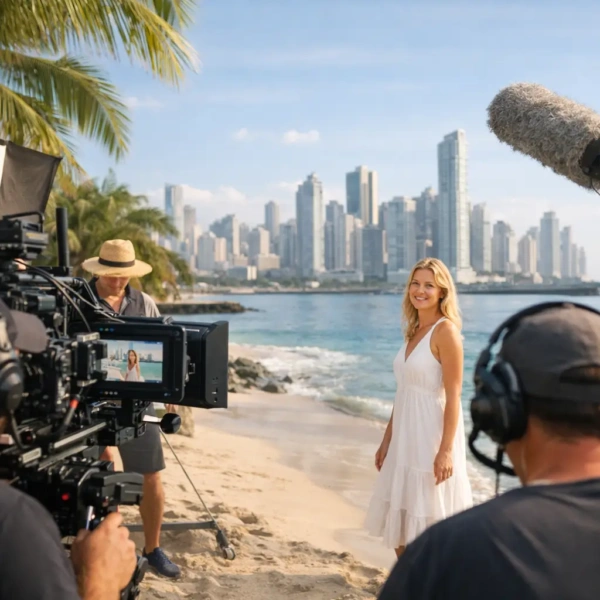
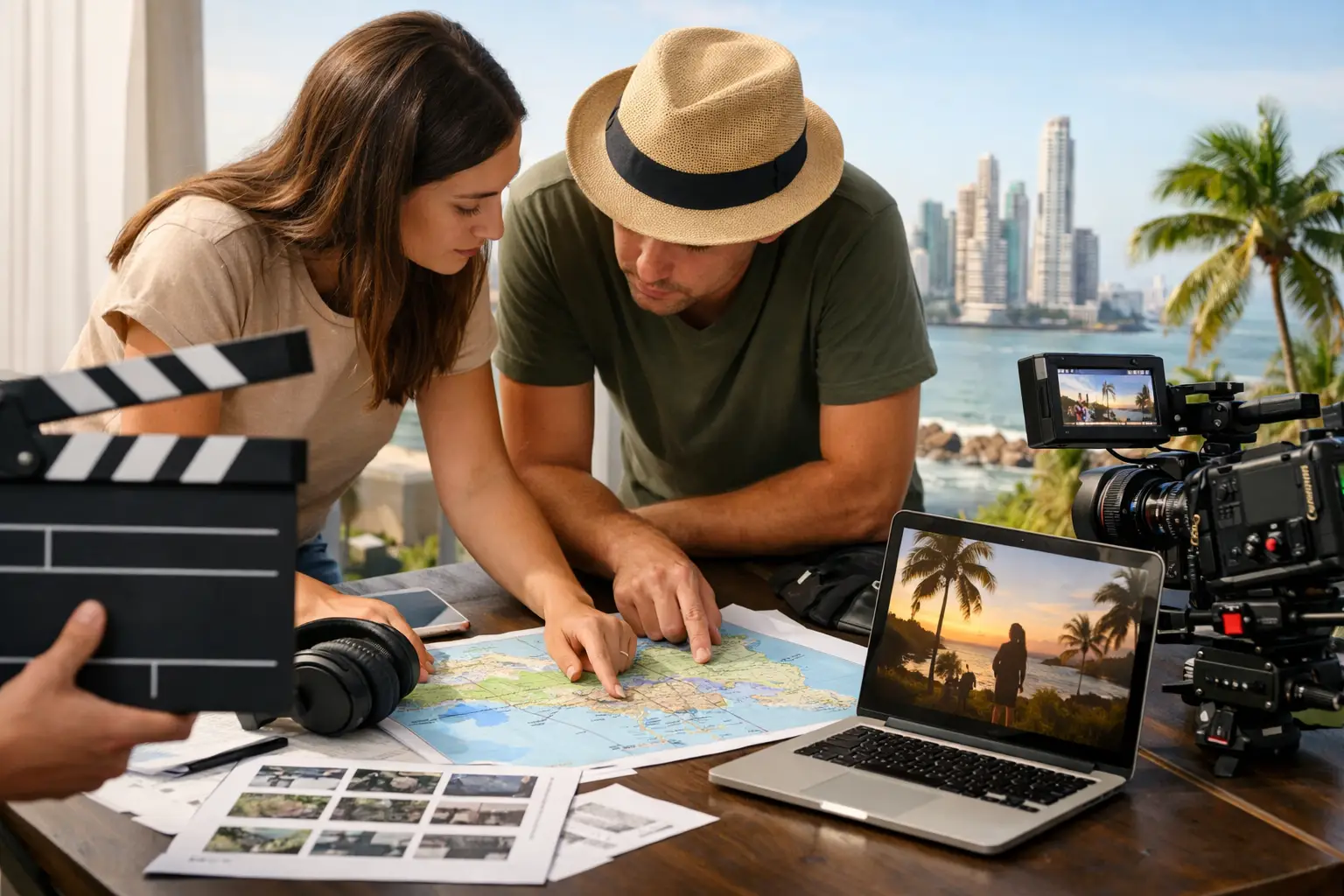
A music video shoot Panama can move from a sunrise beach performance to a neon-lit city sequence, a rainforest chase, or an industrial port setup without changing countries. That range is valuable when the artist, label, or agency needs high production value on a fixed shooting schedule. It only works, however, when the creative plan is translated early into permits, transport, crew calls, equipment, and weather contingencies.
For international teams, Panama is not simply a scenic backdrop. It is a practical production base in Central America with strong air connectivity, a U.S. dollar economy, experienced bilingual crew, and visual variety within manageable travel distances. The goal is not to bring every resource from abroad. The goal is to build the right local production structure around the director’s treatment and protect the shoot day.
Why Panama Works for Music Video Production
Music videos are often judged by the contrast between their locations: polished and raw, urban and tropical, intimate and cinematic. Panama offers that contrast in a compact production environment. Panama City can provide modern towers, dense streets, rooftops, waterfront views, historic architecture, nightlife settings, and industrial textures. Outside the city, teams can access beaches, islands, rainforest, rivers, mountain roads, and rural communities.
That range can reduce the need for multiple country moves, but it does not mean every location is close enough for an ambitious same-day schedule. A location that looks near on a map may involve road conditions, ferry timing, restricted access, or a limited setup window. A local production partner should assess the creative value against travel time, load-in requirements, available power, basecamp options, and the risk of losing daylight.
Panama also works well for productions that need controlled access to Latin American looks without sacrificing international production standards. The best fit is often a project with a clear visual concept, a disciplined shooting plan, and a willingness to adapt the treatment to locations that are both cinematic and operationally realistic.
Start With the Treatment, Not the Location Wish List
A director’s mood board may include a jungle waterfall, an abandoned building, a luxury yacht, street dancers, practical rain, and a performance setup at golden hour. Each element is possible only after the production team defines what it actually requires. Is the artist performing with a playback system? Is there picture car work? Are drones essential? Will a scene require a road lockup, rain cover, generators, marine support, or a late-night permit?
Before scouting, establish the production parameters: the number of shoot days, principal cast, artist security needs, camera package, lighting footprint, special effects, drone use, vehicles, animals, and expected crew size. These details determine whether a location is a fast, low-impact shoot or a larger operation requiring more coordination.
Build a location plan around the schedule
For a one-day music video, location count is usually the first pressure point. Three locations may look efficient on paper, but company moves can consume the hours needed for lighting, artist preparation, playback, resets, and coverage. It is often more cost-effective to secure two strong locations with distinct looks than to chase four setups and compromise every frame.
For a two- or three-day production, Panama’s range becomes more useful. The schedule can dedicate a city day to narrative and performance work, then move to a coastal or rainforest area for wider visual contrast. Scouting should include not only hero angles but also holding areas, artist trailers or green rooms, crew parking, restroom access, catering space, signal coverage, and a rain fallback.
Permits and Compliance Protect the Shoot Day
A music video shoot in Panama may involve municipal permissions, private-property agreements, national park rules, aviation approvals, traffic coordination, police support, and immigration or work authorization considerations for foreign talent and crew. The exact requirements depend on the location and activity. A handheld performance shoot on private property is different from a night exterior with a crane, drone, picture vehicles, and street control.
Permitting should begin as soon as the creative and schedule are stable enough to identify the locations and operational footprint. Last-minute changes can be managed in some cases, but relying on them creates unnecessary exposure. Location owners also need clear terms covering access hours, restoration, electrical use, noise, security, insurance expectations, and any restrictions on filming recognizable brands or public areas.
Drone work deserves separate attention. Panama offers exceptional aerial imagery, especially across coastlines, islands, city skylines, and forest, but aerial filming should never be treated as an automatic add-on. Airspace, equipment registration, operator credentials, weather, site limitations, and approvals must be checked well before the call sheet is issued.
A reliable local fixer can coordinate the permit path while keeping the production informed about what is confirmed, what remains conditional, and what needs a backup. That clarity matters more than vague assurances when an artist’s travel window is limited.
Crew and Equipment: Scale Locally, Crew Intelligently
International productions can source experienced local department heads, assistants, grips, electrics, art support, production assistants, drivers, security teams, makeup artists, wardrobe support, marine crew, and location personnel in Panama. The right crew structure depends on the visual ambition and on which key positions travel with the director or agency.
Some projects bring a director of photography, production designer, choreographer, or agency creative lead from the United States and build the supporting departments locally. Others hire a predominantly Panama-based crew and travel only artist-facing and creative decision-makers. Neither model is automatically better. The decision should be based on continuity of creative relationships, equipment compatibility, budget, and the speed of prep.
Equipment should be discussed at the treatment stage, not after the location is locked. A compact camera-and-lighting package may suit a fast-moving street video, while a stylized studio build or night exterior can require heavier grip, generators, specialty lighting, playback systems, camera movement tools, and significant power planning. Importing specialty gear can make sense when a specific look depends on it, but local sourcing often reduces freight risk, customs complexity, and replacement delays.
40 Grados Producciones supports international teams as a one-stop local production partner, coordinating crews, equipment, permits, locations, and on-the-ground logistics around the requirements of each shoot.
Budget for Production Reality, Not Just the Hero Images
The most effective Panama music video budgets separate visible creative costs from operational costs that keep the production on track. Location fees, crew, equipment, art direction, wardrobe, transport, accommodations, catering, security, permits, insurance, and contingency all affect the final number. An apparent savings on a remote location can disappear if it requires long transport days, boats, generators, additional security, and overnight crew accommodation.
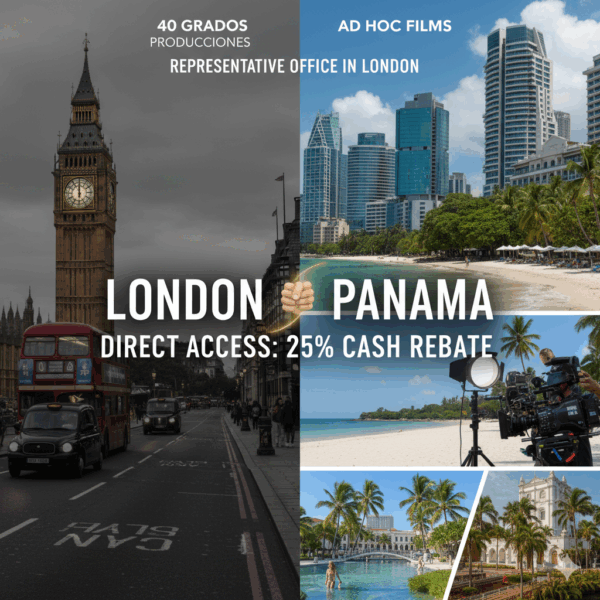
Panama can offer a cost advantage compared with major U.S. production markets, particularly when the production uses local crew and resources strategically. The 25% cash rebate incentive may also be relevant to qualifying audiovisual projects, but it should be evaluated early. Eligibility, minimum spend, documentation, local expenditure rules, application timing, and approval requirements can affect whether the incentive fits a music video budget and schedule. It should be treated as a structured financial process, not as a line item assumed at the start.
A realistic contingency is particularly important in tropical conditions. Rain may create a better image for some concepts, but it can also interrupt choreography, damage art builds, limit aerial filming, and change access to natural locations. Weather cover, alternate angles, interior backup options, and a practical wet-weather plan should be discussed during prep.
Make Artist Logistics Part of the Production Plan
Music video productions are artist-led, which means the schedule must protect performance readiness as carefully as it protects camera time. Artist travel, airport handling, secure vehicles, privacy, glam space, wardrobe changes, meals, rehearsal, playback, and departure timing all need a dedicated plan. A visually perfect remote location can become the wrong choice if it compromises artist comfort, security, or the ability to reset quickly.
This is where local coordination has the greatest impact. A production manager who understands route timing, vendor reliability, access restrictions, local holidays, and weather patterns can prevent small problems from becoming lost hours. The working plan should be detailed enough for every department to execute, while leaving room to respond when light changes, rain arrives, or the director finds a stronger idea on location.
The strongest Panama shoots are prepared with ambition and run with discipline. Bring the treatment, the essential creative references, and the real schedule constraints to the first production conversation. From there, a local team can turn the concept into a shoot plan that gives the artist more time in front of the camera and gives the production fewer surprises behind it.