
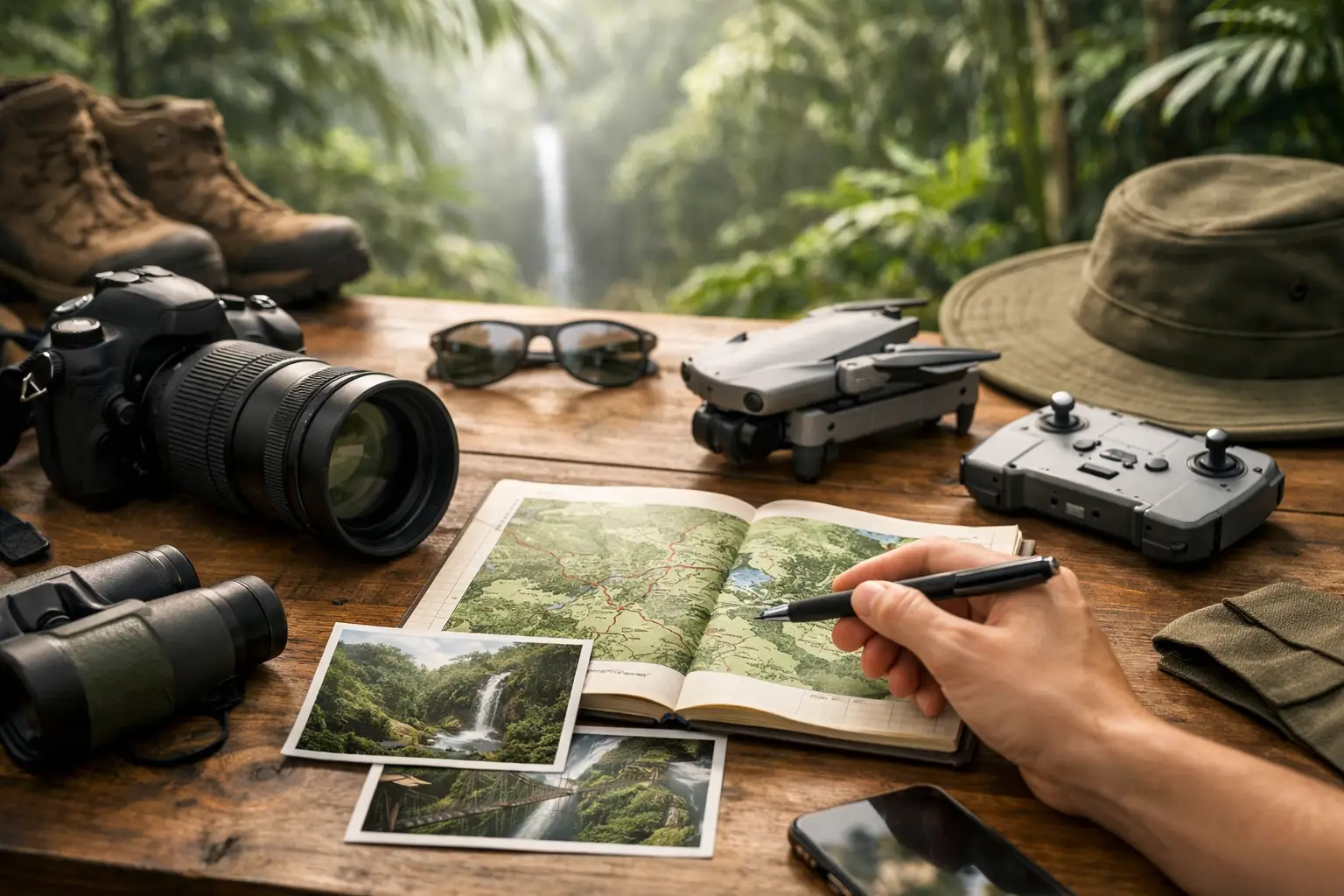
A rainforest location can give a project scale, texture, and production value that no studio build can reproduce. It can also consume a day before first shot if access, weather, equipment, and permissions were treated as details instead of core production decisions. Effective Panama rainforest shoot planning starts well before the unit arrives at the trailhead.
For international producers, Panama offers an unusually practical mix of dense tropical environments, road-accessible locations, experienced local crews, and a major regional airport. The opportunity is real, but the rainforest is not a controlled location. A dependable plan accounts for the conditions on the ground, protects the schedule, and keeps the production compliant from prep through wrap.
Start Panama Rainforest Shoot Planning With the Script
The first question is not which rainforest looks best in a location deck. It is what the scene actually requires. A dialogue scene with a small cast, a remote survival sequence, a vehicle chase, a documentary field unit, and a tabletop product spot all create different access, power, sound, crew, and permitting requirements.
Break the script into production needs before scouting. Identify whether the scene needs controlled silence, a clear canopy view, water access, practical vehicles, a camp setup, night work, drones, special effects, animals, large lighting units, or a basecamp close to set. Those requirements determine whether a visually similar location is workable.
Panama has rainforest environments near Panama City as well as more remote areas with a stronger expedition feel. The right choice depends on the creative brief and the cost of moving the company. A location that appears remote can be highly efficient if it has reliable road access and nearby services. Conversely, a dramatic location several hours from lodging may require transport rotations, additional safety support, satellite communications, and a more conservative shooting schedule.
A local production partner should translate the brief into a location strategy, not simply present attractive jungle images. The goal is to find the setting that serves the shot while keeping the unit operational.
Scout for Access, Not Just Atmosphere
Rainforest scouting needs to test the route as seriously as the frame. During a recce, production should confirm drive time at the actual call-time window, road condition after rain, load-in distance, footpath width, parking capacity, vehicle turnaround, and the availability of a nearby holding area.
A location can look accessible in dry conditions and become difficult after a sustained rain event. That does not automatically remove it from consideration. It means the plan needs a weather trigger, the right vehicles, a realistic load-in allowance, and potentially a secondary approach route.
The scout should also establish where departments will work. Camera and grip need safe staging space. Art needs a protected area for materials. Wardrobe, makeup, client video village, catering, and talent holding each need a place that does not interfere with environmental restrictions or the shooting path. If there is no workable basecamp at the location, identify an off-site basecamp and calculate the shuttle time into the day.
Sound deserves special attention. Tropical forests are rich in natural atmosphere, but cicadas, birds, rain on leaves, wind through the canopy, insects, generators, and distant activity can all affect dialogue recording. A sound team can capture exceptional wild tracks in Panama, but clean production dialogue may require carefully selected hours, disciplined generator placement, additional sound protection, or an alternate coverage plan.
Build Permits and Environmental Compliance Into Prep
Many rainforest locations are subject to land management rules, protected-area requirements, municipal procedures, private landowner approvals, or a combination of these. Permit timing and conditions vary by location, project scale, filming activity, and environmental impact.
Do not treat permission as a final paperwork step. A planned drone flight, trail closure, vehicle movement, night shoot, set dressing, water activity, generator use, or large crew footprint may change what authorities or land managers require. The earlier these elements are identified, the better the chance of protecting the schedule and avoiding a last-minute scope reduction.
International productions should also establish clear rules for waste handling, vegetation protection, equipment placement, and site restoration. These are practical responsibilities, not just compliance language. A disciplined footprint keeps locations available, maintains good relationships with communities and authorities, and reduces the risk of delays during the workday.
40 Grados Producciones coordinates permit pathways, local production logistics, and on-the-ground execution so visiting teams can work through one accountable production partner rather than assembling separate vendors under pressure.
Plan Around Weather Instead of Fighting It
Panama’s tropical weather is part of the visual appeal, and it must be treated as a schedule variable. Rain can arrive quickly, create dramatic skies, change trail conditions, and alter the sound environment. The useful question is not whether rain is possible. It is what the production will do when it arrives.
A rain plan should specify the point at which the unit pauses, shelters, shifts to an alternate setup, or moves to a covered contingency location. It should also address equipment protection, electrical safety, talent comfort, wardrobe continuity, and additional time for drying lenses, resetting surfaces, and restoring set conditions.
Build weather flexibility where it produces the greatest value. For a commercial with a narrow hero-shot requirement, that may mean scheduling the rainforest location early enough in the shoot to allow a return day. For a documentary or reality unit, it may mean carrying lightweight protection, reducing the footprint, and planning coverage that can continue safely under changing conditions.
The trade-off is budget. Extra cover vehicles, rain tents, all-terrain transport, and backup time cost money. They are often less expensive than losing a full day because the location plan assumed ideal conditions.
Match the Crew and Equipment Package to the Terrain
Rainforest work favors experienced departments and practical equipment choices. A local crew familiar with tropical terrain understands how quickly a clean path becomes a cable-management problem, how to protect gear between setups, and how to move a package without exhausting the team before lunch.
Equipment selection should reflect the real journey from vehicle to set. A large package may be appropriate for a controlled roadside location. For a deeper trail, compact camera builds, battery-based lighting, lighter support systems, and dedicated utility teams can move faster and create less disruption. There is no single correct package. The right approach depends on the shot list, access, available power, and how many resets the day demands.
Plan communications early. Radio coverage can be inconsistent in dense terrain, and a split unit requires reliable check-in procedures. For remote locations, production may need additional communication equipment, a medical plan, water and shade provisions, insect protection, and personnel assigned to manage safe movement around the site.
Food and hydration are operational issues, not comforts. Long walks, humidity, and heavy gear affect pace and concentration. Build meal delivery, drinking water, rest breaks, and sanitation into the location plan rather than assuming standard city-set arrangements will transfer directly.
Protect the Budget Through Better Scheduling
The most expensive rainforest day is usually not the day with the most equipment. It is the day that starts without a realistic transport plan, access window, permit scope, or weather contingency. Costs rise quickly when crews wait for shuttles, equipment is carried twice, or a location is found to be impractical after the full unit arrives.
A strong schedule groups work by access type and lighting need. If the shoot requires both a road-accessible forest and a remote trail location, avoid moving back and forth between them unless the creative benefit clearly justifies the company move. Capture inserts, establishing shots, plates, and sound elements while the appropriate crew and equipment are already in place.
International productions should also account for Panama’s potential 25% cash rebate incentive at the earliest budgeting stage. Eligibility and qualifying expenditure requirements need to be evaluated against the specific project, not assumed. When structured correctly, the incentive can improve the overall economics of a Panama shoot, including productions that combine rainforest work with city, coastal, and urban locations.
Keep the Creative Ambition, Control the Variables
A Panama rainforest shoot can look expansive without requiring an expedition-scale production. The advantage comes from planning the reality behind the image: how people enter the location, where the gear sits, who approves the activity, what happens when rain arrives, and how the unit exits safely at wrap.
The best rainforest days feel calm because the difficult decisions were made during prep. Bring the creative brief early, test it against real locations, and build a plan that gives your director options while giving your production team control.